Sinner's Wimbledon Coronation: From Paris Ruin to Grass Court Empire
Jannik Sinner turned a humiliating Paris collapse into a fifth Grand Slam title, redefining his game on Wimbledon's lawns.
The Anatomy of a Champion Forged in Collapse
The most compelling champions are not born in moments of triumph. They are forged in the desperate, quiet hours following humiliation, when the world has watched you unravel and the tape replays endlessly in your own mind. Jannik Sinner arrived at the All England Club in the summer of 2026 carrying the psychological weight of one of the most bewildering collapses in recent Roland Garros memory.
In Paris, he had stumbled out in the second round against Juan Manuel Cerundolo, a defeat that defied logic for a player of his caliber. It was not merely a loss. It was a dismantling of composure, a slow erosion of the identity he had built as the most unflappable force in the men's game. The clay betrayed him, and the Parisian crowd witnessed a champion questioning his own machinery.
What followed at Wimbledon was not a swift restoration. It was something far more compelling: a gradual, methodical reconstruction. Round by round, the Italian rebuilt the architecture of his confidence.
To fall apart in Paris and reassemble yourself on grass is not resilience. It is mastery of the self.
The Quarter-Final That Shook the Tournament
Before Sinner could lift the trophy, Wimbledon delivered its most treacherous rites of passage. The tournament, as it always does, found crevices in the armor of the elite.
Novak Djokovic, playing a five-set quarter-final thriller that will be etched into SW19 folklore, embodied the sort of defiance that has defined his two-decade reign. The Serbian's ability to summon tennis from some untapped reservoir when the mathematics and the momentum suggest otherwise remains the dominant psychological motif of this era.
Djokovic's quarter-final was a tournament within a tournament. Each game carried the gravity of a final, draining both his body and his opponent of whatever reserves remained. The tennis was punishing, gladiatorial, a collision of wills that echoed his legendary duels.
That Djokovic could not convert that quarter-final passion into another final is testament to both the physical demands of the fortnight and the clinical precision of the man waiting for him.
A Flawless Statement on Centre Court
When Sinner met Djokovic in the semi-finals, the narrative demanded a struggle. What it received was an execution.
6-4, 6-4, 6-4. Three identical sets, each a study in disciplined brutality.
Sinner did not merely beat Djokovic. He dismantled the aura. The scoreline suggests comfortable margins. The reality was something more surgical: a player who had studied the legend's patterns with forensic attention and refused to concede a single tactical inch.
The Evolution: Beyond Ball Striking
For years, Sinner's identity was tethered to his ball striking. The clean, flat, vicious hitting from both wings terrorized opponents and seduced analysts. It was the foundation, but critics whispered it was incomplete.
Wimbledon 2026 silenced those whispers permanently.
The tournament showcased a player who had expanded his repertoire with the obsessive attention of a craftsman refining detail. The serve, once merely functional, became a weapon. Defensive skills that once seemed reactive transformed into proactive court coverage.
- Sinner added drop shots and lobs to his arsenal, revealing a touch player hiding beneath the power
- His serve improvements allowed him to win free points at crucial moments
- Defensive retrieval kept him in rallies he would have lost in previous seasons
This was not a player winning on raw talent alone. This was a player who had looked at his own game, identified every weakness, and addressed each one with the cold efficiency of an engineer.
The Final: Zverev's Arrival Met by Sinner's Ascent
Alexander Zverev entered the final as the newly crowned world No. 2, a designation that carried both honor and burden. The German was peaking, his own game rebuilt after years of physical and competitive setbacks.
Zverev's road to the final had been authoritative. He was striking the ball with renewed conviction.
But Sinner met him at a level that felt almost preordained. Four sets. No panic. No deviation from the plan.
The final was a confrontation between two men who had each overcome significant obstacles to arrive at this stage, but only one of them played as if the trophy had always belonged to him.
The Fifth Grand Slam: Context and Legacy
A fifth Grand Slam title places Sinner in a statistical neighborhood that demands historical reverence. The number itself separates the exceptional from the legendary.
In the modern pantheon, five majors means sustained dominance across surfaces and seasons. Sinner has now won across hard courts and grass, silcling any suggestion that his game lacks adaptability.
The significance extends beyond mathematics. Each of his five titles has told a different story of personal evolution. This Wimbledon chapter was about overcoming adversity and psychological scarring.
The Courage of Noskova and Wimbledon's Broader Canvas
While Sinner's triumph defined the fortnight's climax, the 2026 Championships will also be remembered for the courage of Linda Noskova.
The young Czech's run captured the imagination of SW19, her fearless brand of tennis a reminder that the sport's future belongs to those willing to risk failure on the biggest stages. Noskova did not merely participate. She threatened the established hierarchy with a conviction that belied her years.
Her performance added a layer of emotional depth to the tournament narrative.
What This Means Going Forward
Sinner's Wimbledon triumph restructures the competitive landscape of men's tennis in ways that will ripple through the接下来的 сезона.
The most immediate implication is psychological. A player who can absorb a devastating Paris defeat, recalibrate on a different surface within weeks, and capture a fifth Grand Slam is operating with a mental framework that few can match.
Zverev's ascent to No. 2 ensures a compelling numerical rivalry at the top, but the gap between them, measured in certainty and execution, appears wider than the ranking suggests.
Djokovic, meanwhile, faces the familiar question of how much longer the body can answer the mind's demands. His five-set quarter-final was both a testament to his greatness and a reminder that the reserves are not inexhaustible.
The 2026 Championships will be remembered as the tournament where Sinner graduated from contender to custodian. He did not merely win Wimbledon. He colonized it with a completeness of game and spirit that announces a new phase of his career.
The redemption arc is complete. The empire begins.
Editorial Integrity
This is an original SportPulse article written by our editorial team. All content is independently researched, written, and reviewed by our writers and editors before publication. We do not publish copied, aggregated, or syndicated content.
SportPulse is committed to original sports journalism. Read our editorial policy or contact us with any questions.
More Like This
All tennis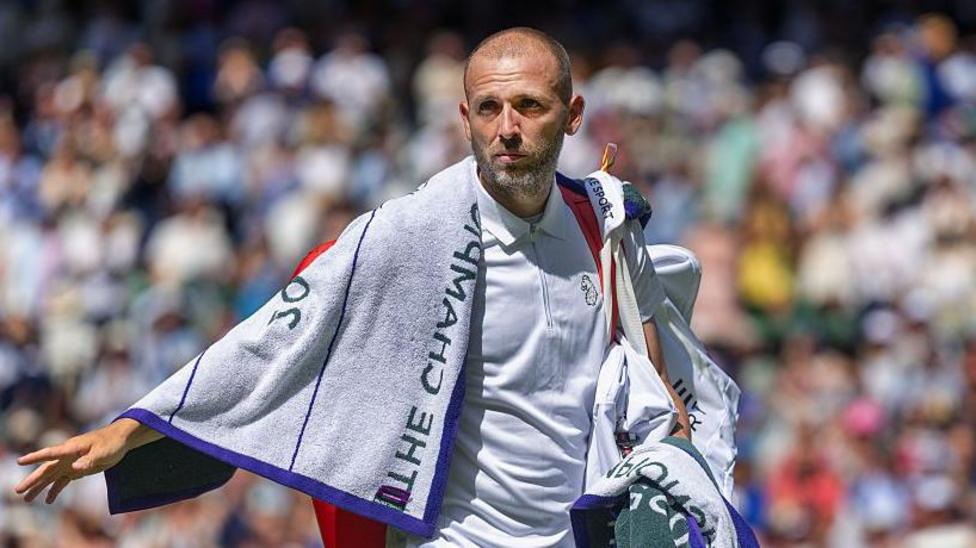
Evans Denied Wimbledon Wildcard: A Strategic Reckoning
Dan Evans must navigate Wimbledon qualifying after the All England Club's wildcard committee made a ruthless, system-driven decision.

Wimbledon Is Losing Its Soul to Social Media
Influencers and TikTok hype threaten Wimbledon's genteel sporting identity, transforming a tennis championship into an aesthetic backdrop for content.
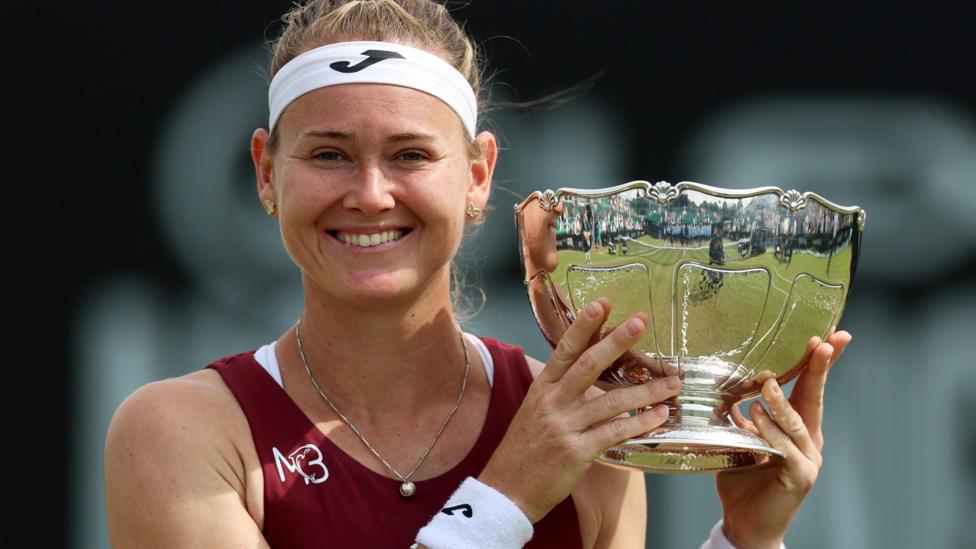
Bouzkova's Grit Shines Through Pain to Claim Nottingham Crown
Marie Bouzkova fought through an ankle injury to capture her first grass-court title at the Nottingham Open.