Bouzkova's Grit Shines Through Pain to Claim Nottingham Crown
Marie Bouzkova fought through an ankle injury to capture her first grass-court title at the Nottingham Open.
When Pain Became the Proof
There is a particular kind of courage in tennis that doesn't show up on highlight reels. It doesn't involve diving volleys or outrageous passing shots. It's the courage to keep planting your feet on grass when every step sends a warning shot through your ankle. Marie Bouzkova knows that feeling intimately now, having carried it with her through every rally of the Nottingham Open final.
The Czech's straight-sets victory over Emma Navarro to clinch the Nottingham title was, on paper, a clean result. But paper doesn't tell you about the strapping around her ankle, the adjustments to her movement, or the mental arithmetic of risk and reward that played out inside her head with every split step. What it does tell you is that Bouzkova now owns something she had never previously held: a grass-court singles title.
For a player whose career has been defined by incremental progress and near-misses on the sport's biggest stages, this felt like a threshold crossed.
The Long Road to Green Lawns
Bouzkova's story is not one of overnight sensation. Born in Prague in 1998, she came up through a Czech tennis system that has produced generations of elite talent but rarely hands anyone a shortcut. She turned professional as a teenager and spent years grinding through the lower tiers of the WTA Tour, learning the rhythms of tour life the hard way: long flights, unfamiliar opponents, and results that don't always reflect the quality of effort.
Her breakthrough moment on grass arrived at Wimbledon in 2022, when she surged into the quarterfinals with a brand of aggressive baseline tennis that caught several higher-seeded opponents off guard. That run announced her as a genuine threat on the surface, even if the broader tennis world was slow to take notice. Grass-court tennis rewards a specific set of skills — low centre of gravity, clean ball-striking, sharp reflexes at the net — and Bouzkova had been quietly assembling all of them.
But a quarterfinal run and a title are different currencies in professional tennis. One earns you respect. The other earns you belief.
Fighting Through the Tape
The ankle injury made Nottingham a test of more than just tennis. Injuries during the grass-court season carry a particular dread. The surface is unforgiving in its own way: the footing is uncertain, the movement patterns are different from clay or hard court, and the compressed timeline before Wimbledon means there is no room for extended recovery.
Bouzkova could have withdrawn. Nobody would have blamed her with the Championships just weeks away. Instead, she adapted. Her footwork became more economical. Her shot selection leaned toward ending points earlier rather than extending rallies. She trusted her serve more than usual, understanding that free points on grass are not a luxury but a necessity when your body is negotiating with you on every change of direction.
Against Navarro, that adaptation was tested to its fullest. The American has emerged as one of the WTA Tour's most compelling young talents, a player with clean mechanics, quiet confidence, and the kind of tactical intelligence that suggests her ceiling is considerably higher than her current ranking. Navarro doesn't beat herself. She makes you earn every game.
Bouzkova earned them. All of them.
A Rising Star Denied
Credit must go to Navarro for her own Nottingham campaign. The American navigated a competitive draw with the poise of a player who increasingly expects to be in these situations. Her movement on grass has sharpened considerably, and her ability to redirect pace from the baseline makes her a dangerous opponent for anyone on the surface.
But the final exposed a gap that experience, not talent, will need to close. Navarro's shot selection under pressure occasionally drifted toward the conservative, and against a player like Bouzkova — who was willing to take calculated risks precisely because her body demanded shorter points — conservatism was a slow surrender.
Navarro will take lessons from this. At her age and trajectory, finals losses are deposits on future titles. The American's career graph is pointed firmly upward, and a grass-court title of her own feels less like a possibility and more like an inevitability.
Career by Numbers
- First grass-court singles title at the Nottingham Open
- Previously reached the Wimbledon quarterfinals in 2022, her best Grand Slam singles result
- Has represented the Czech Republic in Billie Jean King Cup competition
- Overcame an ankle injury sustained during the tournament to win the final
- Defeated Emma Navarro in the championship match
What This Means for Wimbledon
The timing of Bouzkova's triumph is no small detail. Nottingham sits on the calendar as one of the final tune-up events before Wimbledon, and winning it provides something that no amount of practice sets on the All England Club's manicured lawns can replicate: competitive match wins on grass with a trophy at stake.
Bouzkova's game translates well to Wimbledon's slower, heavier grass. Her flat groundstrokes stay low, her return game is among the more consistent on tour, and her mental fortitude — now proven beyond doubt — is exactly the quality that separates quarterfinalists from contenders in five-set Grand Slam conditions.
The ankle remains a variable. Grass-court movement places unique stress on joints, and Wimbledon's best-of-three format over two weeks demands sustained physical output. How Bouzkova manages her body between now and the Championships will be as important as any tactical adjustment.
"You learn something about yourself in moments like these. The body says stop, but something deeper says keep going. That's the part of tennis that doesn't get enough credit."
If she arrives in SW19 healthy and with the confidence of a title-holder, the draw should take notice.
The Bigger Picture
Bouzkova's Nottingham victory is a reminder of something tennis sometimes forgets in its obsession with prodigies and power rankings: the sport rewards persistence. Not every breakthrough happens at 19 on Arthur Ashe Stadium. Some of them happen on a Tuesday in Nottingham, on a sore ankle, against a younger opponent, in front of a crowd that maybe didn't know your name at the start of the week but certainly does by the end.
The Czech has spent years building toward this kind of moment. Her career arc is not flashy, but it is honest. She has improved steadily, added dimensions to her game, and refused to accept that her ceiling had already been reached.
A first grass-court title doesn't make Bouzkova a Wimbledon favourite. But it makes her something more dangerous: a player who knows she can win on the surface, who has done it while compromised, and who has nothing to lose and everything to prove.
That's a player no one wants to draw in the first week of the Championships.
What's Next
Bouzkova will now turn her attention to Wimbledon qualifying and main draw preparations. The key question is physical: can the ankle hold up through the rigours of a Grand Slam campaign? If it can, her Nottingham form suggests she is playing some of the most confident tennis of her career at exactly the right time.
For Navarro, the grass-court season continues. She remains one of the most intriguing young players in the women's game, and her ability to reach a WTA final on grass signals that the surface suits her evolving game. More finals, and more titles, will follow.
The grass-court season is brief and unforgiving. But for Marie Bouzkova, it has never tasted sweeter.
Editorial Integrity
This is an original SportPulse article written by our editorial team. All content is independently researched, written, and reviewed by our writers and editors before publication. We do not publish copied, aggregated, or syndicated content.
SportPulse is committed to original sports journalism. Read our editorial policy or contact us with any questions.
More Like This
All tennis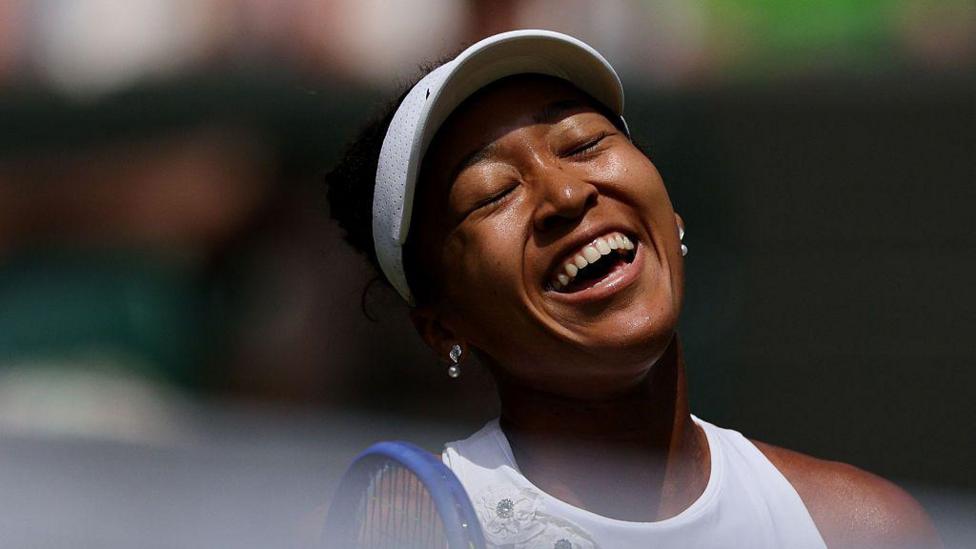
Naomi Osaka Cracks the Wimbledon Code at Last
Four-time hard-court major champion Naomi Osaka reaches the Wimbledon fourth round for the first time, rewriting her grass-court legacy.
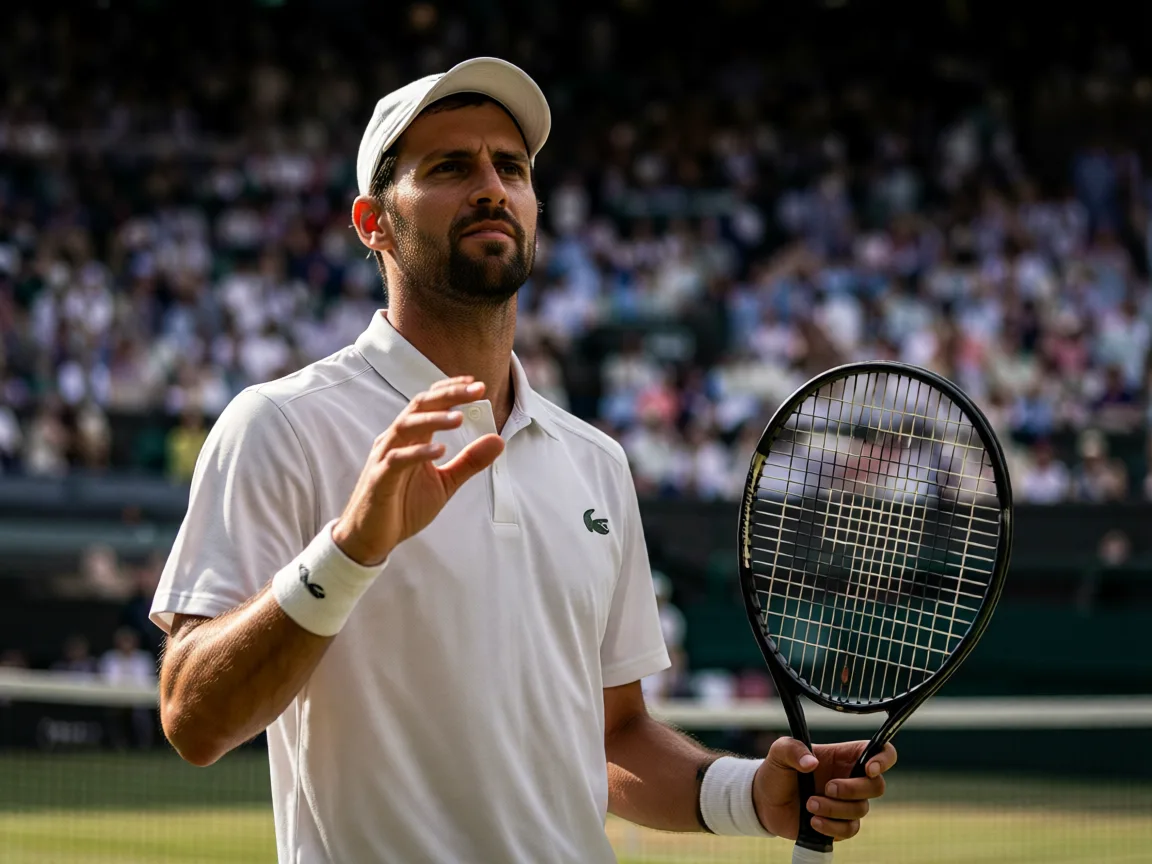
Djokovic Vows One More Wimbledon Despite Sinner Semi-Final Defeat
Beaten in straight sets by Jannik Sinner, Novak Djokovic insists his Wimbledon story is not finished yet.
Guess the Tennis Star: Why Puzzle Culture Is Taking Over Fandom
Interactive tennis trivia games are booming, and they reveal something deeper about how fans connect with the sport.