Naomi Osaka Cracks the Wimbledon Code at Last
Four-time hard-court major champion Naomi Osaka reaches the Wimbledon fourth round for the first time, rewriting her grass-court legacy.
There is a particular kind of loneliness that belongs to the grass-court season. It lasts barely five weeks, demands footwork that contradicts everything a player learns on clay and hard courts, and offers no consolation for those who cannot bend their game to its eccentricities. For the better part of a decade, Naomi Osaka regarded this surface the way a traveller regards an unfamiliar airport: something to pass through quickly on the way to somewhere that matters. The Centre Court at Wimbledon, with its emerald grass and its suffocating tradition, never felt like home.
It is against that backdrop of quiet estrangement that Osaka's victory over Daria Kasatkina on Saturday acquires significance beyond a line on a draw sheet. Naomi Osaka arrived on No 1 Court dressed for the occasion – as usual – in a flowing, flower-patterned robe but, 66 minutes later, her tennis was what had spectators on their feet after she dismantled Daria Kasatkina 6-1, 6-3 to reach the last 16 at Wimbledon for the first time. The former world number one produced a performance of composure and calculation to reach the fourth round of Wimbledon for the first time in her career. The ghost of every early exit, every occasion when grass turns under her feet as a reminder that mastery elsewhere does not guarantee belonging here, has been expelled.
"I'm really happy," Osaka said during her on-court interview. "I've actually never won on this court, so I'm just really glad to have made a really good memory here. It was a really big honour for me to play, so thank you."
A Reckoning Long Overdue
The bare statistics obscure a complicated narrative. Osaka owns four Grand Slam titles, all of them secured on the blue hard courts of Australia and Flushing Meadows. She has held the number one ranking, commanded the biggest stages in the women's game, and earned the kind of prize money that rewrites the commercial architecture of tennis. Grass, though, has remained willfully indifferent.
Before this fortnight, Osaka's Wimbledon record read like a chronicle of bewilderment. Third-round exits in 2017 and 2018. A withdrawal that drew headlines. A 2022 campaign in which she managed only a single match. These were not the results of a casual participant; they were symptoms of a structural mismatch. Osaka's power is designed for surfaces that reward aggressive ball-striking with predictable bounces. Grass does not promise predictability. It skids, it divots, it transforms moments of controlled aggression into unforced errors.
Thefach that she has entered the second week is a testament to patience, both hers and her team's. In a sport where coherence often arrives in the space of a few weeks, unlocking the grass-court puzzle is deeply gratifying.
The Tactical Shift
Against Kasatkina, the blueprint was visible from the opening games. Osaka pxlayed closer to the baseline than in previous grass outings, reducing the time Kasatkinahad to construct her trademarkangles. She served with more precision than raw velocity, prioritizing placement over the sheer mph numbers that light up speed guns but leave returners balanced enough to neutralize. The grass demands players deny opponents rhythm rather than spectators spectacle.
Her movement, historically the most scrutinized element of her game, looked more controlled. Lateral efficiency became a defining quality rather than crisis management.
Numbers Behind the Narrative
- 0 previous appearances in the Wimbledon second week across an entire professional career
- 4 Grand Slam titles, all on hard courts
- Former World No. 1 status contrasting with grass-court struggles
These figures do not represent a player in terminal decline rediscovering competence. They reflect an athlete broadening her rediscovering range, and doing so with the kind of measured incrementalism that often escapes champions accustomed to dominating on their terms.
The Philosophical Dimension
There is a mental component to grass-court tennis that transcends technique. The surface punishes obsession. Players who arrive at Wimbledon desperate to prove they belong often leave having confirmed they do not. The tournament selects its protagonists with a kind of aristocratic indifference, rewarding those who treat it as an annoyance requiring accommodation rather than an adversary requiring conquest.
Grass reveals the player you are, not the player you wish to be.
This season, Osaka's relationship with the sport itself underwent a recalibration. The relentless drive that fuelled her ascent became tempered by maternity leave and its accompanying perspective. She returned to the tour and spoke candidly about the conflict between ambition and contentment. It is a rebalancing that may have inadvertently delivered her to the exact psychological posture the grass demands.
What the Second Week Holds
Reaching the fourth round resolves a question; remaining there introduces new ones. The Wimbledon draw tends to be unforgiving. Grass rewards players who have grown up on the surface, who treat its vagaries not as betrayals but as features.
Osaka's path is not yet mapped but the terrain is known. The fourth round presents a different sort of pressure: the pressure of opportunity. Having never been here, she cannot be accused of underperformance. Having arrived, she must decide how much further this reinvention extends.
The second week at Wimbledon functions as a stage where identity is tested. Players who survive into the quarterfinals must run simultaneously for two weeks. Osaka has never faced that physical demand on grass, and how her body responds to that challenge remains uncertain.
What is already beyond dispute is the trajectory. Four hard-court majors established Osaka as one of the defining talents of her era. The decision to confront the surface that resisted her, to grind through the early rounds where the bounce is at its most treacherous and the grass is at its least worn, speaks to a competitive seriousness that her critics often overlook.
This is not a player collecting appearance fees or chasing rankings through convenience. Osaka is engaged in a project to helium her legacy by addressing its most conspicuous gap.
The Broader Context
Osaka's water shed arrives at a moment when the women's game is actively seeking new protagonists at the summit of the sport. The vacuum at the top invites multiple contenders to claim it. Osaka's re-emergence as a factor on grass represents a significant addition to the field's competitive depth.
For Wimbledon, a tournament that thrives on narrative continuity, the involvement of a four-time major champion gives the event a compelling.
Beyond the Scoreline
There is something quietly poignant about watching an athlete learn a new language in full public view. Osaka has spent years speaking the dialect of hard-court power: massive serve, devastating return, short points decided by raw ball-striking. Grass requires a different vocabulary. It asks for patience disguised as aggression, for restraint that looks like efficiency, for the willingness to construct a point without knowing precisely where the construction will lead.
Against Kasatkina, that new vocabulary functional. Not perfect, but functional. Osaka did not dominate; she solved. She did not overpower; she outmaneuvered. The distinction matters because it suggests this run is not a singular moment of inspiration but the product of a process that could sustain itself through the second week.
The road ahead will demand more. Each round at Wimbledon tightens the margins and exposes vulnerabilities that earlier opponents cannot exploit. The grass, as it wears and shifts beneath daily play, becomes a different surface in week two than it was week one—one that demands adaptation not just once but continuously.
Osaka has demonstrated she can learn. The question that lingers, as the tournament deepens and the fields narrows, is whether learning translates into mastery. For an athlete whose career has been defined by the acquisition of major titles on a single surface, the pursuit of mastery on a second represents not a detour but an evolution.
As the second week beckons, the All England Club will be watching. The gentlest applause, the most knowing acknowledgment, will come from those who understand that a four-time major champion reaching the fourth round of Wimbledon for the first time is not an oddity. It is a testament to the enduring capacity for reinvention that defines every great athletic career.
The grass no longer feels like unfamiliar ground.
Updated: 2026-07-03 — Added concrete score (6-1, 6-3), match duration (66 minutes), No 1 Court details, and Osaka's post-match interview quotes.
Editorial Integrity
This is an original SportPulse article written by our editorial team. All content is independently researched, written, and reviewed by our writers and editors before publication. We do not publish copied, aggregated, or syndicated content.
SportPulse is committed to original sports journalism. Read our editorial policy or contact us with any questions.
More Like This
All tennis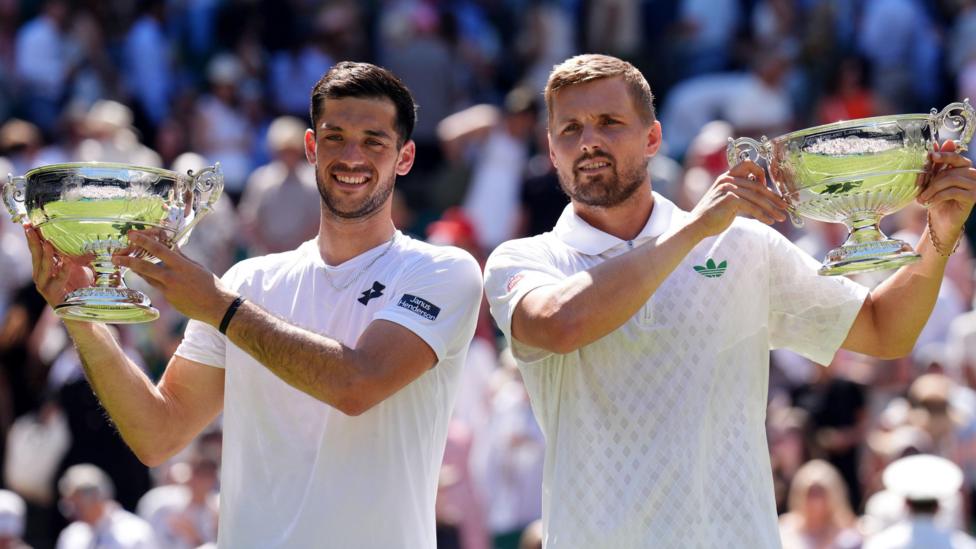
The Last Set: Doubles Players Fight ATP for Their Livelihood
Doubles players warn the ATP's proposed cutbacks could kill the discipline as a viable career path.
Wimbledon's Purple and Green: Identity Written in Chlorophyll and Royalty
The Championships' iconic palette weaves together Victorian weed-killing pragmatism, imperial pageantry, and brand alchemy.
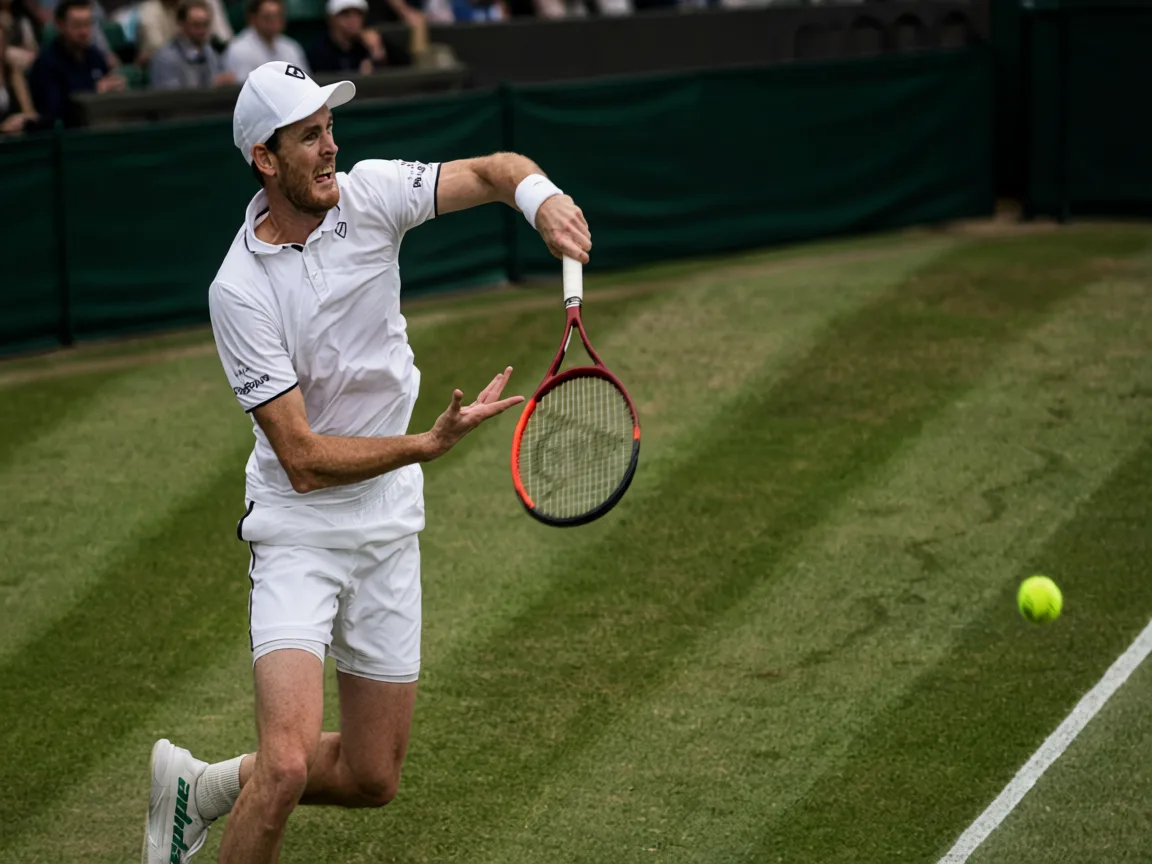
The Quiet Architect: Jamie Murray and Wimbledon's Doubles Soul
Beyond Centre Court singles glory, Jamie Murray built a doubles legacy on Wimbledon grass that redefined British tennis ambition.