Spa 2026: Why Active Aero Turns the Belgian GP Into a Setup Chess Match
F1's 2026 active aerodynamics regulations transform Spa-Francorchamps into the ultimate low-drag, high-corner-speed technical puzzle.
The 2026 Belgian Grand Prix represents the most fascinating technical convergence point of the new regulatory era. Formula 1's active aerodynamics system, designed to replace the current static downforce philosophy, faces its first true stress test at a circuit that simultaneously demands the highest and lowest aerodynamic efficiency on the calendar. Spa-Francorchamps is aerodynamically schizophrenic, and that is precisely what makes this weekend a工程师's nightmare and a fan's dream.
The Regulatory Shift Meets Its Match
Every circuit on the 2026 calendar will force teams to balance the new Z-mode and X-mode aerodynamic configurations, but Spa does it within a single lap. The 7.004-kilometer circuit features the legendary Kemmel Straight stretching 1.8 kilometers after Eau Rouge, demanding a low-drag configuration that the X-mode was designed to provide. Yet the very next sequence through Les Combes and Bruxelles immediately requires the high-downforce Z-mode to maintain cornering performance.
Think of it like a road car switching between highway cruising and canyon carving, except the system must transition in milliseconds while the car is already at 320 km/h. The active aerodynamics concept central to the 2026 rules allows drivers to manually switch between these modes, but the timing of that switch is the critical variable. Engage X-mode too early through Eau Rouge and the rear end goes light through Raidillon. Engage Z-mode too late onto the Kemmel Straight and you bleed 0.4 seconds of straight-line performance.
The Eau Rouge-Raidillon Problem
Eau Rouge is the most demanding corner for the new active aero system because it is the one place on the calendar where the car is simultaneously loading up with downforce while the driver needs to be thinking about shedding it. The uphill compression generates a peak lateral load of 3.5G, which means the suspension is being pushed down into the asphalt at the exact moment the airflow underneath the car is accelerating due to the gradient.
Under the old regulations, this was a set-and-forget situation. You arrived at Spa with a fixed rear wing angle, accepted the drag penalty on the straights, and lived with it. In 2026, teams must map the aero switch points with surgical precision. The software that governs when the system can transition is locked in the FIA-issued ECU, but the trigger thresholds, timing windows, and coordination with the hybrid deployment strategy are all team-specific calibration parameters that represent genuine competitive advantage.
Engineering Insight: The Configuration Chess Match
The technical brilliance of Spa 2026 lies in how teams map their aero transition windows across the lap. Unlike Monaco, where you run Z-mode for 95% of the lap and never switch, or Monza, where X-mode dominates, Spa forces an oscillating configuration profile.
The critical challenge is the floor edge wing interaction. When the car switches from Z to X mode, the beam wing angle changes, which alters the pressure differential under the Venturi tunnels. At Spa, this matters enormously because the floor generates 60% of total downforce. A mistimed switch mid-corner could momentarily unload the floor, causing an aero stall that at 300 km/h through Blanchimont is a accident waiting to happen.
Teams have spent hours in the simulator mapping exactly when the switch can occur safely. The consensus approach is to trigger the Z-to-X transition at the apex of Raidillon, using the uphill exit as a natural transition zone where the car is briefly stable before the long straight. The return to Z-mode after Les Combes is less critical because the braking zone provides a natural aerodynamic reset.
Suspension Geometry and the Com corners Challenge
The anti-dive geometry built into the 2026 suspension is designed to prevent the car from pitching forward under braking, which maintains a stable ride height for the ground-effect floor. This is crucial at Spa because the braking zone into the Bus Stop chicane is the heaviest on the calendar: drivers shed 280 km/h in just 110 meters.
If the suspension allows too much pitch sensitivity, the front floor seals against the asphalt, stalling the airflow underneath and causing sudden understeer. The trade-off is that aggressive anti-dive geometry makes the front end feel lazy on initial turn-in, which hurts performance through the fast direction changes at Pouhon.
The active aero switch through Eau Rouge is happening at 300 km/h with 3.5G of lateral load on the car and the floor is being crushed into the ground. If the transition is not seamless, the car will bite. We have spent more simulation time calibrating that single switch point than we did for the entire Monaco GP this year. The challenge is real and we treat it with the respect it deserves.
Tire Strategy and the Thermal Window
The Pirelli tire allocation for the Belgian GP sees the return of the C2-C3-C4 compound selection, favoring harder rubber to cope with the sustained loads through the fast sections. The traction-limited corners, primarily the exit of La Source and the Bus Stop chicane, are where the team will monitor tire temperatures closely.
The 2026 power units, with their 50% electric deployment off the line, place a different thermal load on the rear tires compared to the current V6 turbo-hybrids. Electronic torque application is instantaneous and aggressive, meaning the contact patch heats up faster. At Spa, where ambient temperatures can swing 15 degrees Celsius between the morning session and the afternoon race, the thermal management window shifts constantly.
Power Unit Mapping and Electric Deployment
The 2026 power unit regulations introduce a significantly increased electrical component to the overall power delivery, and at Spa this creates an entirely fresh strategic dimension. The electric motor can deliver a massive power burst, but the battery management system must carefully balance deployment and recovery across the lap.
The Kemmel Straight is the single most important deployment zone on the calendar. Drivers will run the electric motor at maximum output for over 15 seconds, draining the battery significantly. The recovery phase through the Stavelot-Blanchimont sweepers is equally critical, as the regenerative braking phase must capture enough energy to complete the lap cycle without running dry.
Looking Ahead: The Hungaroring Contrast
The next race at the Hungaroring presents the polar opposite technical challenge. Where Spa rewards low drag and high aerodynamic efficiency, the tight, twisty Budapest layout demands maximum downforce and mechanical grip. The active aero system will spend the vast majority of the lap locked in Z-mode, meaning the calibration work done in Belgium translates minimally to Hungary.
For the engineers, the car setup window will swing dramatically. The ride height will be raised to manage the aggressive track limits kerbs in Budapest, and the differential settings will shift from Spa's high-speed stability bias to a rotation-focused configuration. The pond surface of the Hungaroring is notoriously low-grip and evolves rapidly over the weekend, meaning the baseline setup data from testing will be largely irrelevant by FP2.
The real question emerging from Belgium will be whether any team has found a clever mapping solution for the active aero that others have missed. At a circuit of this length and variety, even a 0.1-second gain per sector compounds into a meaningful advantage. The paddock will be watching the sector times through Eau Rouge with unusual intensity.
Editorial Integrity
This is an original SportPulse article written by our editorial team. All content is independently researched, written, and reviewed by our writers and editors before publication. We do not publish copied, aggregated, or syndicated content.
SportPulse is committed to original sports journalism. Read our editorial policy or contact us with any questions.
More Like This
All f1
Red Bull Ring FP3: Decoding the 2026 Downforce Dilemma
Austria's FP3 exposes the 2026 aero formula's downforce sensitivity as teams scramble to balance drag and mechanical grip.

Antonelli’s Spa Win Exposes Mercedes’ Reliability Crisis
A dominant Belgian victory highlights the gap between race pace and championship survival.
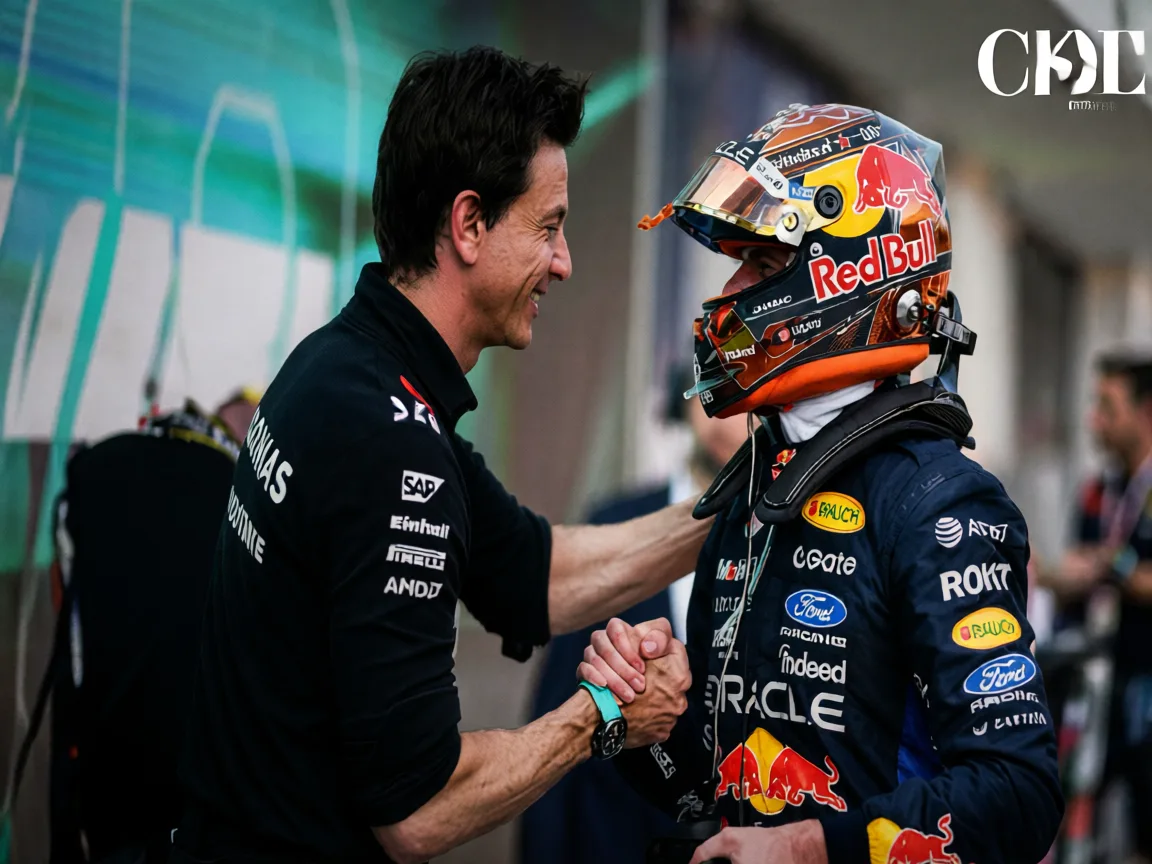
Verstappen to Mercedes? The Technical Calculus Behind the Biggest Move in F1
A Verstappen-Mercedes pairing would reshape F1's technical arms race — but the engineering barriers are enormous.