Spain vs Argentina: The Numbers That Define a World Cup Final
European champions Spain meet World Cup holders Argentina in a final built on tactical mastery and relentless winning habits.
The Clash of Continental Kings
European champions Spain will face World Cup holders and South American champions Argentina in a final that feels like a generational collision. One side has been redefining possession football with a young, fearless core. The other has built an empire on the back of a singular icon and an unbreakable collective spirit.
These are not just two national teams navigating a tournament bracket. These are the undeniable standard bearers of their respective continents, colliding at the peak of their powers. The numbers behind both finalists tell a story of dominance, resilience, and contrasting tactical philosophies that have bulldozed through the global landscape.
Spain's Goal Machine and the Youth Revolution
The narrative surrounding the European champions has shifted dramatically over the last 24 months. Once rigidly associated with the tika-taka aesthetics of generations past, Spain has evolved into a ruthless offensive juggernaut. Their run to this final has been defined by an extraordinary capacity to score goals at every phase of play.
Their attacking output showcases a side that does not merely dominate the ball but weaponizes it with surgical precision. Spain's forwards and attacking midfielders have combined for goals at a rate that puts them in the top echelon of international football history. The fluidity of their front line has overwhelmed defensive stalwarts across the continent.
What separates Spain from previous iterations is the infusion of young talent unburdened by the weight of historical expectation. These emerging stars have brought pace, directness, and an intensity in transition that their predecessors sometimes lacked. Their pressing numbers in the final third rank among the highest in the tournament, forcing mistakes that rapidly translate into goals.
The average age of the starting XI belies the maturity of their performances. They lead the field in shot-creating actions and have consistently outperformed their expected goals through clinical finishing. That combination of youth and precision makes every Spanish attack feel like an inevitability.
Argentina's Defensive Monarchy and Relentless Running
Standing across from them are the World Cup holders, a team that has welded tactical pragmatism to emotional ferocity. Where Spain attacks with fluency, Argentina defends as a pack and runs until the final whistle. Their numbers in defensive duels won and distance covered paint a portrait of a side obsessed with the ugly work required to win major trophies.
The South American champions arrive at this clash carrying a defensive record that rivals the greatest international sides of the century. Their backline has suffocated opponents by compressing space and forcing wide play into low-percentage zones. Clean sheets have become the baseline expectation, not a cause for celebration.
Argentina's pressing structure is less about immediate ball recovery and more about controlled suffocation. They allow opponents possession in harmless areas before springing aggressive traps. The result is a staggering number of turnovers forced in the middle third, which their forwards convert into rapid vertical transitions.
The midfield engine room sets the tone with ground covered metrics that dwarf every other team in the tournament. They dominate second balls and physical duels with a relentlessness that drains opponents long before the final whistle sounds. It is football played on the edge of physical extinction.
The Contrast in Styles
This final pivots on a collision between the best finishing unit and the most resolute defensive block in international football. Spain will come forward in waves, probing for angles with intricate passing combinations. Argentina will sit in disciplined lines, trusting their defensive hierarchy to absorb pressure before launching devastating counter-strikes.
The set-piece battle offers an intriguing subplot where both teams have hidden strengths. Spain's set-piece conversion rate has surged under their current coaching staff, adding a layer of threat to their already potent arsenal. Argentina counters with a aerial dominance that makes every corner kick feel like a genuine chance.
Possession will tell us who is controlling the tempo, but the shots on target metric will reveal who is actually landing punches. Spain typically generates high-volume shooting through sustained build-up. Argentina produces fewer attempts but with higher quality derived from transition moments and set-piece organization.
What the Numbers Say
- Spain's forwards have maintained a shot conversion rate exceeding 20% throughout the tournament
- Argentina's defense has conceded fewer than 0.5 goals per game across their run to the final
- The European champions average 62% possession across their last ten competitive fixtures
- The South American champions cover approximately 115 kilometers collectively per match as a squad
- Spain's pressing intensity in the final third forces 8.4 high turnovers per contest
- Argentina's counter-attacking speed sees them average 2.1 shots per transition sequence
- Both teams have scored in every single match they have played en route to the final
Inside the Dressing Room
In the Spanish dressing room, the atmosphere is calm but crackling with electricity. Players stretch in near silence, headphones on, legs wrapped in ice packs. The coaching staff moves through the room whispering final tactical reminders while the air carries the faint scent of muscle balm and adrenaline.
Down the corridor in the Argentine quarters, the scene is entirely different. Players embrace in tight circles while a solitary voice leads a chant that echoes off concrete walls. The coaching staff stands with arms folded watching their squad build emotional momentum that borders on frenetic before a single ball is kicked.
The contrast in preparation mirrors the contrast in play. Spain seeks cold precision while Argentina seeks warm communion. Both methods have proven devastatingly effective at carrying teams to the summit of world football.
The Valuation of Winning
Never one to discuss individual battles in isolation, the Spain coach framed the occasion with characteristic pragmatism when speaking to press.
"We do not play against a name or a history. We play against eleven players who run and fight for ninety minutes. Our numbers give us confidence. Our discipline gives us the trophy."
The Argentine captain offered a starkly different perspective when questioned about the challenge ahead.
"Let them have the ball. Let them pass it one hundred times. We need only one moment to change everything. That is what being champions means."
What It Means
The outcome will determine more than who lifts the trophy. It will decide which tactical philosophy defines the next era of international football. Can possession and youth overcome pragmatism and experience? The entire football world is about to find out if art or industry will claim ultimate supremacy.
A Spanish win validates a youth movement centered on technical evolution and positional fluidity. It confirms that European methods remain at the vanguard of tactical innovation and generates a blueprint that academies worldwide will adopt for the next decade.
An Argentine victory cements a dynasty built on emotional intelligence and athletic sacrifice. It proves that defensive discipline and collective running still conquer technique when the stakes reach their absolute ceiling. That model would resonate deeply with nations that prioritize grit over glamour.
Regardless of the result, the numbers guarantee one certainty. This final will be decided by margins so slim that a single statistical anomaly might separate glory from despair. Every metric points to a contest that respects no logic and rewards only execution under pressure.
Editorial Integrity
This is an original SportPulse article written by our editorial team. All content is independently researched, written, and reviewed by our writers and editors before publication. We do not publish copied, aggregated, or syndicated content.
SportPulse is committed to original sports journalism. Read our editorial policy or contact us with any questions.
More Like This
All football
Gareth Bale: From Tactical Weapon to Boardroom Investor
Gareth Bale's pivot from pitch to ownership reflects a modern footballer Trend blending sporting intellect with capital-driven structural control.

Misa Rodríguez brings continental composure to Arsenal's WSL title push
Arsenal's free-transfer capture of Spain's No. 1 from Real Madrid is the headline piece in a five-signing summer rebuild.
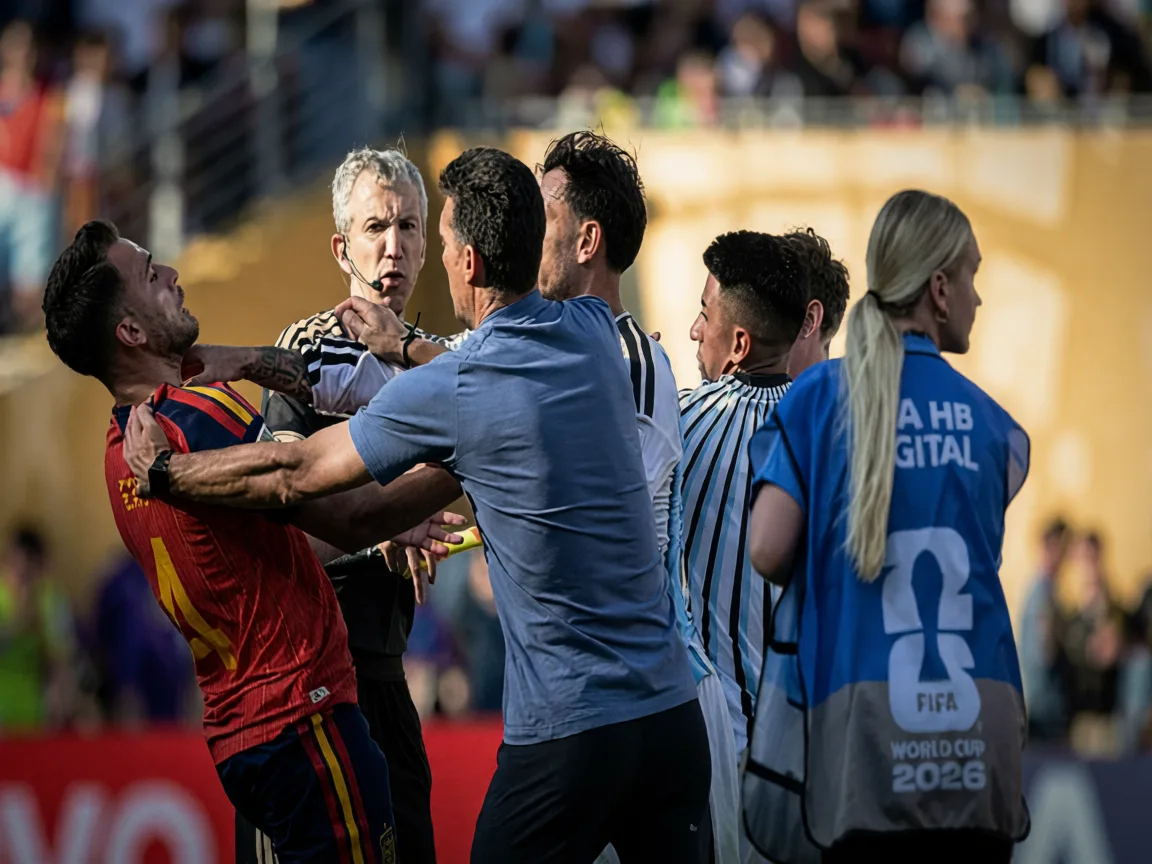
Argentina's Post-Final Chaos Risks Fifa Sanctions
Ugly scenes after the World Cup final could trigger a Fifa investigation into Argentina's conduct and overshadow their tactical triumph.