Clarke's Exit Closes a Tactical Chapter Scotland Needed
Steve Clarke built Scotland into a tactically disciplined unit, but the World Cup exposed the ceiling of his pragmatic approach.
A Pre-Planned Departure Disguised as Spontaneity
There is something almost rehearsed about the way Steve Clarke framed his resignation. Speaking after Scotland's group stage elimination in Charlotte, the 61-year-old insisted the decision was "easy" because it had always been the plan: leave if the World Cup went badly. Yet the timing of his new four-year contract extension, signed just one month ago, tells a different story. Clarke wanted to believe he could build something beyond Qatar's successor, but the tactical problems on display in the United States exposed the structural limits of his tenure.
The resignation was officially confirmed within minutes of Scotland's elimination from the World Cup, with Clarke stating, "Thanks for having me and good luck to my successor." For seven years, Clarke transformed Scotland from a side that couldn't qualify for tournaments into one that reached two consecutive European Championships and a World Cup. That is not a minor achievement. Before his appointment in 2019, Scotland had failed to qualify for 10 consecutive major tournaments. Clarke didn't just break the cycle; he redefined what Scottish football could expect of itself. But expectation, as any continental tactician knows, is a double-edged sword.
The Shape That Defined an Era
Clarke's tactical identity was forged in pragmatism. A disciple of José Mourinho's Chelsea, where he served as assistant, Clarke built Scotland around a 3-4-2-1 or 3-5-2 formation that prioritised defensive compactness over creative expression. The back three of Grant Hanley, Kieran Tierney, and Jack Hendry (or its various permutations) provided a low-block foundation that could absorb pressure from technically superior opponents.
The wing-backs, often Andy Robertson on the left and Nathan Patterson or Aaron Hickey on the right, were expected to provide width in transition. Scott McTominay and John McGinn operated as the dual number tens, tasked with pressing triggers and late runs into the box. It was a system designed to frustrate, to keep Scotland in matches, and to steal results through set pieces and counter-attacks.
And it worked. At Euro 2020, Scotland held England to a 0-0 draw at Wembley. At Euro 2024, they earned a creditable draw against Switzerland. Against elite opposition, Clarke's Scotland were rarely embarrassed. The defensive structure was his signature, and it delivered results that previous managers could only dream of.
Where the System Hit Its Ceiling
The problem was always what happened when Scotland needed to win, not merely survive. Clarke's system was designed to contain, not to impose. In the World Cup group stage, that limitation became fatal.
Scotland's pressing structure under Clarke was built on a mid-block that invited opponents into their half before attempting to win the ball in congested zones. The dual tens would press the centre-backs in an arc, channelling play wide where the wing-backs and nearest centre-back could trap the ball carrier. Against sides willing to play through the middle, this worked. Against teams with the technical quality to circulate possession quickly across the back line, Scotland's press became stretched, leaving gaps between the midfield and the back three.
The creative deficit was equally glaring. Scotland's build-up play often relied on Robertson carrying the ball from deep or McTominay driving forward from midfield. There was no consistent mechanism for progressing the ball through the central corridors. In the World Cup, when opponents sat deeper and denied Scotland the counter-attacking transitions they thrived on, Clarke's side looked bereft of ideas.
Tactical Shift: The Midfield Control Problem
The turning point in Scotland's tournament was not a single moment but a recurring pattern: the inability to dominate the midfield third. Clarke's preferred pivot of Billy Gilmour and Callum McGregor offered technical quality but lacked the physical presence to win second balls against powerful, athletic midfields.
When Scotland fell behind, the tactical response was predictable. Clarke would push McTominay higher, shift to a more aggressive 3-4-3, and ask the wing-backs to push into advanced positions. But this created spaces behind them that opponents exploited ruthlessly. The substitution patterns rarely varied, the in-game adjustments felt formulaic, and Scotland's attack became a series of hopeful crosses rather than structured build-up.
This is where Clarke's conservative instincts, so effective in the group stages of European Championships, became a liability at the World Cup. The step up in quality demanded tactical flexibility that his system simply did not accommodate.
The Contract Paradox
The timing of Clarke's new deal raises uncomfortable questions for the Scottish Football Association. If Clarke always intended to resign after a poor World Cup, why was a four-year extension announced in late May? The SFA's decision to commit to a contract running through Euro 2028 and the 2030 World Cup suggests either a lack of contingency planning or a belief within the federation that the group stage exit was unlikely.
Clarke himself described the decision as "the right time to step away," but the optics are messy. A manager signing a long-term deal and departing one month later does not project stability. For the SFA, the challenge now is to find a successor who can retain Clarke's defensive foundation while adding the attacking dynamism that the next generation of Scottish players arguably demands.
The Scottish Football Association chief executive, Ian Maxwell, offered an official statement on Clarke's departure: "We thank Steve for his record-breaking contribution and know that when the disappointment of World Cup elimination subsides, the Scotland supporters will be thankful for the memories of marching with pride at major tournaments once again."
The Clarke Legacy in Numbers
Whatever the ending, Clarke's record deserves honest appraisal:
- Seven years in charge, the longest-serving Scotland manager since Alex McLeish's first spell
- Ended a 22-year absence from major tournaments by qualifying for Euro 2020
- Secured qualification for Euro 2024 and the 2026 World Cup
- Scotland's FIFA ranking improved from outside the top 50 to the top 40 during his tenure
- Oversaw the development of a core group including Robertson, McGinn, McTominay, and Gilmour who will remain central to Scotland's future
"I always said I'd know when the time was right. The World Cup didn't go the way we wanted, and it's right to step away and let someone else take this group forward." — Steve Clarke
What Comes Next for Scotland
The SFA faces a defining appointment. The next manager inherits a squad with genuine Premier League quality but needs to evolve the tactical template. Players like Gilmour, Ben Doak, and Lewis Ferguson represent a generation comfortable in possession-based systems. Scotland's next coach will need to shift the emphasis from containment to controlled aggression, from reactive shape to proactive pressing.
The shortlist will likely include names familiar to the Scottish football landscape: Graeme Jones, Roberto De Zerbi (should he become available), or an internal promotion from the youth setup. Whoever takes the role will need to retain Clarke's defensive discipline while unlocking a more progressive attacking identity.
The Euro 2028 qualifying campaign begins in March 2027, giving the new manager roughly nine months to implement a revised tactical framework. That is tight, but not impossible. Clarke proved that Scottish football can compete at the highest level. His successor's task is to prove it can do more than compete. It can impose.
Clarke's departure marks the end of a transformative era, but it also opens a door. The question is whether the SFA has the tactical vision to walk through it.
Updated: 2026-06-29 — Added official confirmation of Clarke's resignation and Scottish FA statement from Ian Maxwell
Editorial Integrity
This is an original SportPulse article written by our editorial team. All content is independently researched, written, and reviewed by our writers and editors before publication. We do not publish copied, aggregated, or syndicated content.
SportPulse is committed to original sports journalism. Read our editorial policy or contact us with any questions.
More Like This
All football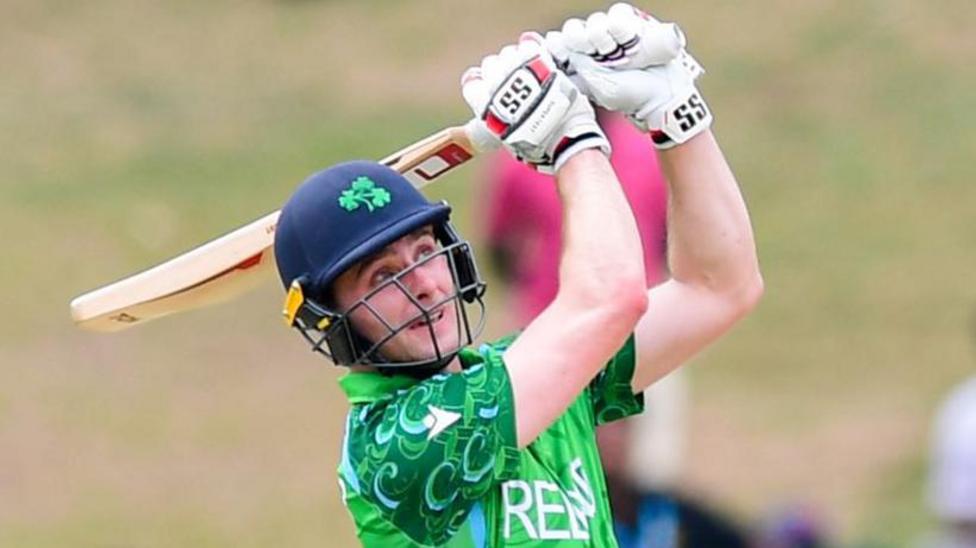
Tucker Takes the Arm Band as Crisis-Hit Ireland Face India
Lorcan Tucker inherits Ireland's permanent T20I captaincy amid an injury crisis just days before facing India at Stormont.
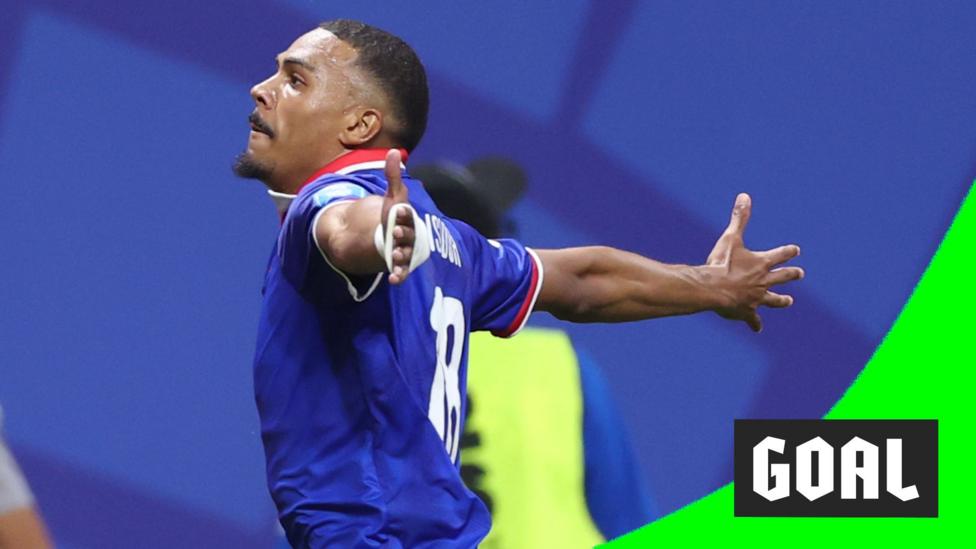
Isidor's Thunderbolt Stuns Morocco as Haiti Take Shock World Cup Lead
Wilson Isidor scored an extraordinary World Cup goal to give Haiti a stunning lead against Morocco in Atlanta.
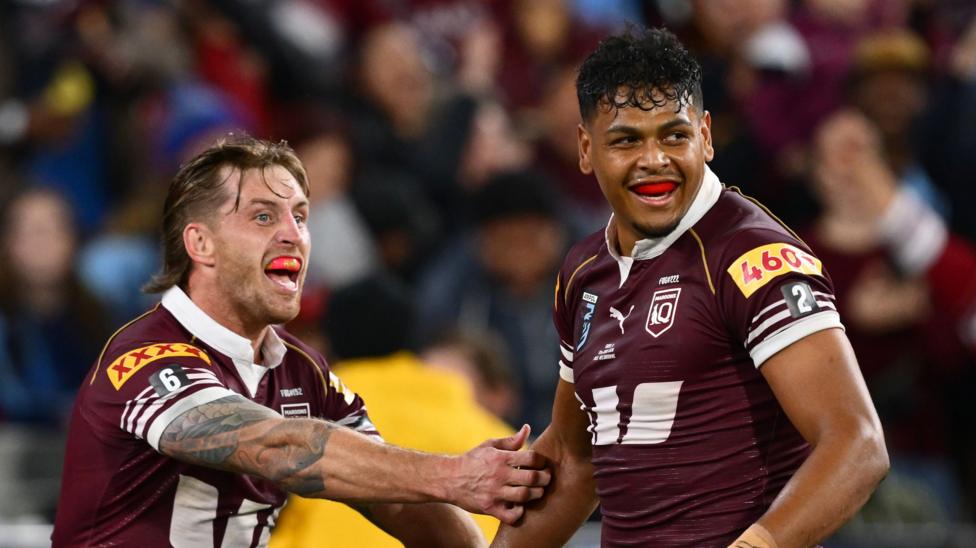
Cobbo's Hat-Trick Ignites Queensland Revival to Level Origin Series
Selwyn Cobbo's stunning second-half hat-trick powers Queensland's breathtaking comeback to keep the State of Origin series alive.