The Clarke Era Ends: Scotland's Tactical Identity Sealed in a Farewell Letter
Steve Clarke's farewell letter closes the book on the most transformative coaching tenure in modern Scottish football.
A Departure Written in Ink, Not in Haste
Steve Clarke chose his words carefully. The man who spent five years reshaping Scotland's tactical identity from the ground up chose a written farewell over a press conference, a letter over a microphone. That feels fitting. Clarke was never a coach who chased the spotlight. He built systems, not brands. He developed structures, not soundbites.
His letter to the Tartan Army closes a chapter that began in May 2019, when the Scottish Football Association turned to a quietly respected coach whose reputation had been forged in the Premier League's back rooms, not in continental hype cycles. What followed was the most successful era of Scottish international football in a generation.
Clarke inherited a squad that had failed to qualify for a major tournament since the 1998 World Cup in France. Twenty-two years of hurt, of playoff heartbreak, of watching from the outside. Within two years, he had Scotland at Euro 2020, playing on the biggest stage at Wembley against England. The significance of that achievement cannot be overstated.
The Tactical Architecture: Clarke's 3-4-2-1 Blueprint
Clarke's defining tactical contribution was the adoption and refinement of a 3-4-2-1 system that gave Scotland a shape, a purpose, and a way to compete against nations with significantly greater resources. It was pragmatic without being cynical. It was structured without being rigid.
The back three became the foundation. Players like Kieran Tierney, Grant Hanley, and Scott McKenna were deployed in a system that asked them to be both defenders and ball-progressors. Wing-backs, particularly Andy Robertson on the left and Nathan Patterson or Aaron Hickey on the right, were given licence to push high, transforming a defensive shell into a 5-2-3 in possession. The dual number tens, often John McGinn and Ryan Christie or Billy Gilmour, occupied half-spaces and pressed triggers between the opposition's midfield and defensive lines.
The system's genius was its flexibility. Against superior opposition, Scotland could drop into a compact 5-4-1, denying central overloads and forcing play wide. Against teams of similar or lesser quality, the wing-backs pushed aggressively forward and the shape stretched into something resembling a front five. Clarke understood the spectrum of his squad's capabilities and built a tactical framework that maximized them.
The Pressing Triggers and Defensive Discipline
What made Clarke's Scotland distinct from previous iterations was the pressing structure. Rather than asking players to chase shadows, he implemented zonal pressing triggers tied to opposition build-up patterns. When the ball moved into wide areas, the nearest wing-back would engage while the back three shifted across in a coordinated block. The dual tens would cut off passing lanes into midfield, funnelling play into areas where Scotland's physical defenders could win duels.
This was not revolutionary football in the Guardiola or Klopp mould. But it was intelligent, disciplined, and perfectly calibrated to the resources available. Scotland under Clarke were consistently hard to break down, conceding fewer than one goal per game across multiple qualifying campaigns.
"Every player knew their job. Every player understood the shape. That's the foundation you build everything else on." — Clarke on his coaching philosophy
The Apex: Euro 2020 and the Wembley Night
The 0-0 draw against England at Wembley in June 2021 remains the tactical peak of Clarke's tenure. Scotland arrived as massive underdogs and executed a gameplan of remarkable discipline. The 3-4-2-1 became a defensive fortress, with Tierney and Hanley marshalling Harry Kane into frustration. McGinn pressed with ferocious energy in the right half-space, disrupting England's attempts to build through midfield.
That match represented everything Clarke wanted his Scotland to be: organized, brave, tactically aware, and capable of competing with elite opposition through structure rather than individual brilliance. The Tartan Army left Wembley with a point and the belief that their manager understood something fundamental about international tournament football.
Where the System Showed Its Limits
Honest analysis demands acknowledgment that Clarke's framework, for all its strengths, eventually revealed structural weaknesses. At Euro 2024 in Germany, the system was exposed. The 5-1 defeat to the host nation on opening night laid bare the fragility of the wing-back approach when faced with elite wide attackers operating in acres of space.
Germany's fluid 4-2-3-1 pulled Scotland's wing-backs into impossible decisions: press the opposition full-backs and leave space in behind, or sit deep and surrender territorial control entirely. The back three, stretched across the width of the pitch, could not cover the gaps. By half-time, the tactical architecture had collapsed.
The group-stage elimination, completed by a 1-0 defeat to Hungary after a 1-1 draw with Switzerland, raised uncomfortable questions. Had opponents simply solved Clarke's system? Had the predictability of the 3-4-2-1 become a vulnerability rather than a strength? The data from the tournament suggested a team that struggled to create from open play, relying increasingly on set pieces and transitions rather than sustained possession phases.
Nations League Regression
The post-Euro 2024 period compounded the concerns. Competing in UEFA Nations League A, Scotland found themselves outclassed against higher-calibre opposition. The same defensive principles that had sufficed in qualifying groups were insufficient against nations who could manipulate Scotland's pressing triggers with quicker combinations and superior technical quality in tight spaces.
Clarke, to his credit, experimented with adjustments. He shifted to a back four in certain matches, attempted to integrate younger players into the system, and tried to evolve the pressing structure. But the results did not follow, and the noise around his position grew louder with each passing window.
The Farewell: Reading Between the Lines
Clarke's letter, by all accounts, was gracious and reflective. It reflected the man himself: measured, dignified, and without self-pity. There were no veiled criticisms of the SFA, no complaints about resources, no blame directed at players. It was a thank-you note to a nation he had served with genuine commitment.
But letters also carry subtext. The very act of writing rather than speaking suggests a coach who wanted control over the narrative of his departure, who wanted the final word to be his own rather than filtered through press conference questions. Clarke has always been a man of intention, and his farewell was no different.
What Clarke Leaves Behind
The tactical legacy is significant. Clarke proved that Scotland could compete at major tournaments not through romantic overperformance but through genuine structural preparation. He professionalized the setup, established a clear identity, and gave a new generation of Scottish players the experience of playing in high-stakes international football.
He also leaves a core of players who have internalized the principles of organized defending, positional discipline, and collective effort. McGinn, Gilmour, Robertson, McTominay, and others have been shaped by five years under a coach who demanded tactical intelligence above all else.
The question now is whether his successor will build on that foundation or tear it up entirely.
Tactical Shift: What Comes Next for Scotland
The SFA faces a defining decision. Do they appoint a coach who continues with the back three system that Clarke established, leveraging the existing muscle memory of the squad? Or do they pivot toward a more possession-based, 4-3-3 or 4-2-3-1 framework that might unlock greater attacking potential but requires a fundamental retooling of how Scotland play?
The current squad profile suggests a hybrid approach might be necessary. Scotland's best players are predominantly wide attackers and box-to-box midfielders, a profile better suited to a four-at-the-back system. But the defensive solidity that Clarke built cannot be discarded carelessly, especially with 2026 World Cup qualifying on the horizon.
Candidates will be evaluated on their ability to evolve without erasing. Clarke's successor must understand that the departing coach did not just manage a team; he rebuilt a footballing culture. That culture now needs a new architect, not a demolition crew.
A Legacy Worth Honoring
Steve Clarke did not win a knockout match at a major tournament. He did not qualify for the World Cup. By the rawest metrics, his tenure ended without the ultimate validation.
But metrics alone cannot capture what he achieved. He took a broken footballing nation and gave it belief, structure, and a seat at Europe's top table. Twice. He coached with integrity, prepared with diligence, and departed with grace.
The Tartan Army will remember the Wembley night, the Hampden roar, the tears of qualification. They should also remember the tactical framework that made it all possible, because that framework proved something vital: Scotland can compete. Not through hope, but through preparation.
Clarke's letter has been written. The next chapter awaits.
Editorial Integrity
This is an original SportPulse article written by our editorial team. All content is independently researched, written, and reviewed by our writers and editors before publication. We do not publish copied, aggregated, or syndicated content.
SportPulse is committed to original sports journalism. Read our editorial policy or contact us with any questions.
More Like This
All football
The Beautiful Nothing: How Spain Made Defence History
Spain's record-breaking defensive streak reveals a tactical philosophy where collective structure and proactive pressing define modern football's most resilient system.
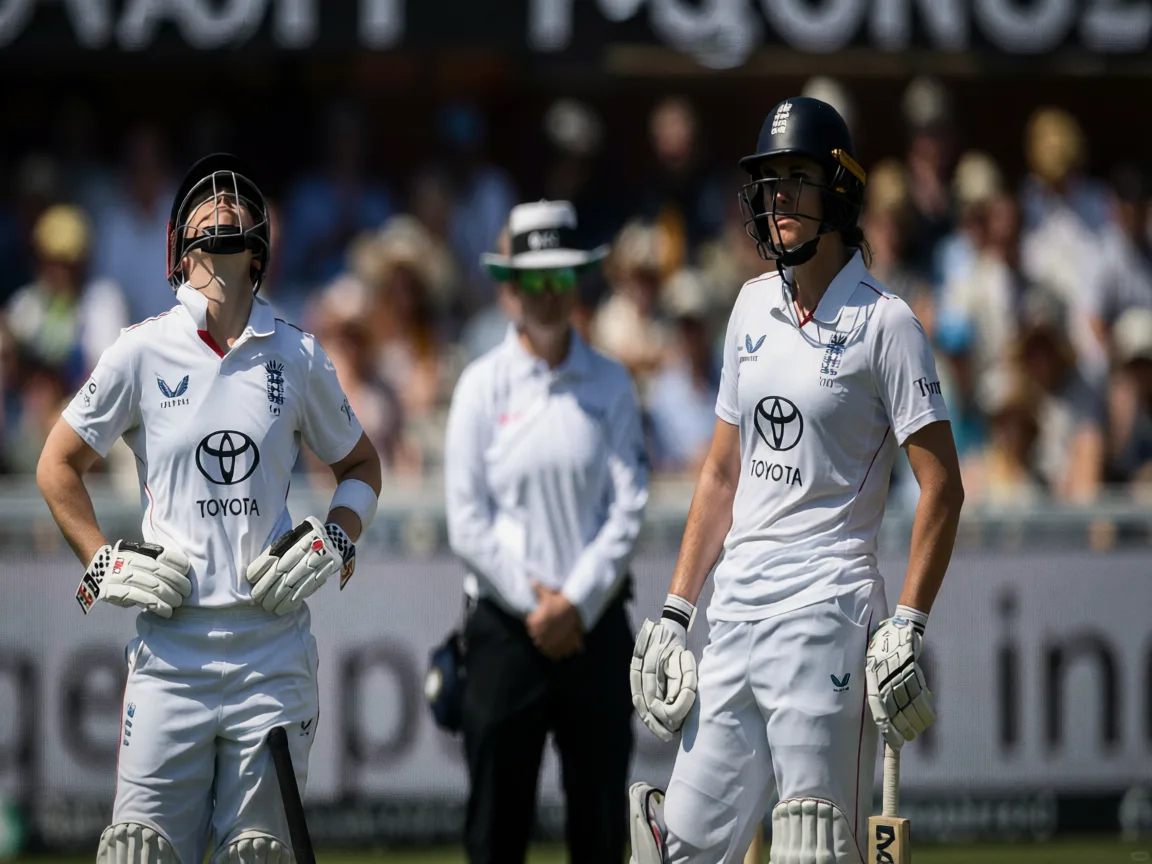
Lord's Collapse: England's Top Order Crumbles Under India's Sustained Pressure
England fell from 31-1 to 32-3 in four balls as India's disciplined seam attack exposed the hosts' technical frailties on day two at Lord's.

Dan Neil Embraces Heavy Expectation at Rangers
Dan Neil's move from Sunderland to Rangers demands he translate League One mettle into the seismic pressure of Ibrox.