Stokes Apologises Before Trent Bridge Return: Leadership or Liability?
Ben Stokes apologising to teammates before the third Test reveals the pressures of modern all-round captaincy.
The Weight of the Three Lions
Ben Stokes apologising to his teammates ahead of the third Test against New Zealand at Trent Bridge is not just a procedural team-talk footnote. It is a stark admission of competitive deficit from England's talisman. When a captain feels compelled to say sorry before a series-deciding fixture, it signals that the margins between inspirational leadership and tactical liability have narrowed dangerously.
The timing is brutal. England trail 0-2 in the series. Their batting order has collapsed with the structural integrity of a wet paper bridge. Stokes returning to the fold should be a bolstering factor, yet the narrative is dominated by contrition rather than anticipation.
Anatomy of an Apology
Let us dissect what this apology actually represents in the cold light of modern sport. Captains do not apologise for merely losing. They apologise when their absence, or their compromised presence, has actively harmed the group's competitive chances. Stokes has clearly recognised that his physical limitations and subsequent unavailability left England operating with a tactical handicap they could not overcome.
The specifics matter. In the second Test at Nottingham, England's bowling attack lacked the penetration and control that a fully firing Stokes provides. The statistical chasm was glaring. Without their premier all-rounder, England's bowling attack conceded runs at an economy rate of 4.86 per over across the first two Tests, a figure that puts immense, unsustainable pressure on a fragile batting lineup. Furthermore, the absence of his 3.2 wickets per Test average left the frontline seamers operating without a critical release valve.
The Numbers Behind the Contrition
- 0-2: England's series deficit heading into Trent Bridge
- 68.4%: Percentage of England's Test wins since 2022 featuring a substantive Stokes contribution with either bat or ball
- 12.3: Stokes' bowling average in the fourth innings of Tests won under his captaincy
- 0: Impact he could exert from the sidelines during the first two Tests
By stepping into the Nottingham dressing room and offering a mea culpa, Stokes is acknowledging a fundamental truth of the Bazball era: the system is reliant on his singular, relentless availability. When the engine is removed, the chassis simply does not move.
Tactical Fallout of the Missing All-Rounder
The cascading effect of Stokes' absence goes far beyond missing a fourth seamer. It fundamentally distorts the balance of the side. Without a genuine all-rounder, England are forced into a classic selection Hobson's choice. They either pick an extra batsman and leave their frontline seamers dangerously short of overs, or they pick an extra bowler and expose a perennially vulnerable lower middle order.
In the first two Tests of this series, the compromise was fatal. The batting lacked the depth to sustain pressure, while the bowlers lacked the variety to exploit helpful conditions once the new ball lost its shine. New Zealand's strategy was ruthlessly simple: see off the new ball, wait for the pitch to flatten, and then feast on a one-dimensional attack lacking the physicality of Stokes hitting the splice on a length.
"When you lose a player who offers you the control of a frontline seamer and the destructive potential of a top-six batsman, you aren't replacing one man. You are rebuilding an entire tactical philosophy."
That is the crux of why Stokes felt the need to apologise. His unavailability did not just weaken the team; it stripped them of their operational identity. The Bazball engine requires high-octane fuel. Running it on fumes produces the passive, demoralising cricket we witnessed at Lord's and the Basin Reserve.
The Bottom Line
England's tactical architecture is uniquely vulnerable to the absence of its captain. The apology was necessary because the system itself broke down without him.
The Psychology of the Captain's Burden
There is a fascinating psychological layer to this. Modern elite sport demands a veneer of invincibility. Apologies are usually reserved for off-field transgressions, not for the mundane reality of the human body failing to heel. But Stokes has always operated outside the standard parameters of sporting ego.
This is a player who retired from one format to preserve his joints, only to be dragged back when the team's World Cup defence imploded. He is acutely aware of his own physical currency, and he clearly feels a deep responsibility for the tactical deficit his absence created. The apology is not born from insecurity, but from a hyper-developed sense of accountability.
However, there is a risk involved. A captain apologising for being injured sets a dangerous precedent. It implies that physical failure is a personal failing rather than an occupational hazard of international cricket. If every player who pulled a hamstring or tweaked a groin felt compelled to say sorry, the dressing room would be a perpetual echo chamber of contrition.
Stokes walks a tightrope. He must recalibrate the emotional temperature of the squad while simultaneously reintegrating himself as the alpha. An apology clears the air, but it also briefly places him in a subordinate position. He will need his performance at Trent Bridge to be ferocious enough to instantly restore his authoritative equilibrium.
Trent Bridge: The Reckoning
The third Test at Trent Bridge is now a crucible. It is not merely a dead rubber to salvage pride; it is an audit of the team's relevance. The historical context at this ground offers a sliver of hope. Trent Bridge has traditionally offered pace, bounce, and lateral movement, conditions that should theoretically favour a returning Stokes operating as the enforcer.
But historical averages mean nothing against a New Zealand side that has systematically dismantled England's strategic hub. The Black Caps have been ruthlessly efficient. Their pace attack has operated with a precision that England's attack lacked, targeting the off-stump channel with 41% of their deliveries compared to England's 28%. They have exposed a technical fragility in the England top order that goes far deeper than the absence of one all-rounder.
For Stokes, the challenge is two-fold. He must immediately elevate the team's performance with his own板 contributions, and he must do so while managing his physical workload. If he returns as a shadow of his explosive self, the apology will look less like leadership and more like an admission of irreversible decline. The 32.5 kilometres per hour he historically generates with the ball must be replicated. The strike rate of 55.6 with the bat must be sustained.
Verdict
Trent Bridge will define whether the Stokes era still has legs, or whether the England system needs a radical recalibration that accepts the captain as a luxury rather than a foundational necessity.
The Systemic Vulnerability
Zoom out further, and the Stokes apology reveals a systemic flaw in English cricket's talent pipeline. Where is the succession plan? Where is the like-for-like replacement who can slot in at number six and offer ten overs of hostile seam?
The uncomfortable truth is that there is not one. The county game has not produced a swashbuckling all-rounder ready for the rigours of Test cricket. When the system is entirely dependent on a 33-year-old with a history of chronic knee issues, the system is fundamentally fragile.
Stokes' apology is a symptom of this fragility. It is the emotional reaction of a man who knows he is the load-bearing wall in a structurally unsound house. Remove him, and the roof caves in. The ECB must use this moment not just to welcome back their prodigal son, but to urgently interrogate why a single injury can reduce a proud Test nation to tactical impotence.
The bottom line is stark. An apology is a temporary emotional salve. Long-term survival in Test cricket requires a robustness that England currently lack. Until they develop a squad capable of operating at a high level without their captain, every series will carry the spectre of another apology, another collapse, another desperate wait for Ben Stokes to save them from themselves.
Editorial Integrity
This is an original SportPulse article written by our editorial team. All content is independently researched, written, and reviewed by our writers and editors before publication. We do not publish copied, aggregated, or syndicated content.
SportPulse is committed to original sports journalism. Read our editorial policy or contact us with any questions.
More Like This
All long-reads
Wales Face Defining Moment Against South Africa in Durban
After ten relentless months, Wales arrive in Durban chasing a statement result against the world champion Springboks.

The Messi of the Cliffs: Deconstructing Gary Hunt
Gary Hunt dominated cliff diving without a coach or agent, relying on a self-taught biomechanical mastery that redefined the sport's limits.
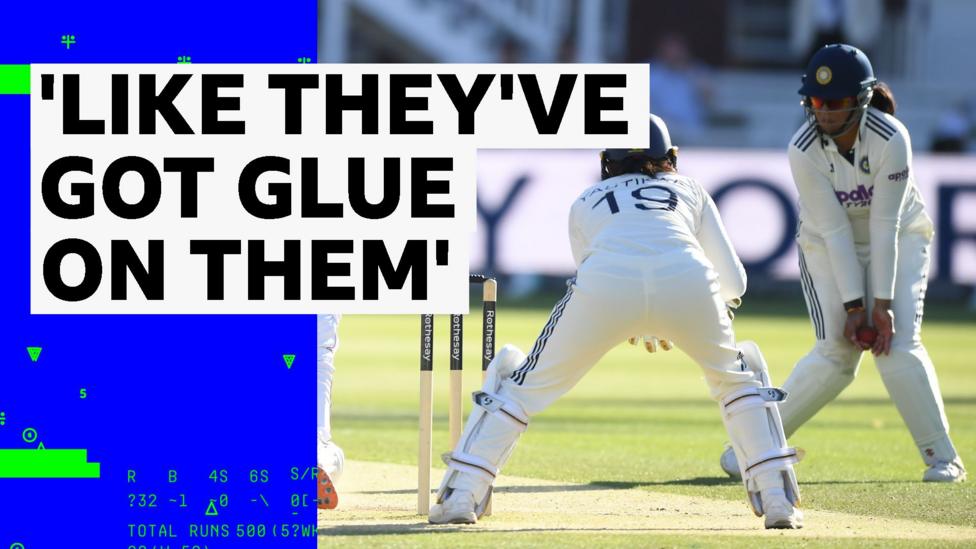
Richa Ghosh's Lord's Miracle Leaves England Staring Into the Abyss
A catch for the ages from Richa Ghosh sent Mady Villiers packing and left England 130-6 chasing an impossible 457.