Summerville Draws United and Spurs While Chelsea Eye Costa and Cambiaso
The Premier League's top four are circling Europe's sharpest young talent as the summer window shapes up to be a tactical arms race.
The Summer's Tactical Shopping List Takes Shape
The Premier League transfer window has not officially opened, yet the shortlists are already circulating with a clarity that reveals how each club intends to evolve tactically. Manchester United and Tottenham have both registered concrete interest in Crysencio Summerville, the 22-year-old Leeds United winger who tormented Championship defenders all season. Meanwhile, Chelsea are pursuing a dual-track operation that speaks volumes about Enzo Maresca's structural vision: monitoring Porto goalkeeper Diogo Costa while targeting Juventus fullback Andrea Cambiaso.
These are not scattergun moves. Each name on these lists addresses a specific positional need within a defined tactical framework, and the convergence of interest in certain players tells a broader story about where the Premier League's elite believe football is heading.
Why Summerville Is the Window's Hottest Commodity
There is a reason two Champions League-caliber clubs are circling the same winger who spent last season in England's second tier. Summerville's numbers at Leeds were not merely good for the Championship; they were elite by any standard. 19 goals and 9 assists in 40 league appearances represent a player who was directly involved in a goal nearly every other match. His shot-creating actions per 90, progressive carries, and successful take-on rate all placed him in the top percentile of Championship attackers.
But the raw output only tells part of the story. What makes Summerville particularly attractive to Erik ten Hag's Manchester United and Ange Postecoglou's Tottenham is his tactical versatility across the front line. He is not a touchline-hugging winger who depends on overlaps from a fullback. Summerville thrives when he can drift infield, receive between the lines, and combine in half-spaces. He operates comfortably on both flanks, though his preferred right-footed cut-inside from the left wing has become his signature move.
For United, the profile makes structural sense. Ten Hag has struggled to find consistent wide threat on the left side, cycling through Marcus Rashford, Alejandro Garnacho, and various improvised solutions without establishing a settled combination. Summerville's ability to carry the ball under pressure, draw fouls in dangerous areas, and finish from range would add a dimension United have lacked when Rashford's form dips. The Dutchman's system, built on a 4-2-3-1 foundation that demands width from the wingers and interchangeability with the attacking midfielder, suits a player who naturally gravitates toward the half-space.
Tottenham's Case Is Equally Compelling
Postecoglou's interest follows a different logic but arrives at the same conclusion. Tottenham's system under the Australian is predicated on aggressive width and overloads in wide areas, typically operating in a 4-3-3 that asks the wingers to stay high and stretch the defensive line. Son Heung-min has excelled in this role on the left, but the right side has been more inconsistent. Dejan Kulusevski has shown flashes but lacks the raw acceleration to consistently beat his man in isolation.
Summerville offers something different. His willingness to take on defenders one-v-one, combined with an improving final ball, would give Spurs a genuine wide threat who can also invert and create numerical advantages in central areas. The Leeds man's pressing intensity also aligns with Postecoglou's demand that the front line defend from the front. At Elland Road, Summerville averaged a respectable defensive action rate, and his willingness to track back and engage in counter-pressing sequences has grown markedly over the past 18 months.
The financial dimension cannot be ignored. With Leeds failing to secure promotion back to the Premier League, their negotiating position is weakened. Summerville's contract situation means a fee in the region of £25-35 million represents realistic business, though Leeds will push toward the upper end given the competition between buyers. For either United or Spurs, that price bracket represents value for a player whose ceiling has not yet been reached.
The Tactical Shift
What makes this pursuit fascinating is what it reveals about the evolving demands placed on wingers in modern Premier League systems. Five years ago, the market valued pure pace and directness above all else. Now, clubs are prioritizing ball-carrying in tight spaces, half-space occupation, and the ability to function in multiple zones. Summerville embodies this shift. He is not a one-dimensional wide player. He is a progressive ball-carrier who can operate as an inside forward, a traditional winger, or even a second striker in a fluid front three.
Both United and Spurs see him as a tactical multiplier rather than a specialist, and that distinction is what drives the price and the competition.
Chelsea's Structural Rebuild: Costa and Cambiaso
While the north of England squabbles over a Championship winger, Chelsea's recruitment team is operating with surgical precision on two fronts that address deeper structural concerns.
The interest in Diogo Costa, Porto's 24-year-old Portuguese international goalkeeper, is rooted in Maresca's need for a sweeper-keeper who can function as an eleventh outfield player. Chelsea's current goalkeeping options have struggled with distribution under pressure, a non-negotiable requirement in Maresca's possession-heavy 4-3-3 system that builds from the back through short, vertical passing sequences. Costa has been one of Europe's most progressive goalkeepers in the Primeira Liga, consistently ranking among the top five in the Portuguese top flight for passes attempted, pass completion rate, and defensive actions outside the penalty area.
At 24, Costa represents both a present solution and a long-term investment. Porto will not part with him cheaply; the Portuguese club are shrewd negotiators who understand the market premium on ball-playing goalkeepers. A fee approaching £50 million would likely be required, which would make Costa one of the most expensive goalkeepers in history. But Chelsea's ownership has shown no reluctance to spend when the profile fits the system.
The Cambiaso pursuit is equally revealing. The 24-year-old Juventus fullback has emerged as one of Serie A's most complete wide defenders, combining defensive solidity with genuine attacking output. In a league that values tactical discipline above all else, Cambiaso has distinguished himself through his intelligent positioning, overlapping runs, and ability to deliver quality crosses from advanced positions. He registered 3 goals and 4 assists in Serie A this season while maintaining a tackle success rate that placed him among the top defenders in the division.
For Maresca, Cambiaso solves the left-back question that has plagued Chelsea's balance. The Italian can operate on either flank, though his natural left-footedness makes him an ideal fit on the left side of a back four. His comfort in receiving the ball in tight spaces and progressing it through passing combinations rather than long switches suits Chelsea's preference for controlled build-up play.
The Bigger Picture: Positional Versatility as the New Currency
Step back from the individual targets and a coherent theme emerges. Every club mentioned in these discussions is pursuing players who offer positional flexibility and technical intelligence over raw physical attributes. Summerville can play across the front line. Cambiaso can operate on either flank. Costa's distribution effectively makes him a midfielder when Chelsea have possession.
This is the direction the Premier League's elite is moving. The rigid positional structures of a decade ago have given way to fluid systems that demand players comfortable in multiple zones, capable of reading the game and adapting in real time. The transfer market is simply reflecting this tactical evolution.
What Comes Next
The Summerville race appears set to define the early weeks of the window. Both United and Spurs will need to move decisively; Leeds, despite their Championship status, will not be bullied into a cut-price sale, and the player's camp is reportedly relaxed about the timeline. A bidding war suits all parties except the eventual buyer.
Chelsea's dual pursuit of Costa and Cambiaso will run on a longer timeline, likely stretching into July and possibly August as Porto and Juventus both engage in protracted negotiations. The Blues' willingness to be patient reflects a more mature recruitment approach under the current ownership, one that identifies primary targets and holds firm rather than pivoting to alternatives at the first sign of resistance.
The window opens on June 14 and closes on August 30. In between, these three names will generate no shortage of noise. But beneath the speculation lies a genuine tactical logic, one that reveals how the Premier League's best clubs are thinking about the next evolution of their systems. The smart money says at least two of these deals get done. The question is which two, and whether the losing parties have viable Plan B targets that fit the same profile.
Editorial Integrity
This is an original SportPulse article written by our editorial team. All content is independently researched, written, and reviewed by our writers and editors before publication. We do not publish copied, aggregated, or syndicated content.
SportPulse is committed to original sports journalism. Read our editorial policy or contact us with any questions.
More Like This
All football
Scotland's Brazil Crucible: Stars Must Rise or History Waits
Scotland face Brazil chasing a first-ever World Cup knockout berth, but tepid form demands radical improvement from their marquee names.
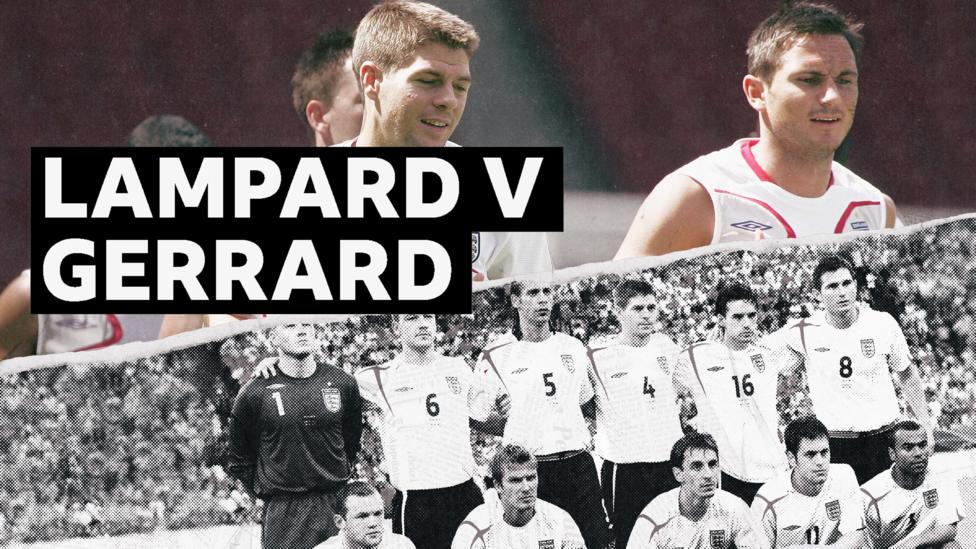
Eriksson’s Tactical Paralysis: The Gerrard-Lampard Tragedy
A star-studded midfield failed because tactical rigidity crushed individual genius.

Argentina's 1986 Kit Stunt Was Football's Most LoadedPoliticalJersey
Argentina wearing a 1986 replica kit against England was less nostalgia and more a calculated psychological operation at the Nations Championship.