The Pants Rule: How Football's Weirdest Rituals Actually Work
Footballers endure bizarre pre-match routines from lucky pants to fixed seating charts, believing each ritual edges them closer to victory.
The Strangest Rule in Football
A footballer steps out of the shower. Saturday afternoon is looming. The stadium is filling up. Millions will watch. And the very first thing he thinks about is his underwear.
Not just any underwear. The right underwear. The same pair he wore during his first professional debut. The ones that have become non-negotiable. The ones that, in his mind at least, hold the power to swing an entire season.
This is the reality behind what has become known in certain football circles as Denno's Pants Rule. It's exactly what it sounds like: a strict, unyielding belief that the choice of undergarment directly correlates with football destiny. If the pants are wrong, everything is wrong.
"If I forgot them, I would genuinely consider faking an injury. That is not a joke. You cannot play without the fabric."
Did players actually follow it? Did legends of the game truly believe something so absurd could alter the course of ninety minutes? The answer, almost universally, is yes.
A Game Built on the Irrational
Modern football presents itself as a monument to data science. Every release. Every angle. Every biometric. We quantify everything. Physical coaches track sleep cycles. Nutritionists monitor micronutrient density. Clubs employ armies of statisticians to model expected goals and pressing efficiency.
And yet, behind every shiny algorithm, a professional footballer is hiding a deeply superstitious, profoundly irrational routine.
The Pants Rule is just the surface of it. The culture of pre-match rituals is embedded deep within football. The sport demands the impossible from its athletes. Perform consistently at an elite level. Execute decisions in fractions of a second. Withstand the psychological pressure of 50,000 screaming fans and a global broadcast audience.
When the variables are uncontrollable, human beings invent their own. Superstition is the desperate attempt to manufacture certainty in an uncertain environment.
The Psychology Behind the Fabric
Sport psychologists have studied this phenomenon for decades. They call it illusion of control. The theory suggests that when humans face high-anxiety situations with random outcomes, they create arbitrary behavioral patterns to simulate a sense of mastery.
It is the same impulse that drives blackjack players to blow on dice. But in football, wearing the same unwashed pants for an entire winning streak is considered standard operating procedure.
Key psychological drivers include:
- Reduction of cognitive load: Following a strict routine eliminates decision fatigue before a match
- Triggering a flow state: Familiar physical sensations serve as a psychological cue to enter competitive mode
- Anchoring identity: Rituals remind players of their journey, reinforcing self-belief before kickoff
The pants are not magic. But the psychological scaffolding surrounding them is.
When Superstitions Define Careers
The Pants Rule sounds trivial. It borders on absurd. But to dismiss it completely is to misunderstand the nature of peak performance and athletic identity.
Laurent Blanc famously kissed the bald head of Fabien Barthez before every single match at Manchester United. A pre-match ritual born from a joke became a non-negotiable superstition. They did it before a Champions League final.
Bobby Moore always insisted on being the last player to pull on his matchday shorts. A small, unspoken decree that nobody in the England camp dared violate. The captain waited. The team waited. History waited.
"You think it is stupid. But try telling a striker who has not scored in six games that his pre-match routine does not matter. He will fight you."
These behaviors are not quirks. They are psychological anchors. Footballers operate in worlds of immense physical duress and emotional volatility. The mere existence of a constant ritual provides an anchor in a storm.
The Pants Rule is simply one of the most intimate, guarded expressions of that anchor.
The Rituals the Cameras Never Catch
Matchday routines become religions in themselves. The specifics vary, but the intensity does not.
- The right boot first: A universally observed rule. Left-footed players sometimes invert the logic, but the sequence is fixed blood ritual
- Turf touching: Tapping the grass upon emerging from the tunnel before stepping onto the pitch
- Fixed Seating: Team bus seating charts are sacrosanct. Upsetting the order can provoke genuine anxiety
- The Tunnel Walk: Warming up and walking in the exact same footsteps, from the same starting paving stone, at the same pace
The cameras capture the monumental. The crowd witnesses the goals. But the real battle is often decided in the darkened corridors of the stadium, where alone with their thoughts and their rituals, players navigate the edge of chaos.
The Cost of Breaking the Chain
What happens when a footballer breaks their ritual? The consequences can be disproportionately severe.
Players have discussed forgetting a preferred pair of boots and struggling to focus. Forgetting the pants is an entirely different level of breach.
An athlete without their anchor is suddenly adrift in open water. All the carefully structured psychology collapses. The sensation of unfamiliarity seeps in. The brain starts asking questions it never normally asks.
Is today going to be different? Did I break the luck?
It is a cascading failure of mental preparation and reassurance. A defender might be fractionally slower to react. A midfielder might hesitate on a pass. A goalkeeper might misjudge a corner.
In a sport defined by margins of less than a second, that hesitation is everything. The missed boot becomes the missed tackle. The missed tackle becomes the conceded goal. The conceded goal ruins the season.
Footballers know this. They know the logic is absurd. They simply do not care.
The Beautiful Game's Ugly Secrets
The data revolution has changed football. Tactical analysis has advanced to surgical precision. Clubs routinely employ specialists who analyze heat maps, sprint distances, and biological fatigue markers. The sport has never been more technologically sophisticated.
Yet the deeper truth remains unspoken. Beneath the cold, calculated exterior beats the heart of something entirely irrational and superstitious.
To outsiders, the concept of a Pants Rule sounds like the punchline of a joke. To insiders, it is the unspoken reality of professional sport. A hidden layer of human vulnerability masked by layers of athletic muscle, athletic tape, and elite resolve.
The next time you watch a player celebrate a last-minute winner, remember the unseen preparation. The untold hours of physical memorization that led to that moment.
And somewhere in the dignity of a stadium tunnel or the quiet of a locker room, the lucky pants will be folded away. Ready for next week. Ready for the next battle for certainty in an uncertain world.
Because in football, sometimes the most important decision a player makes isn't about form or tactics. It's about which fabric touches their skin when they step onto the grass.
The magic isn't real. But the belief absolutely is.
Editorial Integrity
This is an original SportPulse article written by our editorial team. All content is independently researched, written, and reviewed by our writers and editors before publication. We do not publish copied, aggregated, or syndicated content.
SportPulse is committed to original sports journalism. Read our editorial policy or contact us with any questions.
More Like This
All football
Gangs of New Jersey: How the World Cup Final Exploded Into Violence
Spain were crowned champions, but the real story was the extraordinary brawl that consumed both teams as the final whistle loomed.
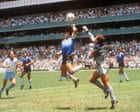
Ghosts of the Azteca: England's Haunted History Awaits at the 2026 World Cup
England could face Mexico at the Azteca in the 2026 World Cup last 16 — the stadium where Maradona's hand changed everything.
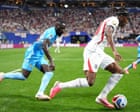
Tuchel Channels Ramsey: England's 35 Crosses Tell a Tactical Story
England's 35 open-play crosses against DRC signal a deliberate tactical shift echoing Alf Ramsey's 1966 blueprint under Thomas Tuchel.