Tartan Army Descends on Miami as Scotland Face Brazil's Ultimate Test
Scotland's travelling army brings colour and conviction to Miami, but the tactical challenge of Brazil looms largest.
The Heat, The Hype, and a Date with Seleção
The humidity in Miami does not care about your footballing heritage. It wraps around you, heavy and indifferent, a constant reminder that you are far from Hampden's grey drizzle and the chill of a November qualifier. Yet the Tartan Army has arrived in force, turning the city's streets into a riverside of tartan and blue, and if the atmosphere in South Florida feels more like a carnival than a football occasion, Scotland's supporters are more than happy to play the role of hosts.
They are here for Wednesday's World Cup group-stage opener against Brazil — a fixture that carries almost mythological weight in Scottish football consciousness. The last time these two nations met at a World Cup was 1998, the opening match in Saint-Étienne, when John Collins' penalty briefly levelled proceedings before Tom Boyd's own goal gifted Brazil a 2-1 win. Scotland have never beaten Brazil in eight attempts. That number hangs in the Miami air like the humidity itself.
But this is not 1998, and the Scotland that takes the field at Hard Rock Stadium is not a side defined by romantic underdog stories. Under Steve Clarke's stewardship, Scotland have built an identity rooted in structure, discipline, and a tactical clarity that has carried them through a gruelling European qualifying campaign to reach the expanded 48-team World Cup. The question is whether that identity can survive first contact with the five-time champions.
Clarke's System: Pragmatism as Philosophy
To understand Scotland's approach in Miami, you first have to understand the framework Clarke has constructed over his tenure. The default shape is a 3-4-2-1 or 3-5-2, a system designed not to dominate possession but to compress space centrally, deny transitions, and force opponents into wide areas where the wing-backs and the back three can manage threats methodically.
The back three — typically featuring Grant Hanley, Kieran Tierney, and Jack Hendry — provides a numerical cushion against elite forward lines. The double pivot in central midfield, often anchored by Scott McTominay and Billy Gilmour, offers both ball-winning intensity and the ability to progress play through short, controlled sequences. Scotland under Clarke do not chase the ball high up the pitch. They set a mid-block, squeeze the space between the lines, and wait.
This is not passive football. It is positional patience, a refusal to commit bodies forward until the structural conditions are right. When Scotland win the ball in midfield, the wing-backs — most likely Andy Robertson on the left and Nathan Patterson on the right — push high immediately, stretching the opposition horizontally and creating crossing angles into the box. It is a system that thrives on transition moments, and it was precisely this approach that earned Scotland results against Spain, Norway, and Denmark in qualifying.
Against Brazil, however, the margin for error shrinks to almost nothing.
Brazil's Evolving Identity
Brazil arrive in Miami in a state of quiet reinvention. The post-Neymar era has forced a tactical recalibration, and the current setup leans toward a fluid 4-2-3-1 that prioritises collective movement over individual brilliance. The attacking line is interchanged freely, with players like Vinícius Júnior and Rodrygo drifting between the flanks and central pockets, making them extraordinarily difficult to track within a rigid defensive block.
The midfield base, anchored by Bruno Guimarães and either Joelinton or André, provides a blend of combative pressing and progressive passing that allows Brazil to dictate tempo in a way that previous generations achieved through sheer technical superiority. Full-backs push aggressively high, creating overloads on the flanks and compressing Scotland's wing-backs into deep defensive positions.
This is the central tactical tension of Wednesday's match: Brazil want width and verticality; Scotland want narrowness and horizontal compression. Something has to give.
Tactical Shift: Where Scotland Must Be Perfect
The match will likely be decided in the moments of transition — specifically, how Scotland handle the second-ball phases after clearing their defensive third. Clarke's system depends on winning the first contact from long balls and set pieces, but Brazil's pressing structure is designed to win second balls high up the pitch and immediately re-enter attacking shape.
If Scotland can secure those second balls and release Robertson or Patterson into wide channels before Brazil's defensive shape resets, they create the very transition moments that their system is built to exploit. If Brazil win them, Scotland will be defending wave after wave of pressure in and around their penalty area, and no back three — no matter how well drilled — can withstand that indefinitely.
Set pieces represent Scotland's other viable route to goal. Scotland have historically been dangerous from dead-ball situations, and against a Brazilian defence that can occasionally be vulnerable to aerial bombardment, corners and free kicks into the box will carry genuine threat. The delivery from Robertson and John McGinn's movement in the penalty area give Scotland a realistic avenue to trouble the Seleção without needing extended spells of open-play dominance.
The Tartan Army Factor
Football at the highest level is not decided by supporters, but anyone dismissing the psychological dimension of a partisan travelling crowd in a World Cup opener is ignoring decades of evidence. Scotland's fans have been among the most celebrated in international football — their colour, their volume, their refusal to treat qualification as anything less than a sacred achievement. Miami will be no different.
The Hard Rock Stadium will hold approximately 65,000 spectators, and Scotland's travelling contingent is expected to number in the tens of thousands. Against the backdrop of Brazil's global fanbase, it will not be a Scottish home crowd, but it will be loud, it will be passionate, and for the opening fifteen minutes — the period when tactical structures are still settling and nerves are at their most fragile — it could provide the emotional fuel Scotland need to weather the initial Brazilian storm.
"We know what we are. We know what we're good at. We don't try to be something we're not. The lads believe in the system, and the fans believe in the lads. That's enough." — Steve Clarke, speaking ahead of the match.
What History Tells Us — And What It Doesn't
Scotland's record against Brazil is sobering: zero wins, two draws, six defeats across all meetings. The aggregate scoreline reads 19-5 in Brazil's favour. On paper, this is a mismatch.
But World Cup group stages have a habit of defying precedent. In 2018, Germany — the defending champions — lost to Mexico on the opening day. In 2022, Saudi Arabia stunned Argentina. The expanded format of the 2026 tournament, with its 48 teams and adjusted group structure, adds further uncertainty. Brazil are favourites, emphatically so, but favourites have been falling at this stage with increasing regularity.
Scotland's best chance lies in making this ugly. Make it stop-start. Make it a battle of set pieces and transitions rather than a showcase of technical fluidity. The longer the match stays level, the more the pressure shifts onto Brazil, who will expect to win this group comfortably and cannot afford dropped points against the lowest-ranked side in the section.
Looking Ahead: The Group Shape After Matchday One
A result in Miami — any result — would fundamentally reshape Scotland's tournament trajectory. A point against Brazil would allow Clarke's side to approach the remaining group fixtures with tactical flexibility, potentially sitting deeper against a second opponent and playing on the counter, or even pushing for a win that could secure qualification.
A defeat, even a narrow one, would not be catastrophic but would ramp the pressure on Scotland to take maximum points from their remaining two matches. In a World Cup where third-place finishers can still qualify from expanded groups, goal difference and even the manner of a loss matter.
The Tartan Army knows the stakes. They have travelled across an ocean, through heat and time zones, to watch their team do what Scotland teams have historically failed to do: produce a moment that transcends the tactical, that defies the spreadsheet, that turns a group-stage match into something people will talk about for decades.
Miami is ready. The question is whether Scotland's 3-5-2 can be.
Editorial Integrity
This is an original SportPulse article written by our editorial team. All content is independently researched, written, and reviewed by our writers and editors before publication. We do not publish copied, aggregated, or syndicated content.
SportPulse is committed to original sports journalism. Read our editorial policy or contact us with any questions.
More Like This
All football
England Double Down on Proven Formula for Argentina Summer Finale
Steve Borthwick resists rotation temptation, naming an unchanged XV as England bank on system stability against Argentina.

English Football Trials Ban on Goalkeeper Tactical Timeouts
A new trial targets the deliberate restart delays goalkeepers use to kill momentum and break up opposition pressure.
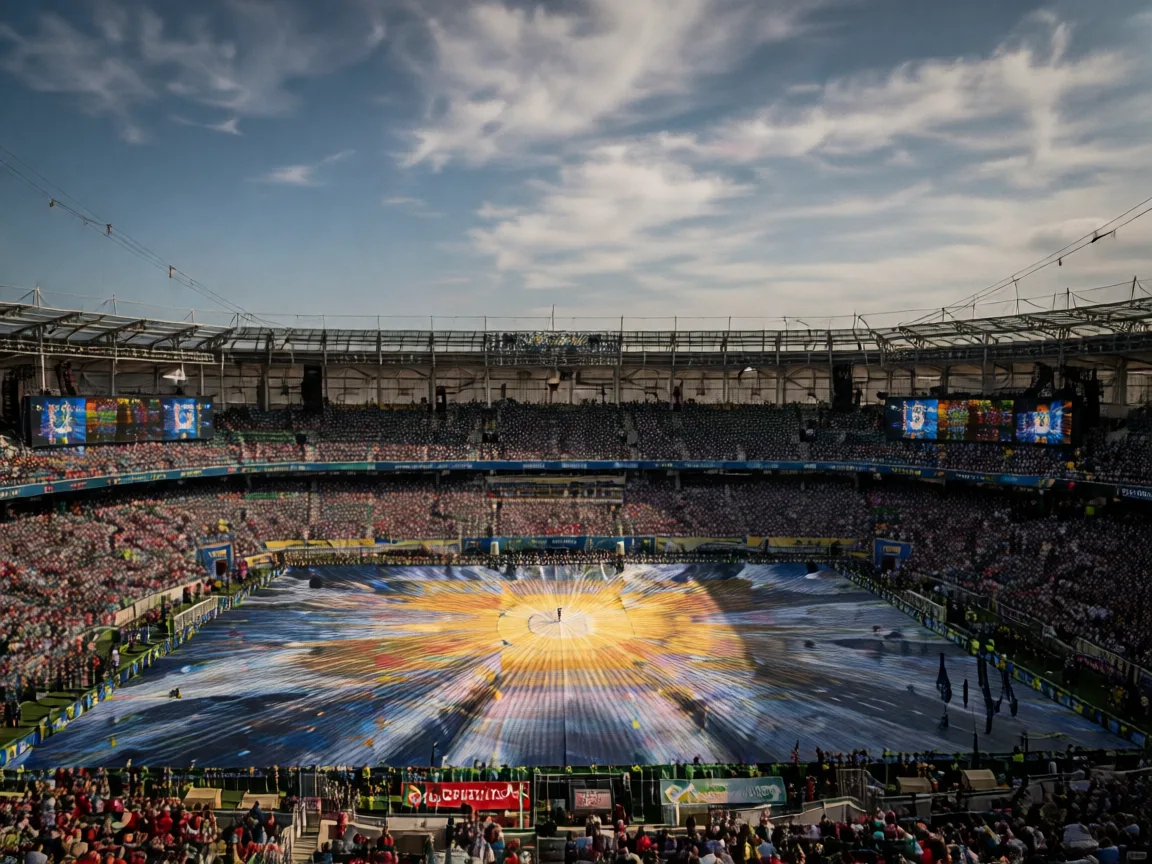
Trump, Shakira, and Logistical Chaos Threaten World Cup Final
Security delays and a blockbuster halftime show risk turning the World Cup final into a geopolitical circus rather than a football celebration.