Tiger Moms on the Sideline: How a Stereotype Shapes Asian Athletes' Careers
The 'tiger mom' trope dominates popular culture — but what does it actually mean for Asian athletes competing under its shadow?
The Stereotype That Won't Quit
The tiger mom is everywhere. Strict, cold, relentless, hovering over practice sessions with a clipboard and a furrowed brow. She appears in Hollywood films, bestselling memoirs, late-night comedy sketches, and now, as explored in a recent Guardian podcast by Rebecca Liu, she has become one of the most recognizable tropes in global popular culture — a shorthand for a particular kind of Asian parenting that is at once admired, mocked, and feared.
But step outside the cultural commentary and into the sports arena, and the stereotype stops being a punchline. It becomes a lived reality — or, more precisely, a lens through which Asian athletes are perpetually interpreted, judged, and narrativized. When Naomi Osaka speaks about anxiety, when figure skaters land quads at age 15, when a young gymnast sticks a landing under Olympic pressure, the tiger mom is always lurking somewhere in the commentary booth, invoked as explanation, context, or accusation.
The question worth asking is not whether the stereotype exists. It obviously does. The more urgent question: what does it do to the athletes trapped inside it?
Where Culture Meets Competition
Rebecca Liu's exploration of the tiger mom myth traces how a specific, narrow archetype — rooted in Amy Chua's controversial 2011 memoir Battle Hymn of the Tiger Mother — calcified into a universal truth about Asian parenting. Chua described an approach built on rigid discipline, zero tolerance for mediocrity, and the belief that children owe their parents achievement. The book was partly satirical, entirely personal, and massively reductive. Yet it became gospel.
In sports, this narrative found fertile ground. Asian and Asian-American athletes who excel — particularly in individual disciplines like figure skating, gymnastics, badminton, table tennis, and tennis — are rarely discussed without reference to parental pressure. The framing is almost always the same: their success is explained not by talent or work ethic alone, but by a cultural machinery that demands excellence at the cost of childhood.
Consider the language used in mainstream sports media when covering young Asian athletes. Phrases like "pushed by her parents," "family sacrifice," and "cultural expectations" appear at rates that dwarf their usage for white counterparts achieving the same feats. When a 16-year-old American skater lands a triple axel, the story is about the athlete. When a 16-year-old Japanese skater does the same, the story often begins with the parents.
"The tiger mom stereotype doesn't just describe parenting — it erases the athlete. It turns a person into a product of culture rather than a person with agency."
The Mental Health Fault Line
The real damage of the tiger mom narrative is not in how it portrays parents. It is in how it frames the emotional interior of Asian athletes themselves.
The stereotype demands that Asian athletes be stoic, mechanical, and unflappable — products of relentless conditioning rather than human beings navigating extraordinary pressure. When they break down, as Osaka did publicly in 2021, the response is often confused or dismissive. How can someone raised to perform under pressure suddenly crack? The tiger mom narrative has no room for vulnerability.
Osaka's withdrawal from the French Open that year was not merely a story about one athlete's mental health. It was a collision between the stereotype and reality. Here was a player who had been publicly celebrated for her composure, her discipline, her ability to handle the spotlight — qualities implicitly attributed to her Japanese-Haitian upbringing. When she said she was struggling, the reaction split along revealing lines: some saw a courageous moment of self-advocacy, while others saw a failure of the very toughness that was supposed to define her.
The pattern repeats across Asian athletes in high-pressure sports. Figure skaters from Japan, South Korea, and China have spoken — often carefully, often after retirement — about the weight of expectation, the isolation of elite training environments, and the difficulty of separating personal identity from national or familial ambition. The tiger mom stereotype makes it harder for them to articulate these struggles, because the script says they were built for this.
The Media Feedback Loop
Sports media does not merely reflect the tiger mom stereotype. It actively reinforces it through a feedback loop that is difficult to break.
When a young Asian athlete rises through the ranks, the narrative machinery clicks into gear. Profiles emphasize training regimens, parental involvement, and cultural background — often at the expense of the athlete's personality, humor, or individuality. The athlete becomes a representative of a culture rather than an individual pursuing a sport.
This has tangible consequences. It influences how coaches approach Asian athletes, sometimes assuming a pre-existing toughness that can lead to under-support. It affects how sponsors and agents market athletes, often leaning into exoticized narratives of discipline and sacrifice. And it shapes public perception, feeding a cycle where Asian athletes are valued for what they symbolize rather than who they are.
The comparison with Western athletes is instructive. When Serena Williams' father Richard pushed his daughters into tennis, the narrative was complex — controversial, certainly, but treated as a story about one family's choices. When Asian parents are described in similar terms, the framing shifts from individual to collective. It becomes about a culture, a race, a way of being.
Breaking the Frame
There are signs of change, though they remain fragile.
A new generation of Asian and Asian-American athletes is actively rejecting the tiger mom framing. They are speaking openly about therapy, about boundaries, about the right to be imperfect. They are using social media to control their own narratives, posting behind-the-scenes content that reveals humor, doubt, and joy — all the things the stereotype denies them.
Coaches and sports psychologists working with elite Asian athletes have also begun to push back against the cultural assumptions embedded in training environments. The recognition that discipline and mental health are not opposing forces — that you can be rigorously trained and emotionally supported — is gaining ground, though unevenly.
The broader cultural conversation, as Liu's podcast suggests, is slowly catching up. The tiger mom stereotype is being examined not just for what it says about Asian mothers, but for what it reveals about Western anxieties — the simultaneous admiration and resentment directed at a perceived cultural superiority in achievement. The stereotype says as much about the observer as the observed.
The Bottom Line
The tiger mom is a powerful myth precisely because it offers a simple explanation for complex outcomes. Asian athletes succeed because they were pushed harder. They break because the pushing went too far. They win because culture demanded it. They suffer because culture had no room for anything else.
None of this is adequate. Asian athletes are not a monolith. Their parents are not a monolith. Their motivations, pressures, joys, and sorrows are as varied as those of any athlete from any background. The tiger mom stereotype flattens all of this into a single, marketable narrative — one that sells books, generates clicks, and fills commentary slots.
Rebecca Liu's exploration of this trope in popular culture is a necessary intervention. In the sports world, that intervention is overdue. The next time a young Asian athlete steps onto the ice, the court, or the mat, the story should begin with them — not with a caricature of the person standing behind them.
The stereotype will not disappear overnight. But athletes, writers, and audiences who demand better can at least make it work harder to survive.
Editorial Integrity
This is an original SportPulse article written by our editorial team. All content is independently researched, written, and reviewed by our writers and editors before publication. We do not publish copied, aggregated, or syndicated content.
SportPulse is committed to original sports journalism. Read our editorial policy or contact us with any questions.
More Like This
All long-reads
Pogacar Conquers Stage 14, Tightens Grip on Yellow Jersey
Tadej Pogacar delivered a brutal mountain assault on Stage 14, extending his Tour de France lead with a dominant victory.

Tunnel Vision: The Rituals Shaping World Cup 2026's Elite
From Messi's timed maté to Kane's left-first kit routine, preparation rituals reveal the tactical psychology behind elite tournament performance.
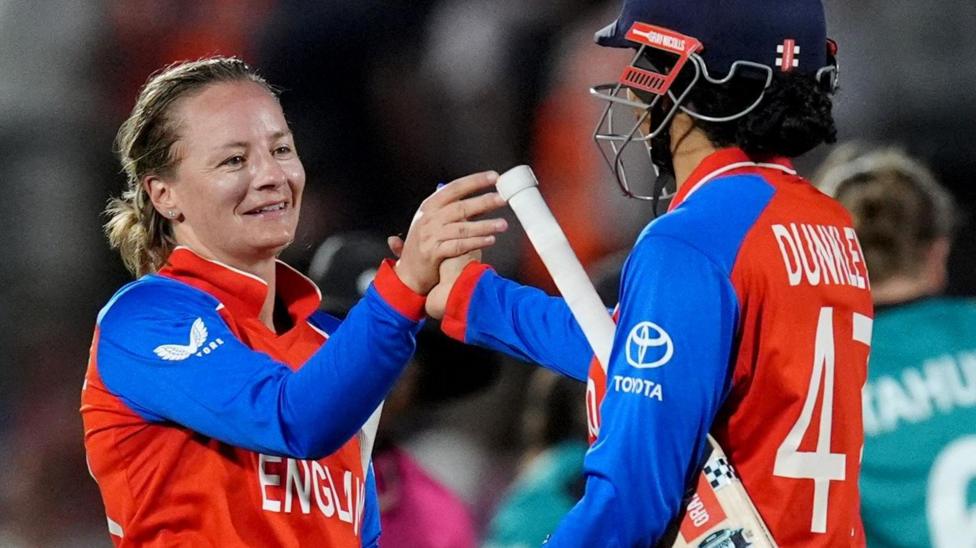
Wyatt-Hodge's Blazing 89 Sends England Storming Into T20 World Cup Semis
Danni Wyatt-Hodge's unbeaten 89 dismantled New Zealand as England women's ruthless T20 World Cup charge continues unchecked.