Cycling Royalty: Naming Every Tour de France Winner Since WW2
The 113th Tour de France departs Barcelona on July 4. Before the peloton rolls out, test your grit against the daunting pantheon of post-war Tour winners.
The 113th edition of the Tour de France launches on Saturday, 4 July from Barcelona, bringing three weeks of suffering, strategy, and aerobic capacity most humans cannot fathom. Before the engines start revving, consider an intellectual endurance test: how many overall champions since World War II can you name?
This is not your standard pub quiz fodder. Recalling Tour winners is an exercise in cycling erudition. The post-war maillot jaune registry is a labyrinth of towering legends, forgotten mercenaries, and controversial figures whose reputations fractured under the weight of doping scandals. It demands a memory that separates myth from statistical anomaly.
The Architectural Dominance of the Post-War Era
Modern Tour audiences suffer from recency bias. They recall Tadej Pogacar carving through the Alps, Jonas Vingegaard's downward dog recovery routines on icy mattresses, and Primoz Roglic's relentlessly calculated time trialing. A true cycling historian, however, must reach much further back into the peloton's institutional memory.
Consider the structural dominance of the post-war decades. The 1950s belonged almost entirely to a psychological marvel. Bernard Hinault did not race in the fifties, but his presence looms large in media training montages today.
- Fausto Coppi claimed back-to-back Tours post-WWII, cementing his status as a tactical pioneer of mountain descents.
- The 1950s produced iconic champions like Louison Bobet, the first rider to win the Tour in three consecutive years (1953, 1954, 1955).
- Jacques Anquetil later became the first rider to win five total Tours, redefining the physiological approach to stage racing.
The sheer difficulty of naming them all lies in transcription discipline. Some surnames are phonetically complex. Unless you are entrenched in the lore of early aerodynamic田timetrialing and mid-center gear shifts, these ghosts fade.
The Five-Time Club: A Statistical Fortress
Only a microscopic fraction of professional cyclists will ever wear the yellow jersey in Paris. An even smaller fraction will monopolize it. Naming the first three riders in the five-win club is a memory test.
- Jacques Anquetil (5 wins)
- Eddy Merckx (5 wins)
- Bernard Hinault (5 wins)
- Miguel Indurain (5 wins)
The modern era eventually added another name to this fortress, rewriting the physiological limits of grand tour recovery. Merckx secured his fifth title in 1974, boasting an overall margin of 8 minutes and 4 seconds.
Merckxian Escapism: A Separate Stratified Category
Eddy Merckx, universally known as "The Cannibal," deserves his own isolated tier in any quiz attempt. His 1969 campaign is a lonely mountain peak of statistical dominance. He won 17 stages across Tours that year, an unbreakable record in modern cycling.
The Bottom Line: If you can name Merckx'spantheon peers automatically, you are part of a vanishing demographic.
Once the clock reaches the 1980s, the quiz becomes situational. Greg LeMond is a mandatory mention as the first non-European to claim the yellow jersey, a hat trick across publications for his dramatic sprint against Laurent Fignon in 1989. His margin of victory remains etched in stone: 8 seconds.
The Phantom Champions: Navigating the Doping Era
No radio-era quiz succeeds without confronting the peloton's dark decade. The years between 1995 and 2005 expanded the winners' circle dramatically, but historical record subsequently shrank it violently.
Lance Armstrong is the most judiciously administered vetting trap of the modern media era. Armstrong was stripped of his 7 consecutive Tour de France victories in 2012 following a USADA investigation into systematic doping. Players typing his name as a "past winner" are technically incorrect, but culturally validated as a kind of corrupted anti-establishment pantheon.
The list of retroactively erased champions is a mandate for historical rigor:
- 1996 winner Bjarne Riis confessed to EPO use, though his title was not officially stripped.
- 1998 winner Marco Pantani died tragically in 2004, later linked to doping allegations that recast his 1998 dominance with an asterisk.
- 1999-2005: Armstrong's erased dynasty reshuffled the official record books. Winners like Óscar Pereiro (2006) and Pereiro's successor Alberto Contador emerged with asterisks of varying severity.
This era is a historical landmine. Writers discussing past winners must specify whether they are referring to results "on the road" or "on the books". Rinsevich, stripped in 2012 of his 2010 title, provides an excellent example of a champion whose name rarely surfaces in retrospective quizzes without immediate erasure.
The Columbus Gap: How Eras Warp Memory
A sophisticated reader will remember modern heroes cleanly. Tadej Pogacar won in 2020 and 2021, blending merciless climbing with world-class descending technique. Jonas Vingegaard responded with clinical masterclass victories in 2022 and 2023, part of a recentist narrative.
But naming the riders between 2012 (Bradley Wiggins) and the Pogacar Era is where casual quizzes crumble. The seamless transitions and tactical race-fixing between Team Sky and Ineos often deny us the aesthetic brilliance of G.I. Joe-era Superteams.
The riders to fall through the Swiss cheese of modern memory:
- Chris Froome: 4 victories (2013, 2015, 2016, 2017), largely defined by leading the peloton more than attacking it.
- Geraint Thomas: 2018 winner, capturing a career-peak result mirroring Wiggins' slow-burn bio-woman transformation.
- Egan Bernal: 2019 winner, subsequently dogged by career-threatening crashes.
The Bottom Line: Modern suffering is memorable, but tactical specelsen narratives pre-2000 are often the litmus test of a fan's commitment to cycling's layered heritage.
What Awaits in Barcelona: The 113th Edition
Cycling tradition sets the stakes high for 4 July. Barcelona, an urban canvas of architectural modernism, provides a Mediterranean launch pad for the modern era's most compelling luxury boats. The systematic battle between Pogacar's UAE Team Emirates and Vingegaard's Visma-Lease a Bike will dominate the headlines, but the 360-degree canvas of Tour history reminds us that immortality is violently fleeting.
Today's dominant narrative becomes tomorrow's quiz question. In ten years, fans might struggle to recall whether Remco Evenepoel won his first Tour in 2024 or 2025. The race is a 113-year-old gauntlet of human endurance, and the only certainty is that another name will soon join a list most fans cannot fully recite.
Verdict: The peloton rolls out on Saturday, but the true test of cycling literacy already began.
Editorial Integrity
This is an original SportPulse article written by our editorial team. All content is independently researched, written, and reviewed by our writers and editors before publication. We do not publish copied, aggregated, or syndicated content.
SportPulse is committed to original sports journalism. Read our editorial policy or contact us with any questions.
More Like This
All long-reads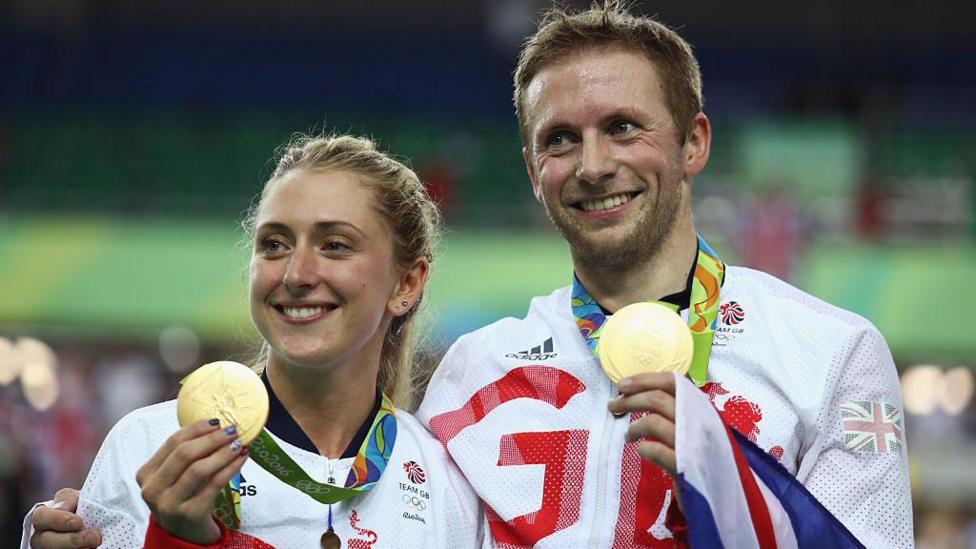
Northern Powerhouse: Olympians Throw Weight Behind Historic English Games Bid
British Olympic and Paralympic icons endorse a bold north of England bid to host the Games, driven by unmatched regional sporting passion.
PGA Tour Adopts Football's Oldest Weapon: Promotion and Relegation Arrive in 2028
The PGA Tour is borrowing European football's most ruthless mechanism to reshape professional golf from 2028 onward.

The World Sevens Proves Football Forgot How to Have Fun
Seven-a-side football strips the modern game to its joyful core — and the tactical implications are fascinating.