The World Sevens Proves Football Forgot How to Have Fun
Seven-a-side football strips the modern game to its joyful core — and the tactical implications are fascinating.
The Beautiful Game Has a Joy Problem
Somewhere between the VAR tribunal rooms, the touchline meltdowns, and the millionth social media thread debating whether a linesman's flag was a centimetre too early, football lost something fundamental. Bill Shankly's famous quip about the sport being more important than life and death has been weaponised into a permission slip for misery. Clubs file formal complaints over refereeing errors with the intensity of diplomatic incidents. Pundits face torrents of abuse for the crime of having once played for a rival. The ecosystem has become so saturated with grievance that simply enjoying a match feels like a radical act.
The World Sevens tournament arrives not a moment too soon. A seven-a-side format, stripped of much of the institutional bloat that suffocates elite football, it offers a reminder of what drew most of us to the sport in the first place: the ball at your feet, a small pitch, and the pure geometry of passing and movement. Tom Garry's recent reflection on the tournament captures the sentiment perfectly, but what makes seven-a-side football genuinely compelling runs deeper than nostalgia. It is a tactical laboratory, a format that demands a completely different reading of the game.
The Tactical Anatomy of Seven-a-Side
Strip away four outfield players from each team and you do not simply create a smaller version of football. You create a different sport. The tactical consequences are profound and cascading.
In an 11v11 match on a full-size pitch, the average outfield player touches the ball roughly 40 to 60 times across 90 minutes. On a seven-a-side pitch, with fewer teammates to share possession and less ground to cover, individual touch counts can easily double or triple. Every player becomes a central figure in the buildup. There is no hiding on the wing, no defensive midfielder who spends entire matches recycling safe passes to centre-backs. The format enforces engagement.
The spatial dynamics change everything. In full-size football, coaches obsess over half-spaces, rest defence, and second-ball recovery zones. These concepts do not disappear in small-sided football, but they compress into a tactical pressure cooker. The pitch is roughly 60 to 65 metres long and 40 metres wide in most seven-a-side formats, compared to the 105x68m of a standard full-size surface. That compression means the distance between defensive shape and attacking threat collapses to almost nothing.
Why Pressing Becomes Everything
The pressing implications alone are worth dissecting. In a conventional 4-3-3 or 4-2-3-1 on a full pitch, a high press requires coordinated movement across a wide front line, with specific trigger moments and cover-shadow mechanics. In seven-a-side, the press is ambient. With fewer passing lanes and shorter distances, any turnover is immediately dangerous. Recovery runs are measured in metres, not the 30-to-40-metre sprints that full-backs must execute in 11-a-side systems.
This creates a fascinating paradox. The format rewards technical quality and quick decision-making above almost everything else, yet it also punishes the kind of risk-averse, possession-hoarding football that dominates elite coaching. When the pitch is small and every player is perpetually involved, the penalty for hesitation is immediate. A poor first touch in a seven-a-side match is not recovered by a sideways pass to a teammate who buys time. It is pounced upon.
The coaching philosophy shifts accordingly. Where a Pep Guardiola disciple might emphasise positional play and patient circulation to manipulate defensive blocks in 11-a-side, the seven-a-side game demands something closer to street football instincts disguised in tactical structure. Quick combinations, blindside runs, and the courage to attempt a dribble in congested space become the highest currency.
A Cultural Corrective, Not a Gimmick
The timing of the World Sevens' appeal is not coincidental. Elite football in 2025 and beyond is richer than ever financially yet arguably more joyless in its cultural atmosphere. The Super League spectre, the relentless fixture calendar, the transformation of supporters into consumers, and the creeping corporatisation of matchday experiences have all contributed to a sense that the game belongs less and less to the people who love it.
Seven-a-side tournaments cut through this. They are participatory by nature. The barrier to entry is low. The tactical complexity, paradoxically, is high. And because the format lacks the institutional weight of a Champions League knockout tie or a Premier League relegation six-pointer, players and spectators alike are liberated from the tyranny of consequence.
"Football should be about the ball and the joy of playing. When you reduce the numbers, you amplify the individual. Everyone touches the ball. Everyone matters. That is the essence of the game." — A common refrain among small-sided football advocates
This is not anti-elite football sentiment. It is a recognition that the 11-a-side format, for all its grandeur, has structural features that can obscure individual brilliance. A world-class midfielder can go entire matches without a meaningful touch if the tactical framework demands it. In seven-a-side, that same midfielder would be on the ball dozens of times per half, forced to create, defend, and transition in rapid succession.
The Street Football Pipeline
There is a developmental argument here too, and it aligns with decades of coaching philosophy from the continent. The great Brazilian and Argentinian players of past generations did not emerge from structured academy systems. They emerged from futsal courts, from street football, from environments where the constraints of space and numbers forced improvisation and technical mastery.
Johan Cruyff understood this when he restructured Barcelona's La Masia academy. The Dutch vision of total football was born not on full-size pitches but in cramped neighbourhood games where every player had to be comfortable in every position. The seven-a-side format is, in many ways, a formalised expression of that same principle.
The modern academy system, for all its sophistication, has produced a generation of players who are tactically drilled yet sometimes technically predictable. The rise of small-sided tournaments like the World Sevens offers a counter-narrative: that the joy of the game and the development of elite talent are not competing interests but complementary ones.
The Shankly Problem
Shankly's quote endures because it captures something real about football's emotional gravity. But the sport's custodians have confused emotional gravity with emotional suffocation. When a referee's honest mistake triggers a 48-hour media cycle of outrage, when a manager's post-match interview is parsed for hidden grievances like a diplomatic cable, when a player's celebration is debated for its political subtext, the game has crossed a line from passion into pathology.
Seven-a-side football is not the solution to football's cultural crisis. It is a mirror held up to the sport, reflecting back a simpler image: people playing football because playing football is fun. The tactical richness is real, the competitive edge is genuine, but the emotional register is different. Lighter. More human.
The World Sevens format may never rival the Champions League for global attention, nor should it aspire to. What it can do, and what it is doing, is remind the football world that the sport's gravitational pull has always been rooted in the elementary pleasure of movement, skill, and shared experience.
What Comes Next
The broader question is whether elite football can absorb this lesson without diluting it. Can the tactical creativity that thrives in condensed formats influence how coaches approach the full-size game? The evidence suggests it already has. The rise of inverted full-backs, false nines, and positionally fluid midfield systems all borrow principles that are native to small-sided football: numerical superiority in tight spaces, constant positional interchange, and the premium placed on technical quality under pressure.
As the World Sevens gains profile and the summer tournament circuit continues to attract attention, expect coaches and analysts to pay closer attention. The format is not merely recreational. It is a distillation of the sport's most essential qualities, and in an era where football risks losing itself in its own complexity, that simplicity might be the most sophisticated insight of all.
Editorial Integrity
This is an original SportPulse article written by our editorial team. All content is independently researched, written, and reviewed by our writers and editors before publication. We do not publish copied, aggregated, or syndicated content.
SportPulse is committed to original sports journalism. Read our editorial policy or contact us with any questions.
More Like This
All long-reads
The Gliding President: What Infantino's Book Reveals About FIFA's Soul
Gianni Infantino's biography is less autobiography and more symptom of FIFA's deeper identity crisis.
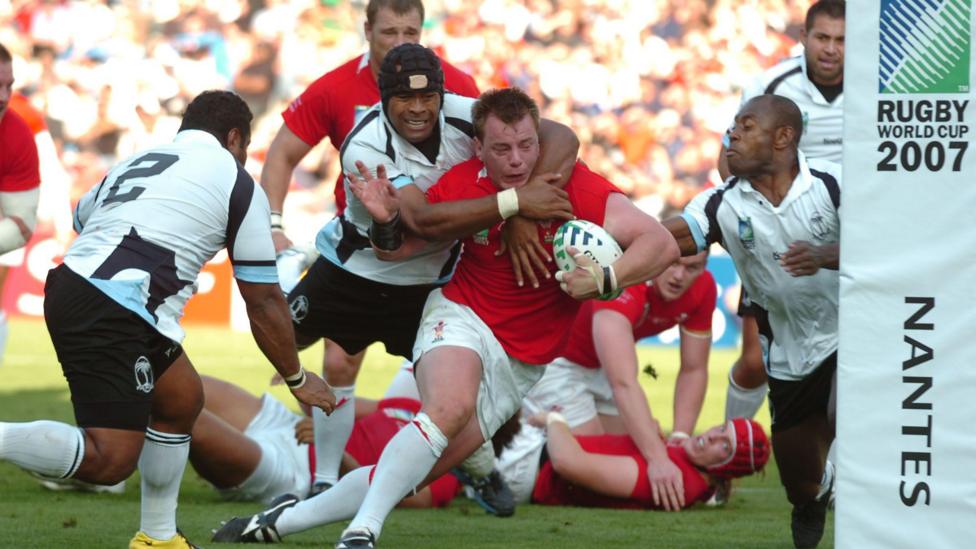
Beauty and Brutality: Six Wales v Fiji Clashes That Defined Rugby
Wales and Fiji renew their rivalry in Cardiff, revisiting six iconic clashes that delivered everything from humiliation to heartbreak and historic highs.

Evonne Goolagong: The Glory, Abuse, and Legacy of a Broken Barrier
A new drama strips back the sentimental myth of Evonne Goolagong to reveal the exploitation beneath her historic tennis career.