Tuchel Faces the Azteca: England's Altitude Problem
England's World Cup visit to Mexico's Estadio Azteca poses a physiological and tactical challenge Thomas Tuchel cannot simply coach away.
Thomas Tuchel’s England face a test that transcends mere opposition quality. A World Cup fixture against Mexico at the Estadio Azteca introduces a variable that no tactical blueprint can entirely neutralise: altitude. At 2,240 metres above sea level, the Mexico City colossus strips oxygen from the lungs, accelerates muscle fatigue, and forces even the most finely tuned athletes into operating at a fraction of their normal capacity. For an England side built on the athletic surges of players like Bukayo Saka and Jude Bellingham, the environment is a profound tactical problem.
The recent discourse around England has shifted from the usual suffocating optimism to something far more measured. Tuchel himself has reportedly been vocal about the physiological disadvantage, with FIFA regulations doing little to accommodate teams descending from sea level. The German coach knows that a defeat in the thin Mexican air would not be an embarrassment but a mathematical reality of sports science meeting environmental extremity.
The Science of Spatial Suffocation
Altitude fundamentally alters the geometry of a football match. At 2,200 metres, the air density drops by approximately 20%. For a coach like Tuchel, whose tactical philosophy hinges on intense counter-pressing and compact box-shaped midfields, the physiological toll is severe. The modern game demands that teams shrink the space between defence and attack, relying on repeated 5-to-10 metre sprints to win the ball back. At altitude, the recovery time for these explosive efforts doubles.
Tuchel’s preferred 3-4-2-1 or 4-2-3-1 formations lean heavily on the verticality of his wing-backs and the dynamic movement of his inside forwards. The Azteca pitch, broader and佩戴 more expansive than many European surfaces, invites teams to stretch the play. But the moment England attempt to execute a high press against a Mexican side accustomed to these conditions, the oxygen debt will accumulate rapidly.
The physiological reality dictates that England cannot sustain a high block for ninety minutes. The energetic cost of playing in the opposition's half increases exponentially when the cardiovascular system is starved. Tuchel will need to engineer a tactical compromise: a mid-block that absorbs pressure, conserves energy, and relies on precision transitions rather than sustained territorial dominance.
Mexico's Environmental Advantage
While England acclimatise, Mexico will be operating within their natural parametres. Jaime Lozano’s side will not merely be playing a football match; they will be conducting an exercise in resource management. The tactical implication is that Mexico can sustain a higher tempo for longer periods. Their pressing triggers will fire more consistently, and their ability to recover between defensive phases will be superior.
Mexico’s tactical identity at the Azteca historically involves a 4-3-3 that morphs into an aggressive 4-1-4-1 out of possession. The wingers, likely Hirving Lozano and Santiago Giménez, will target the vast spaces behind England’s wing-backs. Crucially, the ball travels faster through thinner air, adding whip and pace to crosses and long diagonals. This benefits a Mexico side comfortable in direct vertical patterns.
Tactical Shift
The defining tactical adjustment will arrive in the second half. Tuchel's sides are typically well-drilled in managing energy expenditure, but the Azteca forces an unusual substitution pattern. Normally, replacements are introduced to change the tactical shape or exploit a tiring defence. At altitude, substitutions become a vital tool for simply replenishing depleted lungs.
Expect Tuchel to utilise his bench earlier than customary, around the 60-minute mark, to inject fresh legs into the pressing structure. The shape may shift from a 4-2-3-1 to a more conservative 4-3-3 or a 5-3-2 in the closing stages, ceding the ball to Mexico and defending the penalty area. The introduction of a player like Cole Palmer, whose game is based on spatial awareness rather than relentless running, could be prioritised over a pure athletic winger. The tactical imperative shifts from control to survival.
Tuchel's Pragmatic Evolution
This fixture forces Tuchel to evolve beyond the personalised, high-intensity systems he crafted at Chelsea and Bayern Munich. The Gegenpressing ideal collapses under the weight of Mexican altitude. Tuchel must embrace a controlled possession game, using the ball to rest, probing patiently rather than forcing the issue vertically.
"We cannot fight the mountain. We must adapt our structure to survive the environment, because the physiological reality overrides our tactical ideals." — Typical Tuchel pragmatism ahead a hostile assignment.
The data supports a cautious approach. Teams travelling to the Azteca from sea level historically suffer a drop in high-intensity sprint distance of up to 15% in the final half-hour. England’s total distance covered may remain static, as the ball does the work, but the explosive actions that define modern football will diminish.
What Next for England?
The aftermath of the Azteca fixture will reverberate through England’s World Cup campaign. Crucially, recovery is the next battle. Even if England secure a result, the muscle damage accrued at altitude lingers. Creatine kinase levels, a marker of muscle breakdown, spike significantly after matches at 2,200 metres. Tuchel’s medical staff face a race against time to prepare the squad for the subsequent group fixture.
Tactically, England must view the Mexico fixture not as a must-win but as a exercise in tournament management. A point at the Azteca is a formidable achievement. The broader narrative should focus on adapting expectations. If England emerge with their tournament intact, Tuchel will have demonstrated the pragmatism that separates elite international coaches from club tacticians.
The World Cup is not won in the Azteca, but it can certainly be lost there.
Editorial Integrity
This is an original SportPulse article written by our editorial team. All content is independently researched, written, and reviewed by our writers and editors before publication. We do not publish copied, aggregated, or syndicated content.
SportPulse is committed to original sports journalism. Read our editorial policy or contact us with any questions.
More Like This
All football
Halfpenny Returns to Wales as Interim Kicking Coach
Wales legend Leigh Halfpenn crosses from the pitch to the coaching box to fix Wales' dismal kicking ahead of the Nations Championship.
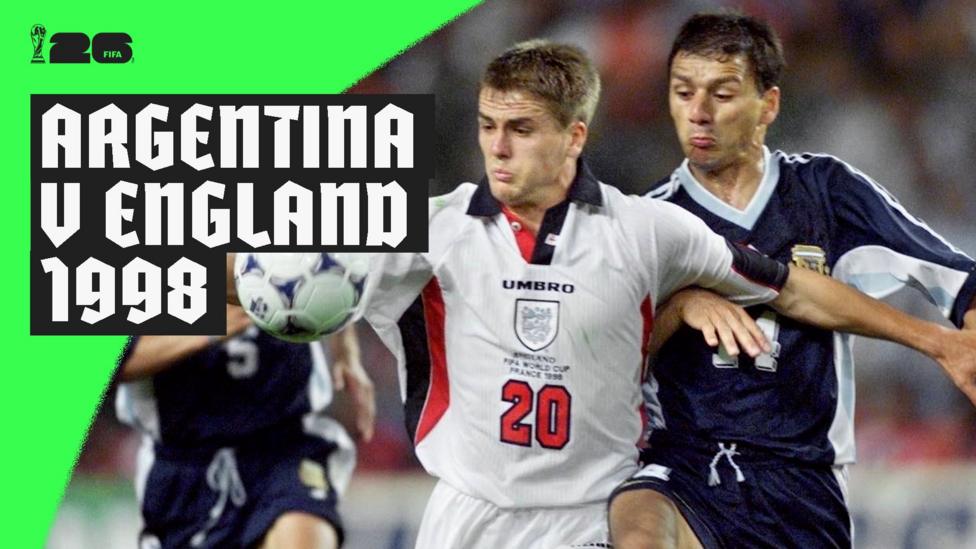
Owen's Rise, Beckham's Fall: England's 1998 World Cup Heartbreak
A night of genius and madness in Saint-Étienne that defined careers and revealed the beautiful game's cruelest theatre.

Tuchel Demands Fearless Passers as England Face DNA Reckoning
England's World Cup exit exposed a possession deficit Thomas Tuchel says must be cured by players who refuse to hide from the ball.