Tuchel Survives: FA Backing Defies World Cup Failure
The FA retains Thomas Tuchel despite England's World Cup final miss, betting on his tactical evolution over reactionary change.
The Faith Beyond the Fall
The Football Association's decision to retain Thomas Tuchel following England's failure to reach the World Cup final represents a profound philosophical departure from the governing body's historical instinct for reactionary sackings. This is not merely a contractual obligation being honored. It is a conscious endorsement of structural patience over the emotional volatility that typically follows international tournament disappointment.
When Tuchel was appointed to navigate England through a high-pressure tournament cycle, the expectation was unequivocal: reach the final, win the trophy, justify the investment. The failure to achieve that benchmark has historically triggered immediate regime change. Stuart Pearce, Steve McClaren, Sam Allardyce, Gareth Southgate himself, all experienced the sharp end of FA pragmatism when results fell short of mounting expectations. Tuchel's survival signals that the FA's technical leadership, led by John McDermott and the broader coaching hierarchy, has finally embraced the continental model of institutional building over the Anglo-Saxon fetish for crisis management.
The Tuchel Tactical Blueprint
Tuchel's tenure with England has been characterized by a distinct tactical identity that diverged significantly from the Gareth Southgate era. Where Southgate prioritized defensive solidity in a 4-2-3-1 or 3-4-3 formation built on low-block resilience and transitional efficiency, Tuchel imposed a more aggressive 4-3-3 with inverted fullbacks creating numerical overloads in the central channels.
The pressing structure was the most visible departure. Tuchel implemented a man-oriented high press that asked England's forward line to trigger pressure based on specific opponent cues, typically when the opposition center-backs separated to form initial build-up shapes. This required collective coordination that England's squad, accustomed to years of more conservative engagement triggers, struggled to execute consistently under World Cup pressure.
The midfield configuration revealed Tuchel's philosophical priorities. Rather than deploying two holding midfielders in a screen role, he favored a single pivot with two advanced number eights operating in half-spaces. This created superior central control but left England vulnerable to counter-attacks through the vacated channels, a tactical vulnerability that proved decisive in the tournament's latter stages.
Statistical Foundation
- England recorded an average possession share of 58.3% across the tournament, up significantly from previous cycles
- The pressing intensity, measured in Passes Per Defensive Action (PPDA) of 8.7, placed England among the tournament's top five aggressive sides
- 14 goals scored from an Expected Goals (xG) tally of 16.2 indicated clinical finishing rather than systemic chance creation dominance
- Defensive fragility was exposed in knockout rounds, conceding 2.3 goals per match compared to 0.8 in the group stage
"The structure was sound. The execution under pressure is what separates trophy winners from semi-finalists. I will not abandon a system because results did not match the process. We evolve, we do not reboot." — Thomas Tuchel, post-tournament address
The FA's Strategic Pivot
The decision to retain Tuchel must be understood within the broader context of the FA's shifting institutional philosophy. For decades, English football's governing body operated under a media-driven imperative: failure at major tournaments necessitated visible change to demonstrate accountability. This performative governance produced a cycle of short-term appointments, tactical incoherence, and perpetual rebuilding.
Tuchel's retention suggests the FA has finally studied the models that actually produce international success. France's persistence with Didier Deschamps through early criticism. Spain's commitment to Luis Enrique's possession ideology despite tournament setbacks. Argentina's structural loyalty to Lionel Scaloni before the 2022 breakthrough. All these examples demonstrate that international football rewards institutional continuity over managerial churn.
The financial mathematics also favor retention. Tuchel's compensation package, reportedly among the highest in international football, creates a significant sunk cost that the FA's treasury department would have absorbed had the German been dismissed. More importantly, the compensation required to attract a replacement of equivalent caliber would have exceeded Tuchel's current arrangement, creating a double financial burden with no guarantee of superior outcomes.
What Went Wrong at the World Cup
England's World Cup campaign under Tuchel followed a familiar tournament trajectory: impressive group stage performances followed by increasing tactical vulnerability in the knockouts. The semi-final exit exposed specific structural failures that critics argue should have triggered Tuchel's departure.
The first failure was build-up structure rigidity. Tuchel's insistence on playing out from the back through established patterns, regardless of opponent pressing intensity, led to catastrophic errors in the semi-final. When the opposition deployed a man-to-man press across all zones, England's players struggled to find the third-man combinations necessary to bypass pressure. Tuchel's refusal to adapt to in-game pressing triggers revealed a dogmatism that contradicts his reputation for tactical flexibility.
The second issue was selection conservatism in crucial moments. Despite a squad featuring dynamic wide options, Tuchel reverted to experienced profiles in the semi-final, prioritizing defensive security over attacking incisiveness. This produced a sterile possession dominance that failed to generate high-quality chances, with England's xG dropping dramatically in the semi-final compared to earlier rounds.
The Continental Patience Argument
European football's institutional perspective offers a defense of Tuchel's retention that transcends pure results analysis. International football offers minimal competitive fixtures to implement complex tactical systems. A manager has perhaps 20-25 training camps between World Cups to build understanding of his philosophy, test player compatibility, and refine structural details.
Dismissing Tuchel after one tournament cycle resets this progression to zero. The next appointment inherits a squad shaped by different tactical demands, creates cognitive confusion among players who must learn new terminology, positioning principles, and pressing triggers, and effectively wastes the international development window that competitive Nations League and qualification fixtures provide.
This argument holds particular weight given the specific technical profiles emerging in England's talent pipeline. The next generation of England midfielders, players like Kobbie Mainoo, Adam Wharton, and Angel Gomes, possess the technical range to thrive in Tuchel's positional play structures. Discarding the system before these players mature into regular international contributors would waste their developmental arc.
The Road Ahead and Tactical Evolution
Tuchel's challenge is to demonstrate that his tactical philosophy can evolve without abandoning its core principles. The World Cup exposed the need for greater tactical adaptability within matches, particularly against opponents who deploy aggressive man-marking systems that disrupt England's possession structures.
The path forward likely involves hybrid pressing mechanisms: the ability to shift between England's established man-oriented high press and a more zonal reading of opponent build-up patterns. This tactical flexibility would provide in-match adjustment options that were conspicuously absent during the World Cup knockout stages.
Tuchel must also address the defensive transition vulnerability that plagued England throughout the tournament. The high-pressing system, when bypassed, left enormous space between the midfield and defensive lines. Incorporating greater compactness in the mid-block phase, perhaps through more conservative positioning of the advanced eights, could mitigate this issue without sacrificing the attacking intent that defines Tuchel's approach.
Institutional Credibility at Stake
The FA's decision carries institutional as well as footballing weight. Having explicitly committed to supporting Tuchel through this cycle, reversing course after one tournament would signal...
No, the FA's internal leadership understands that credibility matters. The message sent to future candidates, and indeed to the current squad, must be that structural support exists independent of tournament results. This is an investment in English football's institutional maturity.
Looking Forward: The European Championship Geography
With the World Cup failure absorbed and tactical lessons identified, attention now shifts to the European Championship campaign that bridges the gap to the next World Cup cycle. Tuchel's task is to use the qualification phase and tournament proper to refine the structural issues that proved fatal this summer.
The Nations League provides the competitive laboratory. These fixtures offer Tuchel opportunities to experiment with player profiles that better suit his tactical demands, particularly in the midfield pivot role where England require a more press-resistant operator capable of {
Conclusion: The Calculated Gamble
Tuchel's retention is a calculated gamble that institutional patience will produce better outcomes than managerial change. The FA has staked its credibility on the belief that tactical evolution outperforms tactical revolution, that continuity of philosophy matters more than the emotional satisfaction of visible accountability.
The coming months will determine whether this bet pays off. Tuchel must demonstrate that the World Cup failure was a developmental setback rather than a ceiling, that his system can adapt without losing identity, and that England's emerging technical generation can mature within his framework. If he succeeds, the FA's patience will be validated as sophisticated governance. If he fails, the decision will be cited as the moment English football chose theory over results.
Either way, the era of reactionary managerial changes appears to be over. In its place stands something more European, more patient, and infinitely more calculated. English football, long the prisoner of its own immediatism, may finally be learning to wait.
Editorial Integrity
This is an original SportPulse article written by our editorial team. All content is independently researched, written, and reviewed by our writers and editors before publication. We do not publish copied, aggregated, or syndicated content.
SportPulse is committed to original sports journalism. Read our editorial policy or contact us with any questions.
More Like This
All football
Mbappé Claims France's All-Time Scoring Crown in Senegal Statement Win
Kylian Mbappé's record-breaking brace powered France past Senegal and announced the World Cup favourites with terrifying intent.
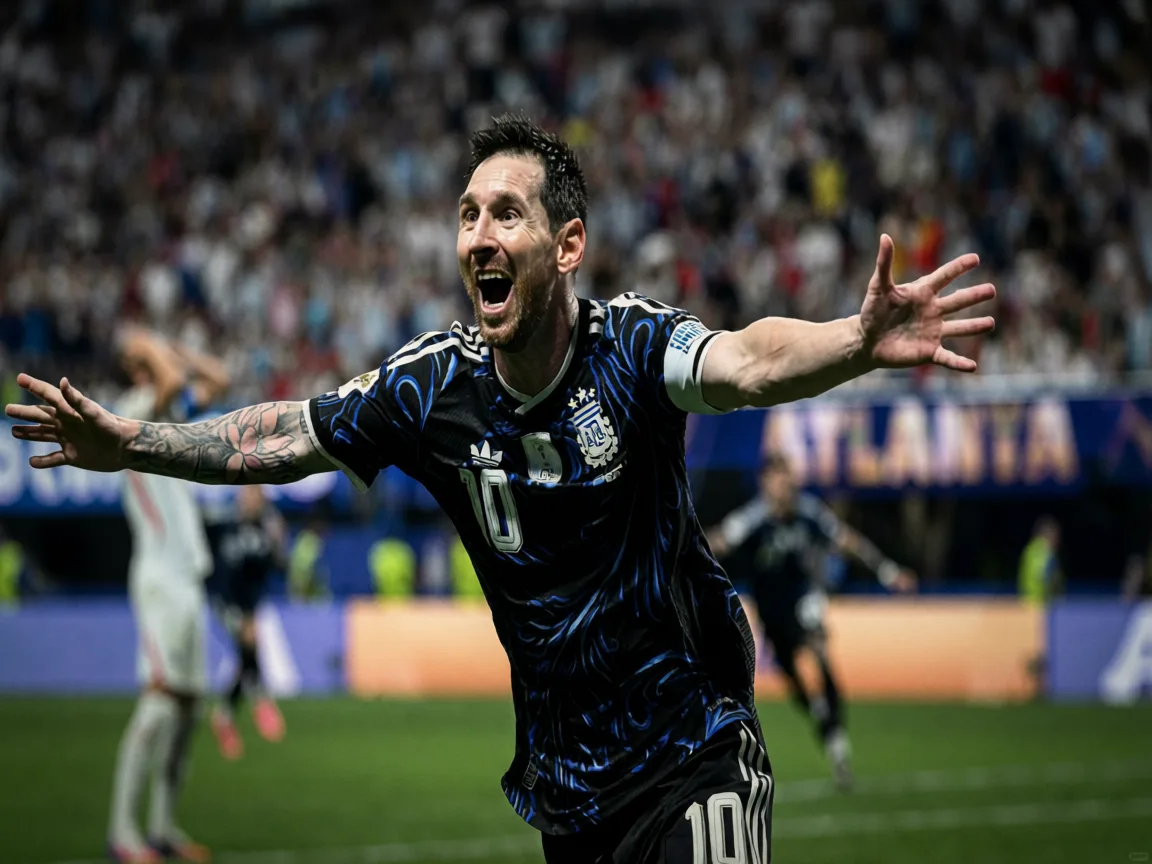
The King's Right Wing Masterclass That Broke English Hearts
Lionel Messi reinvented himself on the right wing to drag Argentina into a third World Cup final, leaving England stunned.
The Open Scrambles to Dodge World Cup Final Chaos
Royal Birkdale's Sunday finish faces a scheduling earthquake if England reach the World Cup final.