From Stuttgart Hip-Hop Nights to Wembley: Tuchel's Unlikely Road to England
Thomas Tuchel's journey from unconventional beginnings to England's dugout makes him a World Cup history-maker in waiting.
The Tactical Maverick Nobody Predicted
When Thomas Tuchel first walked into the England setup at St George's Park, the tactical blueprints he carried with him bore the fingerprints of more than two decades of obsessive methodology. But the roots of that obsession are far stranger than any coaching CV suggests. Before he ever diagrammed a Gegenpressing trigger or designed a 3-2-5 buildup structure, Tuchel was navigating Stuttgart's underground hip-hop scene in the late 1990s, a cultural immersion that shaped a mind now tasked with winning England's first World Cup since 1966.
It is the kind of origin story that defies the stereotype of the elite European football manager. Tuchel never played professionally at the highest level. A knee injury curtailed his playing career at SSV Ulm before it truly began. What followed was not a smooth transition into coaching but a period of drift, exploration, and nights spent in clubs and cultural spaces that would seem utterly disconnected from the pressing systems and positional play he later became famous for.
Yet that cultural fluency matters. Tuchel's ability to communicate across languages, to connect with players from radically different backgrounds, did not come from a coaching badge. It came from years of existing in spaces where English, German, and the coded language of music intersected. It is a skill set no academy curriculum teaches, and it may prove decisive in managing a squad that now spans the Premier League's globalised ecosystem.
A Career Built on Tactical Reinvention
Tuchel's coaching trajectory reads like a masterclass in adaptation. His first senior role at Mainz 05 saw him inherit a squad of limited individual talent and transform it through relentless pressing structures and creative set-piece routines. In 2010-11, Mainz won their opening seven Bundesliga matches under Tuchel, a club record that announced his arrival on the German coaching scene.
The tactical identity was clear from the start. Tuchel demanded verticality in possession, immediate counter-pressing upon losing the ball, and fluid positional rotations that left opponents struggling to track runners. It was Jürgen Klopp's Dortmund energy refined through a more cerebral lens. Where Klopp's teams overwhelmed through emotional intensity, Tuchel's sides suffocated through structural precision.
His move to Borussia Dortmund in 2015 deepened that philosophy. Working with higher-caliber players, Tuchel introduced more nuanced build-up phases. His Dortmund side often deployed a 4-1-4-1 that morphed into a 3-2-5 in possession, with fullbacks inverting into midfield pockets to create numerical superiority in central zones. The ideas that Pep Guardiola would later make mainstream at Manchester City were already germinating in Tuchel's Signal Iduna Park chalk talks.
At Paris Saint-Germain, the challenge shifted again. Managing egos, navigating a lopsided domestic league, and trying to impose structural rigidity on a squad built around individual brilliance tested Tuchel's adaptability. He reached the 2020 Champions League final, losing narrowly to Bayern Munich, but the experience hardened his understanding of knockout football's unforgiving margins.
The Chelsea Chapter and Peak Tuchel
If any single appointment crystallised Tuchel's reputation as an elite tactical mind, it was Chelsea in January 2021. Inheriting a disjointed squad from Frank Lampard, he implemented a 3-4-2-1 system that transformed Chelsea's defensive record overnight. The Blues conceded just two goals in his first 14 matches across all competitions.
The system was elegant in its simplicity. Three centre-backs provided a stable base. Wing-backs offered width and recovery pace. Two holding midfielders shielded the back line while the double number 10 roles between the lines created attacking connections. Most critically, the pressing triggers were refined to surgical precision. Chelsea under Tuchel did not chase the ball recklessly. They waited, shifted laterally as a unit, and sprung traps in the half-spaces.
Bayern Munich followed in 2023, and though his tenure ended earlier than expected, the Bundesliga title added another league trophy to a cabinet that already included the 2021 Champions League, the 2022 Club World Cup, and multiple domestic cups. Each stop on his journey layered new tactical ideas, new man-management techniques, and new evidence that Tuchel could operate at the very summit of the game.
Tactical Shift: England's Structural Evolution
The appointment as England manager represented something unprecedented. Not only was Tuchel the first German to manage the Three Lions, he was entering a national team setup with its own deeply entrenched tactical traditions and cultural expectations. England's approach under Gareth Southgate had been effective but conservative, built on a 3-4-3 or 4-2-3-1 foundation that prioritised defensive solidity over possession dominance.
Tuchel's mandate is different. He inherits a golden generation of attacking talent: Jude Bellingham operating between the lines, Bukayo Saka stretching defences wide, Phil Foden creating from half-space positions, and Cole Palmer offering a left-footed threat that few international defences can prepare for. The tactical question is not whether these players can perform but how Tuchel arranges them into a coherent attacking structure that maximises their complementary strengths.
Early indications point toward a 4-2-3-1 base with significant positional fluidity. Bellingham's role is the key variable. In a Tuchel system, the number 10 is not a static creator but a connector who presses from the front, drops into midfield to create overloads, and arrives late in the box to finish moves. It is the role Tuchel has always valued most, and Bellingham's skill set is arguably the most complete he has ever had at his disposal in that position.
The pressing structure is another area where Tuchel's influence will be felt most acutely. Southgate's England often sat in a mid-block and transitioned quickly. Tuchel's teams press high, coordinated, and with specific triggers tied to the opponent's first touch direction and body shape. Implementing this at international level, with far less training time than a club manager enjoys, is the central coaching challenge.
The World Cup Question
No foreign manager has ever won the FIFA World Cup. That is the historical barrier Tuchel confronts. It is a statistic that speaks to the deeply nationalistic nature of the tournament, where identity, emotion, and cultural cohesion often outweigh tactical superiority. Every previous World Cup-winning manager has shared a nationality with the nation he coached.
Tuchel is aware of this. His approach to the role has been deliberate: learning English with increasing fluency, studying the cultural context of English football, and making public statements that align with the emotional weight the English public places on the national team. He understands that managing England is not merely a tactical exercise. It is a cultural negotiation.
The 2026 World Cup in North America presents a unique format: 48 teams, an expanded knockout stage, and matches spread across the United States, Canada, and Mexico. The tactical demands of a longer tournament, with potential fatigue and travel factors, favour a manager who can rotate intelligently and adjust systems between matches. Tuchel's track record of tactical flexibility is precisely the profile required.
What Comes Next
England's upcoming qualifying campaign and the Nations League fixtures that precede it will offer the first real evidence of Tuchel's structural imprint. Key questions loom: does he stick with a back four or introduce a three-centre-back system that served him so well at Chelsea? How does he integrate the new generation of English midfielders into a pressing framework? And can he solve the age-old problem of getting the best from England's attacking talent without leaving the defence exposed?
The early tactical signals will be scrutinised with an intensity that Tuchel has never quite experienced, even during his Chelsea and Bayern tenures. The England job carries a weight of expectation that is disproportionate to the resources and preparation time available. But if any manager's career trajectory suggests an ability to thrive in precisely those conditions, it is the one that began not on a coaching pitch but on the dance floors of Stuttgart.
"You learn more about people in one night of real conversation than in a hundred training sessions."
Editorial Integrity
This is an original SportPulse article written by our editorial team. All content is independently researched, written, and reviewed by our writers and editors before publication. We do not publish copied, aggregated, or syndicated content.
SportPulse is committed to original sports journalism. Read our editorial policy or contact us with any questions.
More Like This
All football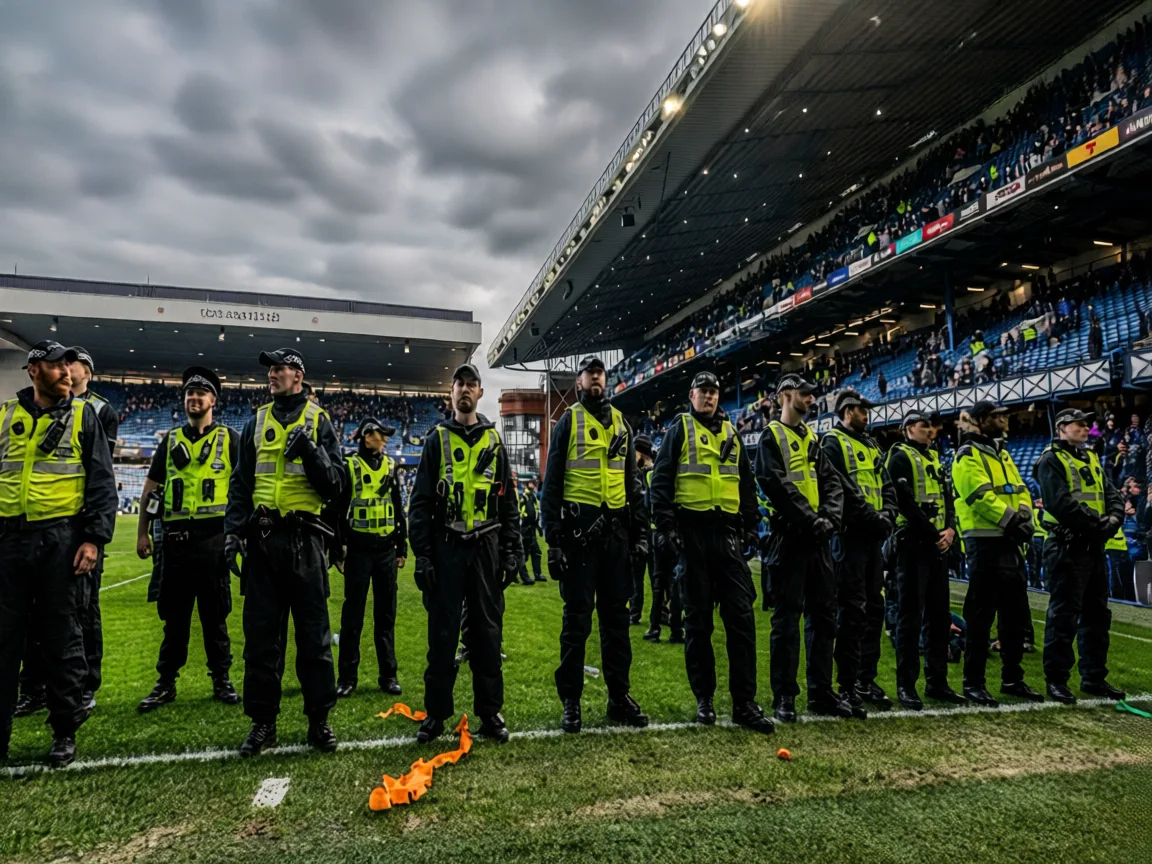
Rangers and Celtic Charged Over Ibrox Cup Unrest as Independent Review Lashes Planning Failures
Both Glasgow giants face disciplinary action after a Scottish Cup tie descends into disorder that an independent review blames on woeful planning and ultras conduct.

Falkirk's McGlynn Dilemma: Keep the Architect or Lose the Project
Falkirk's promotion architect is drawing national team interest. Losing McGlynn now would unravel seasons of built momentum.

Lions Rookie Terrion Arnold Named Primary Conspirator in Kidnapping Arrest
Detroit's first-round pick faces shocking felony charges in Tampa, threatening to derail a promising career and a franchise's defensive rebuild.