Tyrone Left Fuming as Ref's Whistle Tilts a Classic Kerry's Way
Malachy O'Rourke points the finger at 'really, really harsh' officiating after Tyrone's agonising two-point loss to Kerry.
When Two Points Feel Like Twenty
Malachy O'Rourke stood at the podium, jaw tight, choosing every word with the precision of a man who knew one misstep would turn frustration into headline fodder. Tyrone had just lost 1-24 to 0-25 to Kerry in an All-Ireland SFC quarter-final that crackled with intensity from throw-in to the final whistle. The scoreboard said two points. O'Rourke's eyes told a different story.
"Some of the calls were really, really harsh."
That single sentence, delivered with the restraint of a manager who wanted to say far more, became the post-match talking point that threatened to overshadow what was a genuinely absorbing contest at Croke Park.
A Rivalry That Refuses to Cool
Kerry and Tyrone don't do friendly. This is a fixture forged in the white heat of All-Ireland finals in 2003, 2005, and 2008 -- trilogy of battles that shaped an entire generation of Gaelic football. Every meeting since carries that freight, every tackle reopens old wounds.
Sunday's quarter-final was no different. Tyrone arrived with the hunger of a side that believed this championship was still there for the taking. Kerry came with the composure of a team that has spent decades treating Croke Park as a second home.
The first half was a tactical chess match played at breakneck speed. Tyrone's defensive structure, the organised press that has been O'Rourke's calling card, held firm for long stretches. But Kerry's inside forward line kept probing, kept finding half-yards of space in the channels that separated Tyrone's cover.
The Goal That Shifted Everything
Every tight All-Ireland quarter-final pivots on a single moment. For this one, it was Kerry's goal.
In a game decided by two points, that green flag was the difference between a Kerry win and what could easily have been a Tyrone triumph. Remove the goal from the equation and Tyrone's 0-25 would have been enough. That arithmetic will haunt O'Rourke and his backroom team in the film review sessions to come.
Kerry's ability to manufacture that goal-scoring opportunity -- against a Tyrone defence that had been disciplined and aggressive throughout -- spoke to the quality that makes them perennial contenders. The Kingdom don't need many chances. They just need the right one.
The Numbers Behind the Defeat
- Kerry's total of 1-24 (27 points) represented a commanding scoring display in championship football
- Tyrone's 0-25 showed they were far from outclassed -- they simply couldn't find the goal their performance arguably deserved
- The two-point margin is the finest of lines at this stage of the championship
- Tyrone's scoring rate suggested they controlled large portions of possession and territory
Behind the Whistle: O'Rourke's Grievance
Here is where the story gets complicated. O'Rourke didn't launch a broadside at the officiating. He didn't name the referee. He didn't stage a protest or call for a replay. What he did was more measured and, in some ways, more damning.
By describing the calls as "really, really harsh," O'Rourke was making a calculated public statement. In GAA, managers walk a tightrope with the Central Competitions Control Committee (CCCC). Criticise a referee too pointedly and a suspension follows. Say nothing and the narrative belongs entirely to the result.
O'Rourke chose the middle ground: acknowledge the frustration, frame it as unfairness, but stop short of outright accusation. It is the language of a man who has watched the footage back and identified moments where marginal calls -- frees given, frees not given, advantage played or withheld -- tilted the contest.
The Refereeing Debate in Championship Football
This is not a new faultline in Gaelic football. The sport's officials operate under extraordinary pressure, managing 30 outfield players in a contact-heavy environment where offsides, steps, and fouls are judged in fractions of a second. Championship football amplifies every decision because there is no safety net. A league game can absorb a bad call. A knockout All-Ireland quarter-final cannot.
The challenge for Tyrone is that grievance, however justified, changes nothing on the scoreboard. Kerry advance. Tyrone go home. The championship rolls on.
What Tyrone Built This Season
Context matters here, and the context is this: Tyrone did not arrive at this quarter-final by accident. O'Rourke has rebuilt this squad with a clarity of purpose that demanded respect from every team in Ulster and beyond. Their defensive shape, their transition speed, their ability to rack up 25 points against Kerry's suffocating back line -- these are not the hallmarks of a team out of its depth.
The frustration in O'Rourke's voice was not just about refereeing. It was the frustration of a manager who knows his team played well enough to win and didn't. That is the cruel arithmetic of knockout football. Performance and outcome do not always align.
Tyrone's 0-25 in a losing cause tells you everything about the quality on display and the margins that decided this tie.
Several Tyrone players delivered performances that, on another day, would be remembered as the catalysts for a famous victory. The midfield battled ferociously. The forward line found scores from distance and from play. The defensive unit held Kerry's potent attack to a single goal.
None of it was enough.
Kerry's Championship Pedigree
On the other side, Kerry will care little for the controversy. They won. They advanced. And they did it by showing the steel that has carried them to 37 All-Ireland titles.
Their goal proved to be the decisive blow, but their composure in the closing stages was equally significant. Championship football in July and August is about managing moments, and Kerry managed them better on the day. The experience of playing in these pressure cookers, year after year, is an intangible advantage that no tactical blueprint can replicate.
Kerry's management will know, however, that a two-point win over a side that felt hard done by is not a statement of dominance. It is a warning. The semi-final will demand more. The opposition will be sharper. The margins will be just as thin.
What Comes Next
For Tyrone, the offseason begins with questions that have no easy answers. How do you process a defeat where you scored 25 points and still lost? How do you channel the frustration of perceived injustice without letting it define the campaign?
O'Rourke's task is to frame this defeat as fuel. The performance level was high. The squad depth is real. The tactical identity is established. A two-point loss to Kerry in an All-Ireland quarter-final is not a crisis. It is a platform, provided the right lessons are drawn.
For the championship itself, this quarter-final delivered exactly what neutral observers crave: drama, controversy, quality, and a result that could have gone either way. Kerry march on. Tyrone lick their wounds.
And somewhere, in the film room, Malachy O'Rourke is rewinding the tape on those "really, really harsh" calls, looking for the moments that turned a classic into a heartbreak.
The whistle has blown. The argument has not.
Editorial Integrity
This is an original SportPulse article written by our editorial team. All content is independently researched, written, and reviewed by our writers and editors before publication. We do not publish copied, aggregated, or syndicated content.
SportPulse is committed to original sports journalism. Read our editorial policy or contact us with any questions.
More Like This
All football
The Beautiful Chaos of 48: Inside World Cup 2026's Group Stage Survival Game
An expanded format means more permutations, more heartbreak, and a tiebreaker system that rewards precision over power.
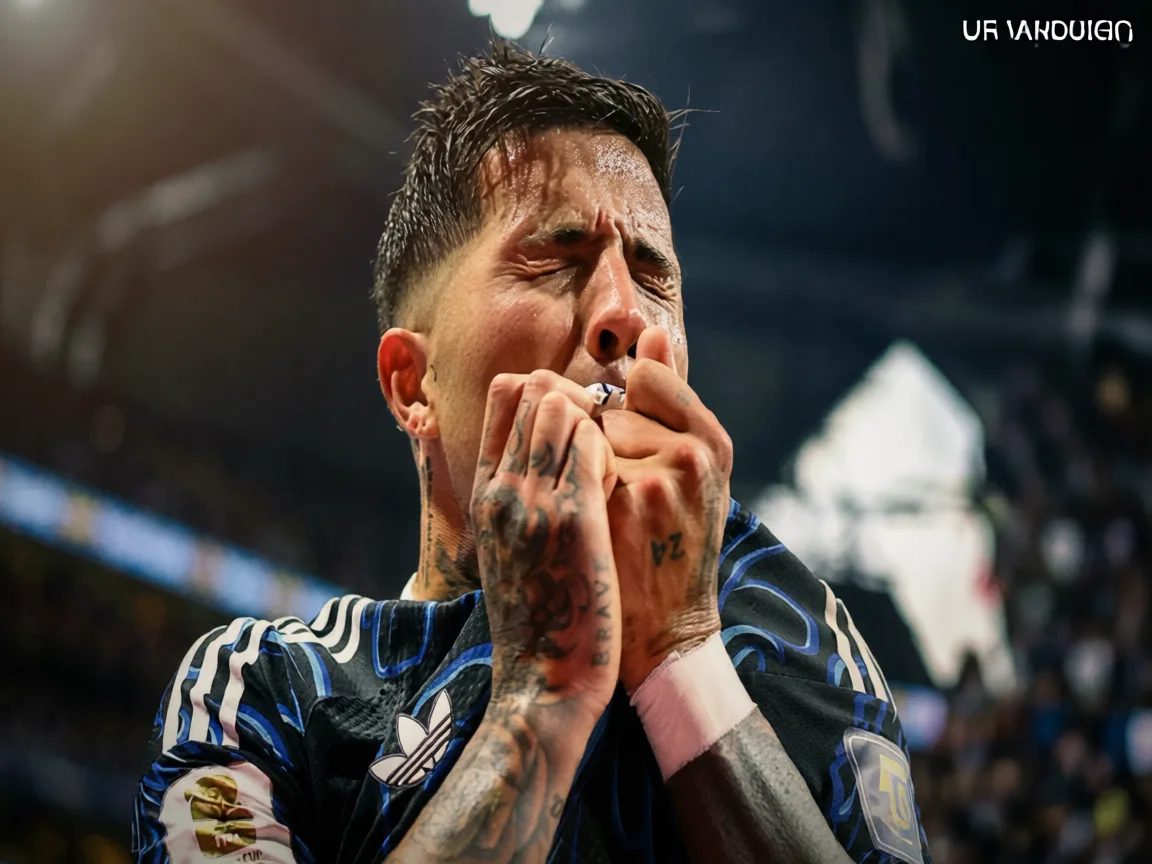
Argentina Capitalize As England Lose Focus In Atlanta Semi Final
England broke shape in Atlanta, allowing Argentina to seize control through relentless tactical discipline.
Queiroz Exits Ghana as England Braces for Mexican Storm
Carlos Queiroz’s departure leaves a vacuum in Accra while England faces a thunderous World Cup 2026 knockout test in Mexico.