America's World Cup Conversion: From Political Minefield to Cultural Obsession
Against every geopolitical and commercial headwind, the World Cup has America hooked — and the numbers are staggering.
The Tournament That Shouldn't Have Worked
Let's be honest about the expectations. When FIFA awarded the 2026 World Cup to a trifecta of North American nations led by the United States, the prevailing mood among serious football observers ranged from cautious optimism to grim fatalism. The reasons for skepticism were not abstract. They were concrete, political, andfinancial.
In the 18 months leading up to kick-off, the geopolitical landscape surrounding the tournament resembled less a celebration of international sport and more a slow-burning diplomatic crisis. The host nation's political leadership had publicly threatened the sovereignty of one co-host and military action against another. Relations with at least one participating nation were openly hostile.
And yet, against every rational projection, the tournament has not just survived in America. It has flourished. Packed stadiums, record television audiences, and a genuine cultural footprint now define what increasingly looks like a transformative summer for the sport in the United States.
The Geopolitical Minefield
The pre-tournament concerns were legitimate and multifaceted. Diplomatic tensions created an unprecedented hosting environment where the political rhetoric actively undermined the collaborative spirit a multi-nation World Cup requires.
- Co-host Canada faced public threats of annexation
- Co-host Mexico was threatened with military invasion
- Iran, a tournament participant, was engaged in a direct geopolitical standoff with the host nation
- Harsh travel restrictions and visa backlogs threatened to block fans from Senegal, Ivory Coast, and Haiti
This was not the standard pre-tournament hand-wringing about infrastructure or logistics. This was a scenario where the host nation's foreign policy posture actively discouraged participation from multiple qualifying nations. Visa complications for supporters from West Africa and the Caribbean raised the specter of half-empty stadiums and a tournament stripped of the traveling fan culture that gives the World Cup its soul.
The concept of a World Cup is inherently fragile. It requires the host to extend genuine hospitality to the world. When that hospitality is politically gated, the entire enterprise risks collapse.
The Commercial Headwinds
Beyond politics, the commercial framework surrounding the tournament raised concerns that struck at the core of the fan experience. This was always going to be a World Cup where the tension between monetization and sporting integrity would be tested aggressively.
Ticket prices drew immediate and sustained criticism. The cost of attending matches in major American markets like Los Angeles and New York was projected to require thousands of dollars, pricing out domestic fans while international travelers faced the additional burden of long-haul flights and premium accommodation costs. Reports surfaced that hotel blocks in several host cities were not filling at the rates organizers had projected or publicly claimed.
FIFA's introduction of hydration breaks during matches added another layer of controversy. Ostensibly a player welfare measure, the breaks were immediately criticized as a vehicle for television commercial insertion. A shameless cash grab, as observers put it bluntly, that threatened to shatter the flow of a sport that has built its massive global appeal on uninterrupted play.
The fear was reasonable. American sports programming already treats audiences to constant commercial interruption. The idea of importing that model into football felt like a fundamental betrayal of the sport's rhythm. Two minutes of stoppage for drinks and advertisements could reshape match momentum in ways that disadvantage teams already struggling with climate adaptation.
The Numbers Defy the Narrative
Despite all this, the tournament has delivered results that silence the skeptics. The television viewership numbers have broken records previously thought untouchable in the American market. Stadiums have been filled not just with polite curiosity but with genuine, vociferous atmosphere.
- Record TV audiences across English and Spanish language broadcasts
- Sold-out venues across multiple host cities with vibrant multicultural fan representation
- Sustained public engagement beyond the standard post-tournament drop-off in soccer interest
The domestic audience has not merely tolerated the event. It has embraced it with a fervor that recalls the 1994 World Cup but with a scale modern infrastructure and media can amplify.
The Unifying Force
What the raw numbers cannot fully capture is the cultural function this tournament has served. In an American political moment defined by heated rhetoric around immigration, national identity, and cultural homogeneity, the World Cup has operated as a spectacular counter-narrative.
The stadiums have become stages for a joyous multiculturalism that feels increasingly at odds with the political temperature outside them. Fans draped in Senegalese, Mexican, Iranian, and American colors, mingling in concourses and city fan zones, represent a vision of the country that the evening news rarely reflects.
This is not to romanticize the event or ignore the real barriers that prevented many fans from traveling. The visa restrictions were a stain on a tournament that claims to unite the world. But what the scenes inside the stadiums demonstrate is that the appetite for that unity among ordinary Americans and visitors alike remains remarkably strong.
Sport at this scale rarely changes policy. But it changes rooms. It fills a stadium with a version of a country that many citizens recognize as theirs, even when their television screens tell them otherwise.
Why This Tournament Hits Different
The success of the World Cup lands at a moment when American soccer needed it most. Major League Soccer continues to grow steadily, but the domestic league still operates far from the cultural mainstream. The sport needs moments of mass national convergence to push it further into the collective consciousness.
This World Cup delivered that convergence. Not through manufactured hype or superstar marketing, but through the organic drama of the tournament itself. People who could not name three MLS players last spring are now debating tactical substitutions and VAR decisions at work. The game has purchased real estate in casual conversations it never previously rented.
The critical factor is that this engagement has felt different from the transient bursts that follow previous World Cups. The infrastructure of American soccer fandom has matured. Pubs, fan zones, and watch parties exist in cities where they did not exist a decade ago. The media ecosystem around the sport in the United States is deeper and more sophisticated.
The question was never whether Americans could enjoy a major event. They enjoy the Olympics. They host the Super Bowl. The question was whether they could fall in love with this sport, on its own cultural terms, without the shelter of domestic league familiarity. Early returns suggest yes.
The Bottom Line
The 2026 World Cup has survived its geopolitical birth defects and commercial overreach to become what it was always supposed to be. A unifying event that reminds Americans, and the world, what sport is for.
That it happened despite an atmosphere that seemed designed to prevent exactly this outcome makes the success more remarkable. The tournament has proven more resilient than the politics, the pricing, and the punditry that surrounded it. America has not just hosted this World Cup. Against the odds, it has fallen for it.
What remains, when the stadiums empty and the broadcasting trucks pull away, is whether this momentum can be captured and converted into lasting growth. Previous World Cups on American soil have sparked temporary surges. This one has the feel of something deeper. The crowds, the ratings, and the culture have aligned to create a moment.
The challenge now belongs to those who govern and promote the domestic game. They have been handed a gift they did not earn and a platform they did not build. What they do with it will define the next decade of American soccer.
The tournament, for all its flaws and friction, has done its part. America is watching. The risk is that, once again, the sport's custodians fail to keep them watching.
Editorial Integrity
This is an original SportPulse article written by our editorial team. All content is independently researched, written, and reviewed by our writers and editors before publication. We do not publish copied, aggregated, or syndicated content.
SportPulse is committed to original sports journalism. Read our editorial policy or contact us with any questions.
More Like This
All football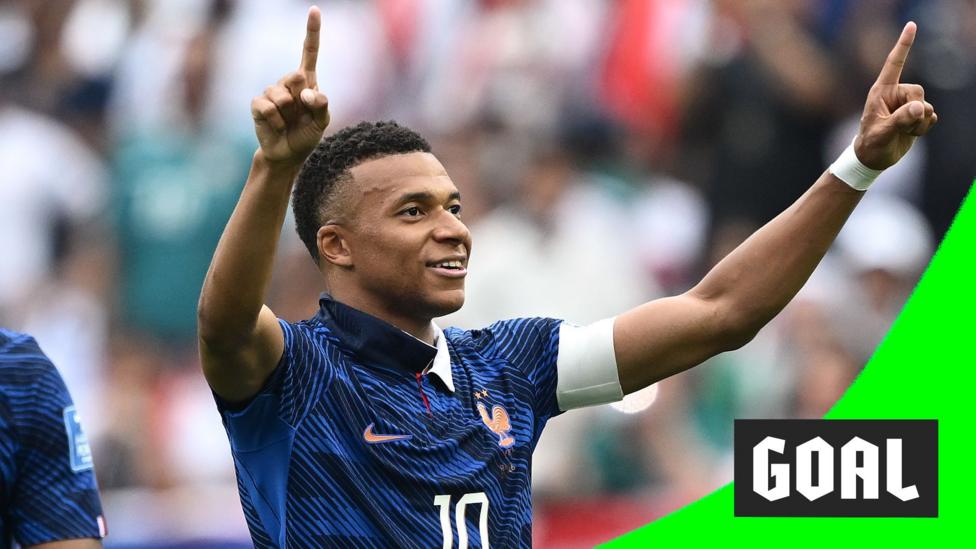
Mbappe's Thunderbolt Sums Up France's Evolving Blueprint
Kylian Mbappe's long-range stunner against Iraq highlights his expanding tactical repertoire and France's shifting attacking paradigm.
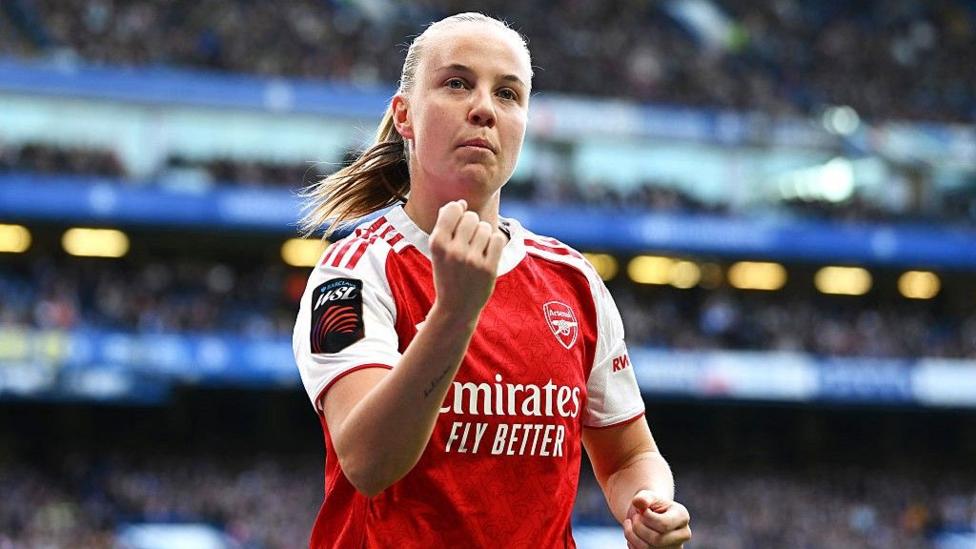
Mead Ditches Arsenal for City in Blockbuster Free Transfer
Beth Mead's shock Arsenal exit delivers Manchester City their deadliest WSL weapon on a free transfer.

Fifa Strips Commentator Credentials After Almirón Red Card Rant
Fifa revokes Jorge Chipi Vera's World Cup access after his live on-air tirade calling Gianni Infantino and referee Iván Barton 'thieves'.