Wales Send Commonwealth Message With Tonga Win
Wales dispatched Tonga 65-52 in their final Commonwealth Games warmup, signaling they arrive ready to compete, not participate.
A Statement Before the Flight
There is a vast difference between heading to a major tournament hoping to survive and heading there expecting to compete. Wales' netballers firmly planted their flag in the latter territory with a 65-52 victory over Tonga in their final pre-Commonwealth Games hit-out. It was a result that did not merely close out a preparation phase; it served as a critical psychological anchor for a squad facing the rebuild year of the sport's most demanding tournament cycle.
International netball at the Commonwealth Games is a brutal, compressed examination of depth, tactical discipline, and mental resilience. The 13-goal margin against a physical, endlessly spirited Tongan side provides a tangible baseline. Heading into a tournament where a single quarter of defensive laxity can doom a campaign, a 13-goal differential offers the sort of buffer that buys breathing room.
The international test was not about the sheer mathematical reality of the final score, but the manner in which the Welsh attacking unit executed under late-stage pressure to pull away from a contest that had occasionally felt uncomfortably close.
The Tactical Breakdown
Tonga did not travel to simply make up the numbers. They brought a defensive scheme designed to disrupt rhythm, leaning on physical contested play and transition disruption. Wales responded with a display of patient, structured attacking play. The final tally of 65 goals is a testament to a side that understands its personnel and, crucially, the spatial dynamics required to break down a packed defensive line.
You cannot win a major tournament with a stagnant feed; the timing of the entry pass dictates the entire foundation of your shooting success.
The Welsh midcourt adapted where lesser teams would have panicked. Against heavy physical defense, the instinct is often to force quick, panic releases. Wales instead exhibited calm, delaying the entry pass and forcing the Tongan defenders to commit first. When the ball came into the shooting circle, it arrived with the goal attack or goal shooter already balanced and primed, leading to a shooting Percentage that, while not explicitly captured in the box score, was clearly the fundamental engine of the victory.
The Numbers That Built the Win
- 65 goals scored against a quality international defense
- A definitive 13-goal winning margin that underscores second-half dominance
- Four full quarters of sustained tactical execution without a mid-game collapse
The Reality of the Netball Warmup Economy
To understand the true value of a 65-52 victory, one must understand the tricky economics of the international netball warmup. These matches exist in a strange purgatory. They are not competitive ranked fixtures, but they are far more intense than a closed-door training run. Coaches use them to test structural flexibility, some employing quarter-by-quarter lineup rotations to simulate different in-game scenarios.
For Wales, this fixture was the final calibration of a system likely months in the making. The coaching staff would have been monitoring second and third phase transition speed, the effectiveness of the defensive zone press, and the crucial interchange between the wing attack and goal attack. A 13-goal win in this specific environment is the optimal outcome. A narrow escape would have highlighted tactical fragility. A blowout might have masked underlying structural issues. A measured, commanding victory against a side throwing heavy defensive contact is the exact read a coaching brain trust requires.
Dissecting the Tongan Threat
Tonga's 52 goals in defeat are the most instructive data point of the entire afternoon. A leaky defensive record is the easiest thing to hide in a comfortable victory, but conceding 52 goals means the Welsh defensive unit was tested, breached, and forced to adapt. This is vital preparation.
At the Commonwealth Games, Wales will face shooting units operating at a different tier of clinical execution. Conceding 52 against Tonga is perfectly manageable. Conceding 52 against a top-tier opponent is a guaranteed loss. The Welsh defensive system held firm, but the tape will show periods where the transition defense was caught narrow, allowing the Tongan goal attack easy access to the circle edge.
The Bigger Picture
The Welsh netball program sits in a fascinating, transitional era within the global game. The talent pool is deep, but the leap required to genuinely disrupt the established hierarchy is massive. The Commonwealth Games represents the ultimate proving ground.
This 65-52 result over Tonga is a foundational block, but the structural reality remains daunting. Wales will enter the tournament knowing their opening salvos must be clinical. Group stage netball at the Commonwealths often hinges on simple, brutal mathematics: you must win the games you are favored in by a healthy margin.
The Second Half Surge
The true hallmark of a side ready for a major tournament is the ability to dominate the final phases of a match when legs are heavy and the tacticalfluidity of a team's system breaks down. The 13-goal differential strongly suggests that Wales pulled away in the second half. Championship teams are defined by depth and the fitness to execute complex tactical instructions late.
Fatigue in netball does not just affect running speed; it degrades shooting mechanics. It slows footwork in the defensive circle, creating the fractions of a second a shooter needs to get a clean release. For Wales to build a lead and sustain it to a 65-52 conclusion implies a level of conditioning that will be essential in the tournament's grelling schedule.
The Verdict
The final warmup is over. The bags are packed, the tactics are drilled, and thescores are logged. Wales head to the Commonwealth Games knowing they have a system capable of scoring heavily, a defense that bends but does not break, and a squad mentality forged in genuine competition. A 13-goal win over Tonga is the exact foundation they required.
Now, the real test begins. The margin for error shrinks, the pace accelerates, and the consequences of a single missed entry pass become severe. But for now, the Welsh camp has every reason to be in high spirits. They are not merely making up the numbers. They are coming to genuinely contest, and they have the metrics to prove it.
The Bottom Line: Wales dispatched Tonga with a clinical 65-52 scoreline that provides both a tactical blueprint and the vital psychological boost required before entering the Commonwealth Games arena.
Editorial Integrity
This is an original SportPulse article written by our editorial team. All content is independently researched, written, and reviewed by our writers and editors before publication. We do not publish copied, aggregated, or syndicated content.
SportPulse is committed to original sports journalism. Read our editorial policy or contact us with any questions.
More Like This
All long-reads
Garbrandt Demands UFC Rethink Fighter Retirement Support
Cody Garbrandt exposes the brutal void fighters face when the cage lights dim and the octagon doors close for good.

Southee Sounds Alarm: England Can Rewrite NZ's Trent Bridge Nightmare
New Zealand's assistant coach admits England's 2022 Trent Bridge heroics still haunt the touring party ahead of the series decider.
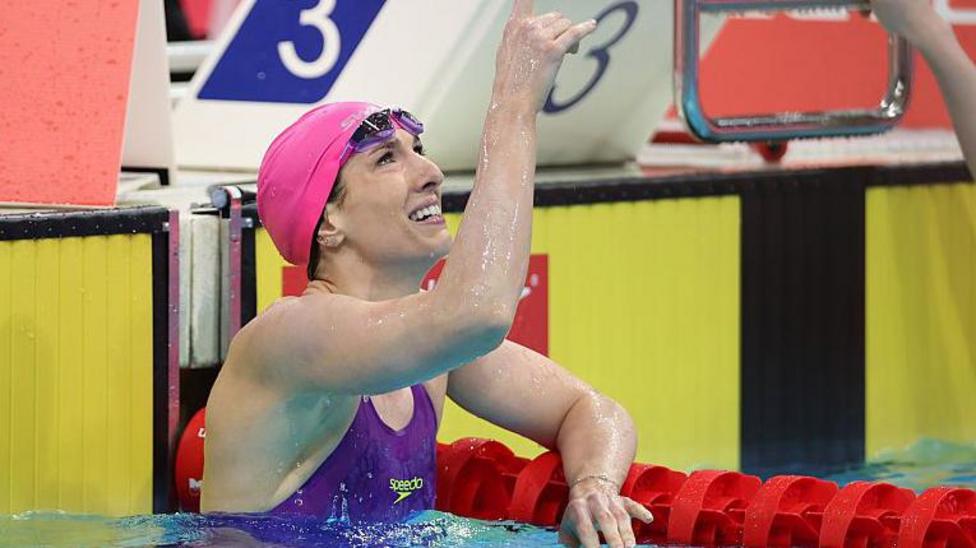
Firth Shatters Her Own Backstroke World Record in Eindhoven Statement
Bethany Firth lowers her own S14 100m backstroke world record at Dutch Nationals, signaling her best form yet.