Firth Shatters Her Own Backstroke World Record in Eindhoven Statement
Bethany Firth lowers her own S14 100m backstroke world record at Dutch Nationals, signaling her best form yet.
The Queen of the Water Just Raised Her Own Standard
There are swimmers who chase records. Then there is Bethany Firth, who seems to collect world marks the way other athletes collect medals — casually, repeatedly, and with an almost dismissive inevitability.
At the Dutch National Championships in Eindhoven, the Northern Ireland swimmer dismantled her own S14 100m backstroke world record, lowering a benchmark that already belonged to nobody else. It is the kind of performance that stops the parasport world mid-sentence and forces a recalibration of what is possible.
"Every time I get on the blocks, I want to be faster than the last time. That's the only race that matters." — Bethany Firth
A Career Built on Relentless Rewrites
Firth's relationship with the record books is not new. The S14 classification, designated for athletes with intellectual impairments, has been her kingdom for over a decade. She first burst onto the global scene at the London 2012 Paralympic Games, claiming gold in the 100m backstroke as a teenager. That victory was not a surprise to those who had watched her development through the Irish and British para-swimming systems, but it announced her to a wider audience.
What followed has been one of the most dominant sustained careers in Paralympic sport:
- London 2012: Gold in the S14 100m backstroke
- Rio 2016: Multiple gold medals, cementing her status as the premier S14 swimmer on the planet
- Tokyo 2020: Further podium finishes, including backstroke and freestyle success
- Multiple world records across backstroke and freestyle disciplines in the S14 category
The Eindhoven swim adds another chapter to a story that long ago transcended the narrative of a single talented athlete. Firth is the standard. Everyone else is measuring themselves against her.
The Eindhoven Swim: What We Know
The Dutch National Championships, held at the Pieter van den Hoogenband Zwemstadion in Eindhoven, is a well-attended meet that regularly attracts elite international swimmers alongside Dutch national-level competitors. For Firth, it represented an opportunity to race against high-caliber opposition in a fast pool — exactly the kind of environment where world records tend to fall.
Details of the exact time and the margin by which she lowered the record were confirmed by competition officials following the race. The performance was clean, controlled, and backed by the kind of race execution that separates generational talent from the merely excellent.
Behind the Record: What It Takes
Breaking a world record that you already own is a peculiar psychological challenge. There is no external rival to chase, no deficit to claw back. The opponent is a number on a clock — a number you set yourself.
Firth has spoken in the past about the mental discipline required to consistently perform at this level. Para-athletes in the S14 classification face unique pressures: navigating a competitive landscape that receives less media coverage, managing training schedules around support structures, and maintaining motivation when the gap between you and the field is often significant.
Her continued ability to find incremental improvements — shaving fractions of seconds off times that are already historically fast — speaks to a training programme that refuses to stagnate and an athlete who is never satisfied.
The Bigger Picture: Paralympic Swimming's Quiet Giant
Eindhoven is not Paris. A Dutch national meet does not carry the weight of a Paralympic Games or a World Para Swimming Championships. But that framing misses the point entirely.
Record-breaking performances do not happen by accident. They happen because an athlete is in peak condition, because the preparation has been meticulous, and because the competitive fire burns just as hot in a February meet as it does on the biggest stage.
For Firth, the Eindhoven record is a signpost. It tells rivals, coaches, and selectors that she is not coasting on legacy. She is improving. She is hungry. And she is doing it at a point in her career when many athletes in her position might be content to manage their output and protect their bodies.
"Bethany doesn't race to defend what she's done. She races to prove she can still do more." — A coach familiar with her training programme
What This Means Looking Ahead
The parasport calendar builds toward major championships in cycles, and the sport is already looking toward the next wave of international competition. For Firth, every world record is both a personal triumph and a strategic statement.
Rivals in the S14 100m backstroke now face a deeply uncomfortable reality: the woman they need to beat is not just ahead of them — she is pulling further away. The gap between Firth and the rest of the field has been substantial for years. In Eindhoven, she made it wider.
The Legacy Question
At this stage of her career, Firth is not merely accumulating results. She is building a legacy that will define the S14 backstroke for a generation. The question is no longer whether she is the greatest S14 backstroke swimmer of her era. It is whether she is the greatest S14 swimmer, full stop.
The answer, judging by the evidence accumulating meet by meet and record by record, is becoming harder and harder to dispute.
Northern Ireland has produced sporting giants in boxing, in golf, in football. Bethany Firth belongs in that conversation. Her canvas is water. Her brushstrokes are world records. And in Eindhoven, she painted another masterpiece that the rest of the sport is still trying to comprehend.
Editorial Integrity
This is an original SportPulse article written by our editorial team. All content is independently researched, written, and reviewed by our writers and editors before publication. We do not publish copied, aggregated, or syndicated content.
SportPulse is committed to original sports journalism. Read our editorial policy or contact us with any questions.
More Like This
All long-reads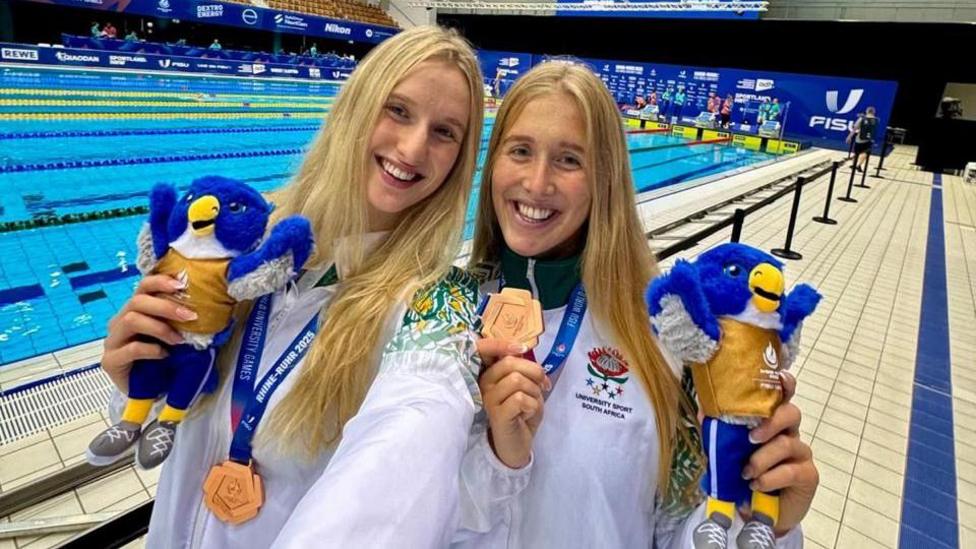
Cowley Daughters Chase Commonwealth Redemption After 1986 Exile
Thirty-eight years after Annette Cowley's political ban, her daughters aim to complete the family's unfinished Commonwealth business.
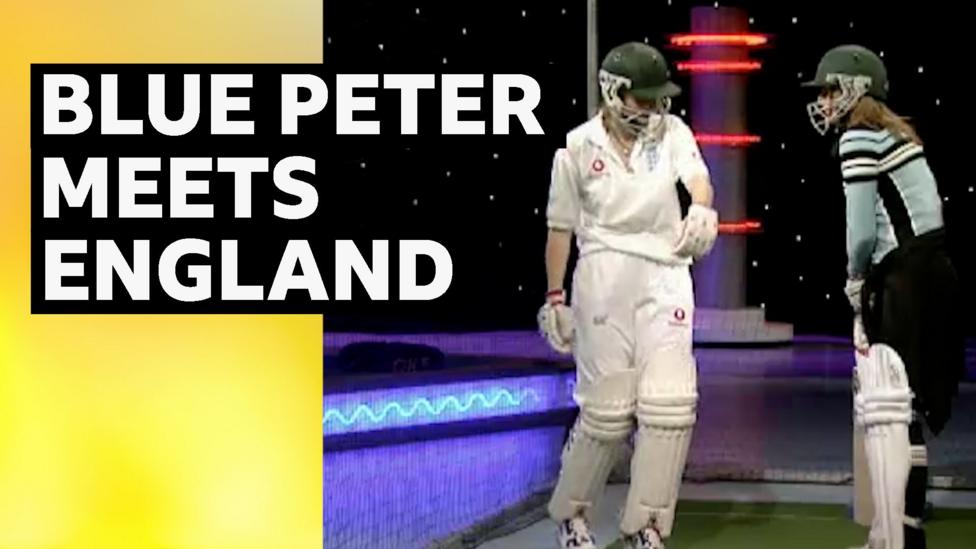
From Blue Peter Prodigy to England Boss: Charlotte Edwards' Full Circle
Charlotte Edwards went from a Blue Peter rising star in 1997 to England's T20 World Cup head coach this summer.

The Body Remembers What Language Erases
A personal essay unravels the gap between the abortion debate's abstractions and the raw, unforgettable violence of the body.