William McCrum: The Irishman Who Invented the Penalty Kick
Before VAR and shootouts, a Irish linen merchant solved football's darkest tactical problem and changed the sport forever.
The Death of the Gentleman's Game
Football in the 1890s was not the sport we recognize today. It was a brutal, chaotic affair where fouls were treated as matters of personal honor rather than sporting infractions. Defenders routinely dragged attackers to the ground by their jerseys, hacked at their ankles with stud-first challenges, and even pulled them off the ball entirely. Referees had virtually no power to intervene beyond awarding a free kick, which was almost always too far from goal to matter.
The problem had reached crisis proportions. Defensive cynicism was strangling the sport, and the Football Association was desperate for a solution. Clubs were openly instructing their defenders to commit professional fouls rather than concede a clear scoring chance. The unwritten code of gentlemanly conduct that had governed the game's early decades was crumbling under the pressure of rising attendance figures and growing financial stakes.
Into this chaos stepped a figure virtually unknown to modern football fans: William McCrum. He was not a administrator in a London boardroom or a controversial referee. He was an Irish amateur goalkeeper, a linen merchant from County Armagh, and a man whose frustration with the sport's defensive cynicism would ultimately produce its most dramatic moment.
The Milford House Proposal
McCrum played for Milford, a modest club in the Irish province that existed on the very fringes of organized football. His position as a goalkeeper gave him a unique vantage point on the sport's darkest tactical evolution. He watched attackers bear down on his goal and saw defenders cut them down with grim regularity. He knew the free kick, awarded wherever the foul occurred, was an inadequate deterrent.
In 1890, McCrum drafted a formal proposal through the Irish Football Association. His idea was radical: when a defensive foul occurred inside a designated area near the goal, the attacking team should be awarded a free kick from a fixed spot, with only the goalkeeper permitted to defend it. Every other player would be forced to retreat. The concept was startling in its simplicity and devastating in its implications.
The proposal initially faced mockery and resistance from the English football establishment. Traditionalists viewed it as an insult to the spirit of the game, a manufactured solution that smacked of contrivance. Skeptics feared it would produce artificial scorelines and incentivize diving. The debate raged for months inside the International Football Association Board, the body responsible for the sport's laws.
The Shot Heard Around the World
The Football Association formally adopted the penalty kick in 1891. The first-ever competitive penalty was awarded on September 14, 1891, during an FA Cup tie between Wolves and Accrington at Molineux Stadium. John Heath stepped up for Wolves and converted from the spot, etching his name into the record books as the first man to score a penalty in a competitive football match.
The initial version of the penalty kick bore little resemblance to today's format. There was no penalty spot painted on the grass. A line was drawn 12 yards from the goal line, and the kick could be taken from anywhere along that line. Goalkeepers were permitted to advance up to 6 yards off their line, and they frequently did, dramatically reducing the angle and the scoring probability. The modern penalty spot would not be introduced until 1902, and the goalkeeper's movement restriction was not codified until 1905.
Early penalties were not the near-certainties they are today. Conversion rates hovered around 60% in the first decade of the rule's existence, a far cry from the 75% to 80% success rate that defines the modern era. Goalkeepers wore no gloves, and the heavy leather balls of the period behaved unpredictably in flight. A penalty was a genuine contest, not the execution-style ritual it has become.
The Tactical Revolution Nobody Anticipated
McCrum could never have foreseen what his invention would unleash on the sport. The penalty kick did not merely punish defensive cynicism. It fundamentally reshaped the psychology of defending inside the box. Defenders suddenly had to weigh the cost of a mistimed tackle against the near-certainty of conceding a goal. The risk-reward calculus that had governed defensive play for decades was inverted overnight.
The rule also spawned an entirely new dimension of tactical gamesmanship. Attackers learned to seek contact inside the box, arching their backs and collapsing dramatically at the slightest touch. The term "diving" entered the football lexicon within years of the penalty kick's introduction. Referees were suddenly forced to adjudicate not just fouls, but the intent behind them, a burden that haunts the sport to this day.
By the time the 20th century dawned, the penalty kick was an established part of football's fabric. Its strategic importance grew with every passing decade as the game became more professionalized and defensive systems grew more sophisticated. The penalty arc, the curved line at the edge of the box designed to keep encroaching players at bay, was introduced in 1937 to address the growing circus of players rushing the kicker.
The Century's Defining Innovation
More than 130 years after McCrum's proposal, the penalty kick has become the single most consequential rule in football. It decides roughly 1 in 11 top-flight matches directly. It has crowned world champions and broken national hearts. The 1990 World Cup semi-final between Argentina and West Germany ended on a penalty shootout that crystallized the rule's capacity for both cruelty and catharsis. The 2006 World Cup final between France and Italy descended into a shootout that produced one of the most iconic missed penalties in history.
The penalty shootout, introduced as a tiebreak mechanism in 1970, transformed McCrum's invention into a standalone theatrical event. What began as a simple deterrent against defensive fouls became football's ultimate pressure test, a psychological crucible that has ended careers and defined legacies. Players like Roberto Baggio, John Terry, and Antonio Cassano carry the weight of missed penalties that altered the trajectory of entire tournaments.
A Forgotten Architect's Legacy
William McCrum died in 1932 at the age of 68. He never profited from his invention and lived his final years in relative obscurity in Armagh. His contribution to the sport went largely unrecognized for decades. Milford FC, the club he played for, faded into history and was dissolved long ago. The pitch where he first conceived the penalty kick is now unmarked, a forgotten patch of Irish ground that gave the world its most dramatic moment.
The Irish Football Association erected a plaque in his honor in 2010, nearly 120 years after his original proposal, acknowledging the debt the global game owes to a small-town Irish goalkeeper. The memorial sits in Milford, a quiet recognition of a man whose frustration with cynical defending produced football's most enduring spectacle.
Inside the sterile modern dressing room, where sports psychologists now deliver presentation carousels on penalty technique and cognitive resilience, McCrum's influence remains invisible. Coaches analyze run-up angles and goalkeeper diving patterns with forensic precision. Players practice spot kicks for hours under simulated pressure, rotational cameras tracking their every movement. Specific penalty-taking specialists have emerged, players who exist in squads primarily for their conversion rate from 12 yards.
"The penalty kick is the loneliest place in football. Eleven years of work can come down to one kick. There is no place to hide." — A senior international manager speaking privately after a tournament elimination.
Statistical analysis has turned the penalty into a science. Goalkeepers now compile dossiers on every opposition kicker, noting preferred placement, run-up speed, and eye-line tendencies. Kickers study goalkeeper positioning and diving histories. The 12-yard confrontation has become a chess match played out in fractions of a second, a far cry from the crude deterrent McCrum first envisioned.
What It Means
The penalty kick's invention marked the moment football stopped pretending to be a gentleman's pastime and became a sport governed by rules, consequences, and tactical accountability. McCrum's proposal was not merely a rule change. It was an admission that honor codes could not survive the pressure of competition, and that structures were needed to punish cynicism and reward attacking intent.
Every modern controversy involving VAR, penalty reviews, and handball adjudication traces its lineage back to that 1890 proposal from Milford. The sport's endless arguments about what constitutes a foul inside the box, whether a defender made a genuine attempt to play the ball, or whether an attacker initiated contact are all unresolved consequences of McCrum's intervention. The penalty kick created a zone of extraordinary consequence, and football has been arguing about what happens inside that zone ever since.
In an era where VAR reviews can take three minutes and handball law changes season to season, the core principle McCrum established remains unchanged. A foul in the box demands a direct shot on goal with only the goalkeeper to beat. It is the simplest rule in football, and the most complicated. William McCrum, the Irish linen merchant who watched defenders hack down attackers from his goalmouth, gave the sport its most perfect and most flawed mechanism for justice.
Editorial Integrity
This is an original SportPulse article written by our editorial team. All content is independently researched, written, and reviewed by our writers and editors before publication. We do not publish copied, aggregated, or syndicated content.
SportPulse is committed to original sports journalism. Read our editorial policy or contact us with any questions.
More Like This
All long-reads
Hrgovic Erupts: Itauma Handed Everything on a Plate
Filip Hrgovic unleashed a furious tirade against Moses Itauma, accusing the prodigy of enjoying a gilded path to heavyweight stardom.
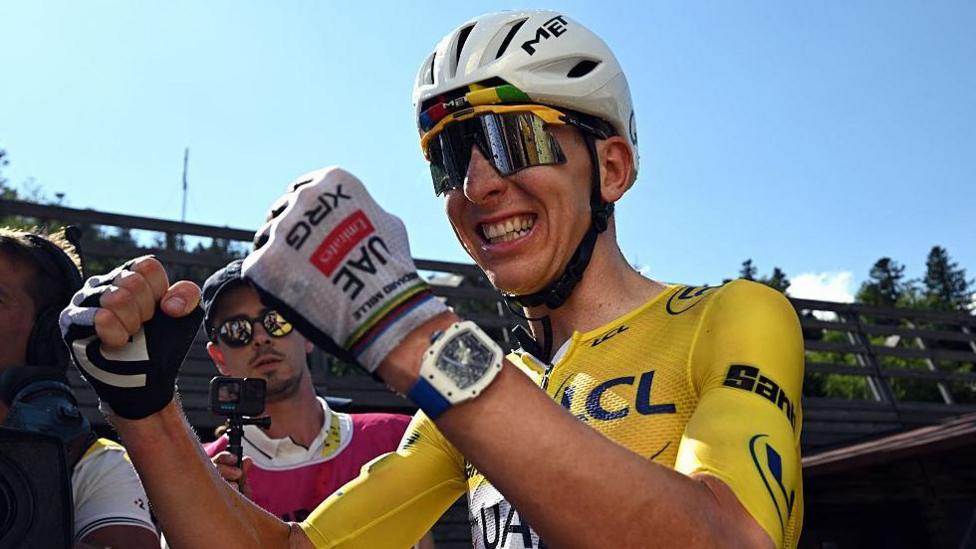
Pogacar Crushes Bastille Day With Third Stage Win
Tadej Pogacar turned Bastille Day into a personal showcase, grabbing his third stage win and extending his Tour lead past three minutes.

Breen Leads Wales Into Glasgow: A Captain's Fourth Crusade
Double gold medallist Olivia Breen will captain Team Wales at her fourth Commonwealth Games in Glasgow 2026, cementing a remarkable career of resilience.