The Silence on the Grass: Wimbledon Bids Farewell to Line Judges
Wimbledon's embrace of electronic line calling ends centuries of tradition, reshaping the atmosphere of tennis's most storied tournament.
A Tradition Falls Silent on the Most Sacred Court in Tennis
The crack of a serve splits the London air. The ball lands deep, skidding off the immaculate Wimbledon grass with a sharp hiss. Centre Court holds its breath for the call — but no call comes. No arm shoots up. No voice cries "Out!" There is only a brief, sterile pause, followed by the electronic tone that has now replaced over a century of human judgment at the All England Club.
Wimbledon 2025 has gone fully electronic for line calling, and the absence is deafening.
For generations, line judges were as much a part of the Wimbledon tableau as the white kits, the strawberries and cream, and the royal box. They sat courtside in matching uniforms, eyes laser-focused on chalk dust and baselines, delivering verdicts with the authority of a magistrate. They were the gatekeepers of fairness, the arbiters of millimetres, and sometimes the unwitting protagonists in the sport's most dramatic moments.
Now they are gone.
Why Wimbledon Made the Switch
The decision did not arrive overnight. The All England Lawn Tennis Club (AELTC) has been testing electronic line calling technology for several years, and the trajectory of professional tennis made this moment almost inevitable. The US Open removed line judges ahead of the 2021 edition. The Australian Open followed. The French Open, on clay, has retained human officials due to the unique properties of the surface, where ball marks serve as a natural review system.
But on grass, the calculation was different. Wimbledon's surface produces tight, low-bouncing points where margins are razor-thin. The old debate — human eyes versus camera arrays and infrared sensors — has tilted decisively toward the machines. The technology, known as Electronic Line Calling Live (ELC Live), uses a network of high-speed cameras positioned around the court to track the ball's trajectory in real time. The system can determine whether a ball is in or out to within a millimetre of accuracy.
The AELTC confirmed ahead of the 2025 Championships that all match courts, including Centre Court and No. 1 Court, would operate without line judges. The call is final, delivered through speakers embedded around the arena. There are no appeals. There are no challenges.
The Hawkeye Era Was Already Here
For those who watched the sport closely, this was not a revolution but the final step in a long migration. Hawk-Eye Live technology first appeared at the Australian Open in 2021 as a pandemic-era necessity. Reduced staff on-site made electronic calling a practical solution. But what began as a health measure revealed something deeper: the technology was not just equivalent to human line-calling. It was superior.
Studies across the sport have shown that electronic systems deliver an accuracy rate exceeding 99.9%. Human line judges, even the most experienced, operate at roughly 95% accuracy in high-pressure situations. That five per cent gap may sound small, but over the course of a five-set Wimbledon final involving hundreds of line calls, it translates into multiple wrong decisions.
Think back to 2019, when Serena Williams's semi-final against Barbora Strycova featured a contentious overrule that shifted momentum. Or consider 2009, when Robin Soderling's upset of Rafael Nadal at the French Open was partially shaped by a debatable baseline call. These moments, born from human error, were once woven into the sport's narrative fabric. Now they are being systematically removed.
What Has Changed on Court
The atmosphere at the All England Club this year is noticeably different. The hush that preceded every line call — that pregnant pause between impact and judgment — has been replaced by something cleaner but arguably less dramatic. The electronic tone that signals a fault is crisp and instantaneous. There is no ambiguity, no protest, no tension.
Players have adapted quickly. Carlos Alcaraz, the defending champion, noted during his first-round press conference that the transition felt natural.
"I've played with it at the other Slams for years now. At Wimbledon, it felt a little strange at first, because this is where tradition matters so much. But the calls are always right. I can just focus on the tennis." — Carlos Alcaraz
Others have been more reflective. Novak Djokovic, a seven-time Wimbledon champion and a player who once thrived on the psychological theatre of challenging calls, acknowledged the shift.
"Part of the drama was the challenge. You used your challenge like a weapon sometimes. That's gone now. But I understand why. The sport has to move forward." — Novak Djokovic
The removal of the challenge system is perhaps the most jarring change for longtime fans. The moment when a player would point their racquet at the big screen, the crowd would roar, and the Hawk-Eye animation would spin into view was one of tennis's most electric rituals. It is gone. In its place is a quiet confidence that the call is simply correct.
Match Stats: The Human vs. Machine Debate
- 99.9%+ — accuracy rate of electronic line calling systems in professional tennis
- ~95% — estimated accuracy of human line judges under match pressure
- 0 — line judges on court at Wimbledon 2025 across all match courts
- 2021 — year the US Open first removed line judges entirely
- 147 — years Wimbledon used human line judges before this switch
- 0 — challenge replays shown on court, as the challenge system has been eliminated
The Romance of the Line Judge
There is a loss here, and it would be dishonest to pretend otherwise. Line judges were not just officials. They were characters. The veteran who had worked 20 consecutive Wimbledons, sitting in the same seat on Court 18. The nervous first-timer whose hand shot up a fraction too late. The judge who made a howler on match point and became the subject of tabloid headlines for a week.
Their presence added a layer of human drama to a sport that can sometimes feel clinical. When a line judge overruled themselves, correcting their own call with a sheepish shake of the head, it was a reminder that tennis was played and judged by human beings, all of them fallible, all of them trying their best.
That humanity is now absent from the officiating chair. The electronic system does not get nervous on Centre Court. It does not feel the weight of a Grand Slam final. It does not flinch.
And for the purists who mourn that loss, the counterargument is blunt: it also never gets it wrong.
The Financial and Logistical Equation
Beyond sentiment, there are practical considerations. Maintaining a full complement of line judges across 18 match courts over a 14-day Grand Slam is an enormous logistical undertaking. The AELTC employs and trains hundreds of officials each year. Electronic line calling reduces staffing requirements significantly and eliminates the risk of a judge falling ill, missing a call due to sun in their eyes, or becoming the centre of a controversy that overshadows the tennis itself.
The technology also levels the playing field between show courts and outer courts. Previously, the quality of officiating could vary between Court 2 and Court 14, where less experienced judges might be stationed. Now every court operates on the same system, with the same precision.
What This Means for the Rest of the Tour
Wimbledon's move leaves the French Open as the only Grand Slam still using human line judges, a distinction rooted in clay court tennis's unique relationship with ball marks. On Roland Garros's crushed brick surface, the physical evidence of a ball's landing point is visible to the naked eye, making electronic calling less essential — though not irrelevant.
The broader ATP and WTA tours are expected to follow the Grand Slam model. Several Masters 1000 and WTA 1000 events have already transitioned to full electronic line calling, and the direction of travel is unmistakable. Within five years, human line judges may be confined to lower-tier events and exhibition matches.
Looking Ahead: Tradition Meets Progress
Wimbledon has always walked the line between heritage and innovation. The tournament introduced a roof over Centre Court in 2009. It adopted tiebreaks at 12-12 in the final set in 2019, ending the era of endless deciders. It relaxed its all-white dress code slightly to accommodate women's athletic needs. Each change was met with resistance, debate, and eventual acceptance.
The removal of line judges will follow the same arc. The complaints will fade. The accuracy will be appreciated. The novelty will wear off, and the electronic tone will become as much a part of Wimbledon's soundscape as the popping of champagne corks on Henman Hill.
But on the first day of the 2025 Championships, as Centre Court sat in that unfamiliar silence after a ball struck the line, there was a moment — brief, perhaps irrational — where something felt missing. Not accuracy. Not fairness. Just a little bit of the human messiness that made this sport feel alive.
The grass is still perfect. The traditions endure. And somewhere, a retired line judge is watching from the stands, their arm twitching on instinct when a ball lands close to the baseline.
Wimbledon moves on. It always does.
Editorial Integrity
This is an original SportPulse article written by our editorial team. All content is independently researched, written, and reviewed by our writers and editors before publication. We do not publish copied, aggregated, or syndicated content.
SportPulse is committed to original sports journalism. Read our editorial policy or contact us with any questions.
More Like This
All tennis
The Serve That Heals: Anisimova Channels Serena to Rewrite Her Wimbledon Story
Amanda Anisimova fired 20 aces to survive Sofia Kenin and continue her redemptive Wimbledon journey.
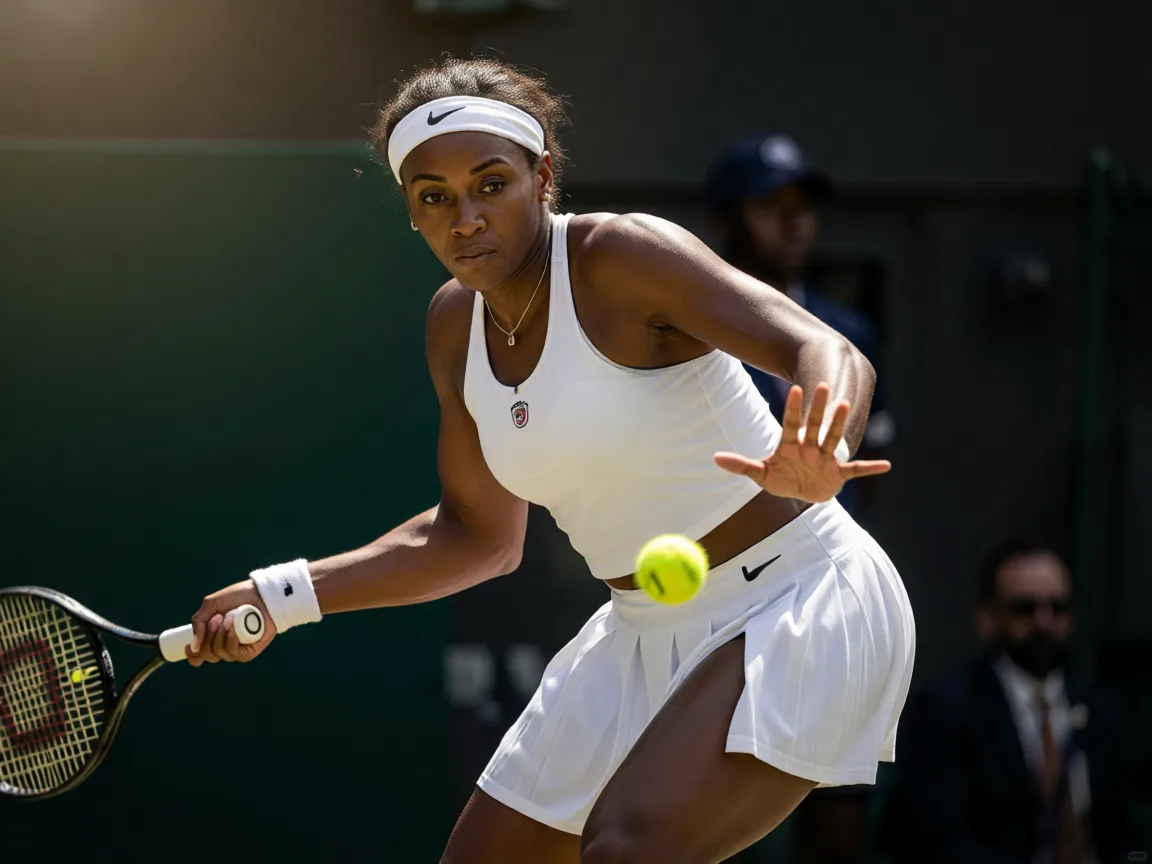
Wimbledon's Semi-Final Shake-Up: The Old Guard Absent, the New Order Arrives
No Sabalenka, no Swiatek, no Rybakina. Wimbledon's final four crown a generational shift forged on grass.
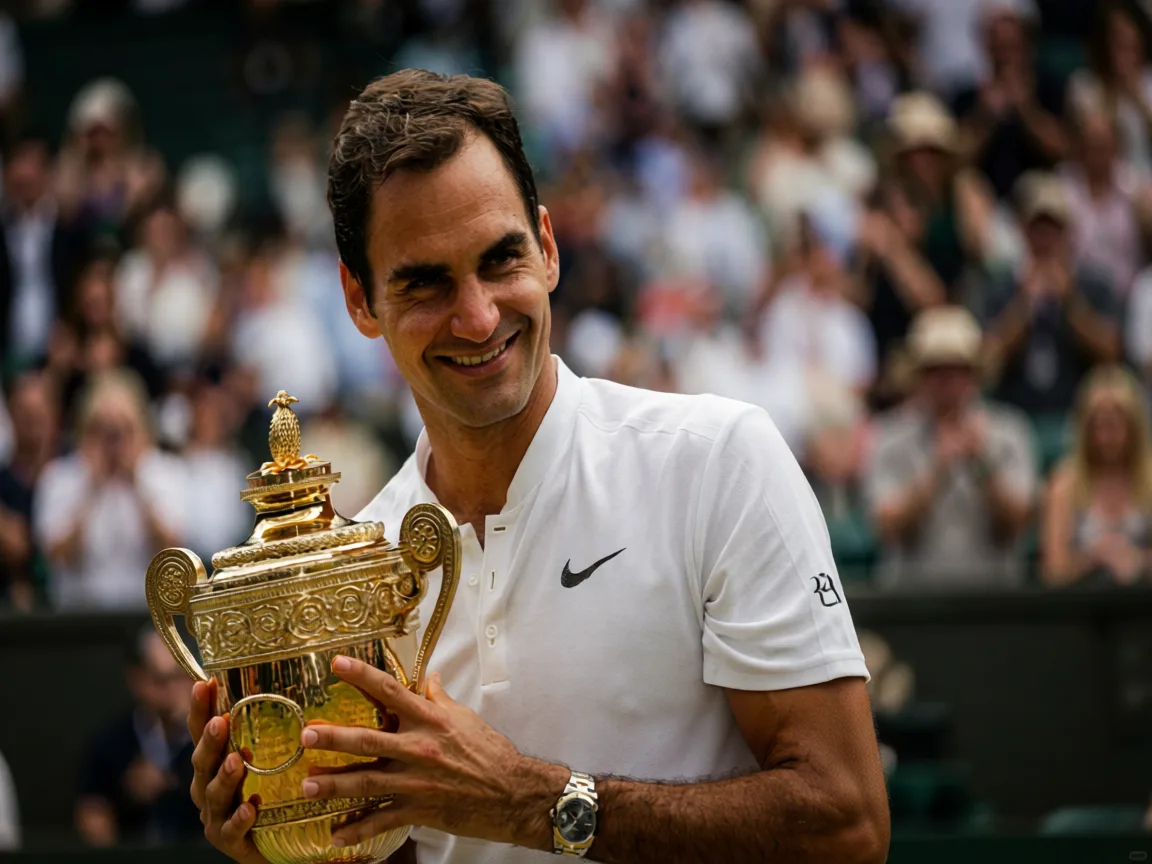
The Grass Court Gods: Wimbledon's Untouchable Record-Holders
From Navratilova's nine trophies to Federer's eight, the legends who turned Wimbledon into their personal kingdom.