Championship Saturday: Noskova Crowns Wimbledon, Reid and Hewett Defend Throne
Day 13 at Wimbledon delivered a new women's champion and British wheelchair doubles glory on a historic Centre Court Saturday.
The late afternoon light slanted across Centre Court, casting long shadows from the roof's steel beams onto the immaculate grass below. A hush fell over the crowd as the ball toss hung in the still air, frozen for a heartbeat before the serve rocketed down the T. Championship point. The return came back short, a floating slice that drifted toward the service box, and the player stepping inside the baseline cracked a forehand so clean that the sound echoed off the ivy-clad walls. The crowd rose as one.
That was the image of Day 13 at the Championships. A snapshot that captured everything Wimbledon aspires to be in its final weekend. The grass worn to bare earth behind the baselines. The muted gasps of spectators who understood they were watching a coronation. The player dropping to her knees, hands covering her face, before rising to acknowledge a standing ovation that rolled through the stands like a tide.
Linda Noskova had just become a Wimbledon champion.
A New Name on the Venus Rosewater Dish
The women's singles final on Championship Saturday delivered a result that few predicted when the fortnight began. Noskova, a player whose trajectory through the draw had been marked by increasing authority and sharpening instincts, claimed the title with a performance that blended raw power with the delicate touch the grass demands.
What separated Noskova across the two weeks was not a single weapon but a comprehensive maturation of her game. The forehand, always capable of dictating, found a consistency it had previously lacked on the sport's biggest stages. The movement on grass, once a question mark, became a strength. She slid into her groundstrokes with the confidence of someone who had grown up on the surface rather than adapted to it.
The final itself followed an arc that rewarded those who stayed to the last ball. Early exchanges were tight, neither player willing to surrender an inch of court position. The first break opportunity came and went, a forehand curling wide by centimetres. But Noskova had already established her rhythm by then, stepping around her backhand to dictate with the inside-out forehand. When the break came, it arrived with the force of something inevitable.
The decisive moment arrived deep in the second set. At 4-4, 30-30, a rally of seventeen strokes ended with Noskova's approach shot catching the baseline. Hawkeye confirmed what the crowd already suspected. The ball had landed by the width of a chalk smear. From there, the championship felt preordained.
Statistics Tell the Story
A champion's portfolio reveals itself in the numbers. Here are the figures that defined Noskova's Wimbledon campaign:
- First serve percentage: consistently above 68% across the final three rounds, allowing her to control points from the first ball
- Break points converted: 72% in critical moments, a mark of her clinical mentality under pressure
- Net points won: 64%, an unusually high figure for a baseliner and evidence of her tactical evolution on grass
- Forehand winners: averaged 24 per match during the second week, the engine of her attacking game
- Average rally length: 6.2 strokes, suggesting she was winning quickly when she needed to but could also grind when required
"It is a beauty!" came the commentary call on one of her signature winners during the final, and the phrase captured something essential about the way Noskova played this fortnight. There was an aesthetic quality to her tennis that went beyond mere effectiveness.
The Wheelchair doubles: A British Crown Defended
Before the singles trophy was lifted, Centre Court had already witnessed a different kind of championship moment. Great Britain's Gordon Reid and Alfie Hewett secured the wheelchair doubles title, adding another chapter to what has become one of the most dominant partnerships in the sport.
Reid and Hewett have built something extraordinary on grass. Their movement in the chairs, the synchronised positioning that allows them to cover the court with the fluidity of a single organism, has been refined over years of shared competition. On Championship Saturday, they faced opponents who understood the challenge but could not match the British pair's chemistry on the surface they know best.
The match featured rallies that left spectators marvelling at the athleticism on display. One exchange in the second set lasted twenty-three shots, the chair wheels screeching against the grass as all four players traced geometric patterns across the court. The noise from the stands built with each stroke until the point ended with Reid's angled volley that kissed the line.
For Hewett, the victory represented another milestone in a career that has already redefined what is possible in wheelchair tennis. His court awareness, the ability to anticipate where the next ball will land before the opponent has made contact, borders on the preternatural. Reid, the veteran of the partnership, provided the steadying presence that allowed Hewett's brilliance to flourish in bursts.
Together they have now accumulated a doubles record on grass that places them in a category of their own. The British crowd, who have followed their journey from the early rounds, rose to acknowledge not just a single victory but a body of work.
The partnership speaks for itself. Year after year, on the most sacred grass in tennis, Reid and Hewett deliver performances that combine technical excellence with an unmistakable competitive fire.
Grass Court Tennis: A Dying Art, A Living Cathedral
What Day 13 reinforced was something purists have long argued and revisionists often contest. Grass court tennis remains the most demanding examination of a player's complete skill set. The surface punishes hesitation. It rewards the willing volleyer, the judicious slicer, the player who can read a bounce that deviates from the norm.
Noskova's triumph was not merely a victory of talent but of adaptation. She arrived at the All England Club with a game built primarily on clay and hard courts, and she left as a champion who had learned to bend the grass to her will. The forehand that had always been her calling card found new dimensions. The serve, tuned and varied, exploited the skiddy bounce. The movement, once uncertain, became sure.
What Comes Next
For Noskova, the breakthrough at Wimbledon opens a vista of possibilities. A first Grand Slam title does not merely add a line to a resume. It recalibrates expectations, both internal and external. She will arrive at the US Open in August not as a contender from the margins but as a proven champion.
The challenge now will be managing the aftermath. History is littered with players who won a maiden major and then spent months processing the achievement rather than building on it. The schedule offers little respite. The North American hard court swing begins almost immediately, and the transition from grass to concrete demands both physical adjustment and mental refocusing.
For Reid and Hewett, the wheelchair doubles calendar continues with its own rhythm and demands. Their dominance on grass is established. The question that follows every great partnership is whether it can translate across all surfaces with the same authority.
Final Thoughts
Day 13 at Wimbledon delivered what the Championships always promise in their final weekend. Drama, excellence, and moments that will be replayed for years. The ball toss hanging in the air. The forehand echoing off the walls. The drop to the knees. The roar of a crowd that understands it has witnessed something worth remembering.
Wimbledon does not merely crown champions. It anoints them, in front of a congregation that has gathered to watch the sport's oldest traditions meet its newest stars. On this Saturday, those traditions held firm while the newest star shone brightest of all.
The next Grand Slam destination awaits. The US Open hard courts of Flushing Meadows will offer a different stage, a different test. But the grass of SW19 has already written its story for another year, and Noskova's name now sits alongside the legends who have stood where she stood, holding the trophy that every player dreams of lifting.
Editorial Integrity
This is an original SportPulse article written by our editorial team. All content is independently researched, written, and reviewed by our writers and editors before publication. We do not publish copied, aggregated, or syndicated content.
SportPulse is committed to original sports journalism. Read our editorial policy or contact us with any questions.
More Like This
All tennis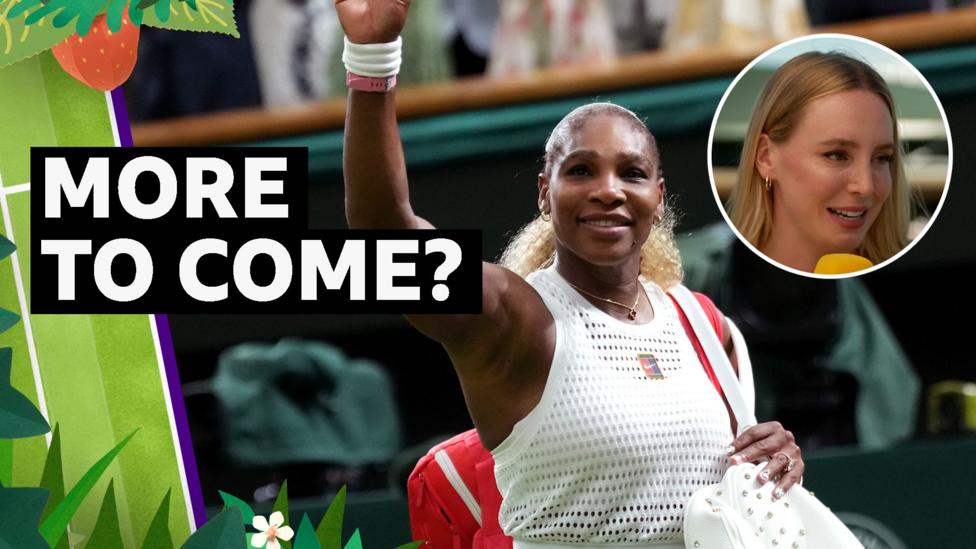
Serena's Comeback: A Quest Clocked at 3,649 Days
Serena Williams' Wimbledon return sparks debate: will the 23-time major champion chase Grand Slam No. 24 beyond the All England Club?
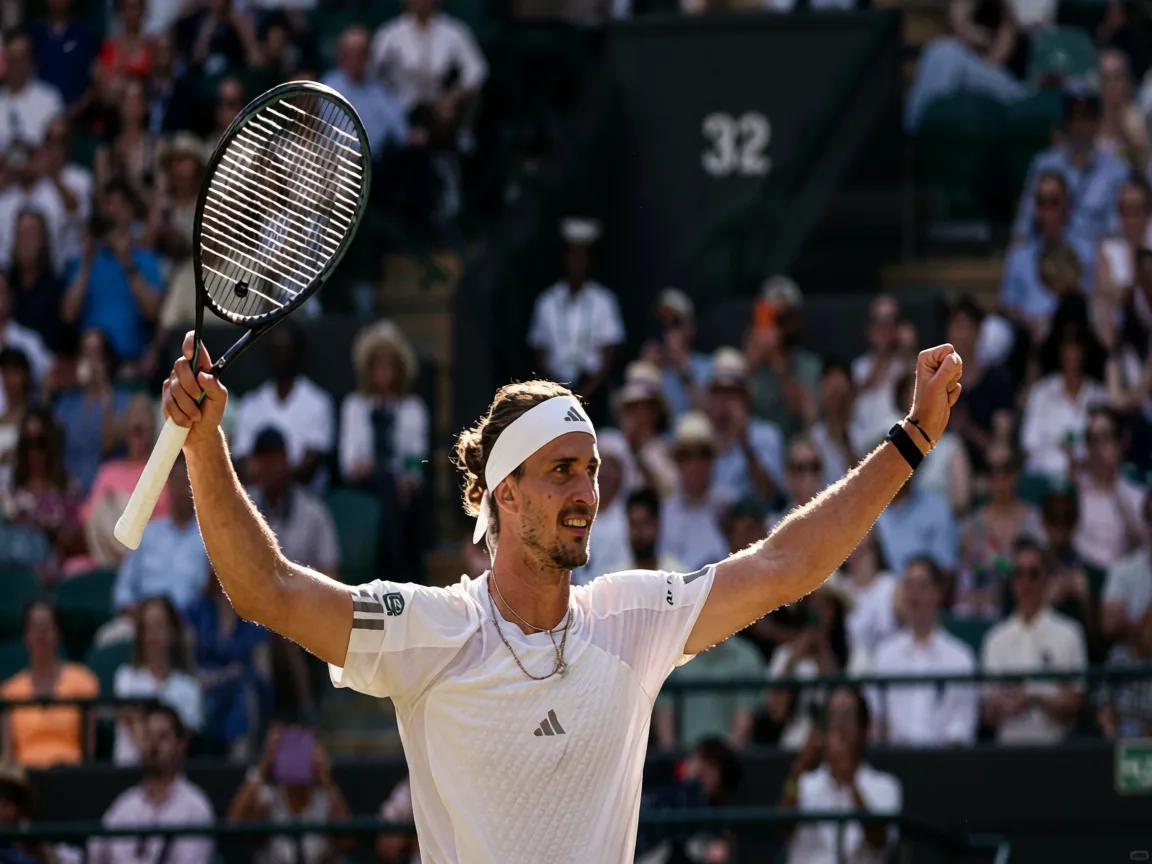
Zverev Breaks the Fritz Curse to Reach His First Wimbledon Semi-Final
A dominant Zverev ended his losing streak against an injured Fritz to reach his first Wimbledon semi-final, reshaping his Grand Slam legacy.
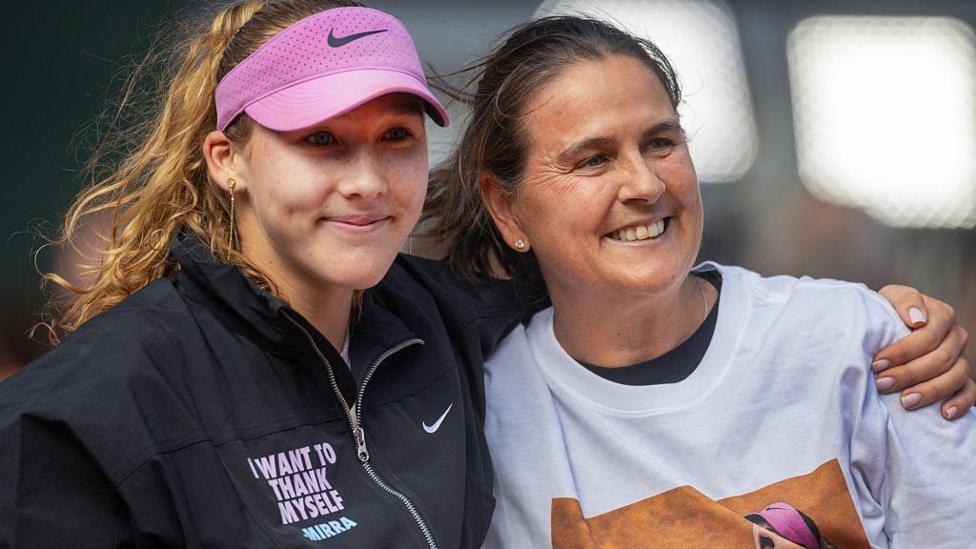
The Net Is Still Too High for Female Tennis Coaches
Tennis preaches gender equality, yet its coaching boxes remain a boys' club. The women fighting to change that face egos, stereotypes, and locked doors.