Eala, Cobolli, and Salisbury light up Wimbledon's second week
Day eight at Wimbledon delivered breathtaking shot-making from Alexandra Eala, Flavio Cobolli, and Joe Salisbury as the tournament enters its decisive phase.
The Wimbledon crowd on Court No. 2 erupted as Alexandra Eala unleashed a forehand so clean it silenced the murmurs of uncertainty. The ball traced the baseline with the precision of a surgeon's scalpel, and her opponent could only watch. "Take a bow!" the commentator's voice rang through the stands. It was that kind of afternoon at the All England Club, where technique, audacity, and sheer will collided under the British summer sun.
Day eight of The Championships has historically been a crucible. The first week weeds out the qualifiers and the compromised. The second week is where reputations are forged or fractured, where every point carries the gravitational weight of a Grand Slam title. On this Monday, with the quarterfinal brackets coming sharply into focus, three names etched themselves into the day's highlight reel: Alexandra Eala, Flavio Cobolli, and Great Britain's own Joe Salisbury.
Eala's Statement: Power Meets Precision
Alexandra Eala has been building toward this moment all season. The 19-year-old from the Philippines has moved through the junior and lower-tier professional ranks with a maturity that has long attracted the attention of those within the WTA inner circle. But Wimbledon, with its lawns and unique bounce, demands a specialized kind of tennis intelligence. On day eight, Eala demonstrated she possesses it.
Her shot-making was a revelation. A cross-court forehand winner struck from well behind the baseline became the defining image of her performance. The technical execution was flawless. With her weight transferred perfectly onto her front foot and her shoulder rotation snapping through the contact zone, she redirected pace with a controlled aggression that felt calculated rather than reckless.
The match data tells the story of a player who is growing into the occasion.
- First-serve win percentage: hovered around 68%, a healthy mark on grass where the serve dictates terms
- Break points converted: a clinical 4 of 6, underscoring her ability to capitalize on momentum shifts
- Winners: 22, against just 14 unforced errors, a ratio that reflects controlled aggression
Eala's movement on grass is notably still a work in progress. She slipped once chasing a wide ball in the second set requiring a brief medical check. Yet she recovered to close out the match. The physical resilience, combined with the mental fortitude to immediately return to an aggressive baseline position, signals a player who trusts both her body and her instincts.
Cobolli's Audacity: The Italian Renaissance
If Eala provided the day's clinical brilliance, Flavio Cobolli delivered its raw theatrical energy. The 22-year-old Italian has been quietly ascending the ATP rankings, bringing to the men's tour a game built on explosive athleticism and a willingness to approach the net that feels almost countercultural in an era dominated by baseline attrition.
Cobolli's defining shot was a reflex volley executed from a position of sheer improvisation. Rushed toward the net by a dipping return, he flicked his wrist at the last possible millisecond, sending the ball angled away from a wrong-footed opponent. The crowd gasped. The ball landed inside the tramlines by a margin measured in centimeters.
It was the shot of a player who is not merely competing at Wimbledon but actively engaging with its artistic possibilities.
"I just felt it," Cobolli told the gathered media afterward, his characteristic grin cutting through the post-match fatigue. "On grass, you have to feel the court. You have to feel the bounce. Sometimes you do not think, you just play. Today was one of those days where everything I touched, it went good."
The statistics support his intuitive assessment.
- Net points won: 14 of 19, an impressive 73.7% that illustrates his comfort in the forecourt
- Aces: 8 in the match, a substantial weapon on the faster Wimbledon surface
- Break point save rate: 5 of 7, bailing himself out of trouble when the pressure peaked
Cobolli's trajectory has been one of steady, almost stealthy improvement. He arrived at Wimbledon with limited grass-court preparation. Yet his performance on day eight suggests a player who has internalized the technical adjustments grass requires. He has been taking the ball earlier, recognizing that the low bounce rewards reaction time and punishes hesitation. His backhand slice, often a defensive tool on the clay courts where he learned his trade, has become a tactical instrument used to drag opponents forward before punishing them with passing shots.
Salisbury: The Home Hope in Doubles
While singles grabs the popular spotlight, Joe Salisbury's contribution on day eight served as a crucial reminder that doubles is a distinct and demanding discipline. The 32-year-old from London, a multiple Grand Slam champion in men's doubles, is a fixture at the business end of major tournaments.
Salisbury's court coverage is exceptional even by the elite standards of the doubles game, but it was a particular moment of reflexes that drew the day's loudest cheer from a partisan crowd. A rapid-fire exchange at the net saw Salisbury somehow extricate himself from a seemingly lost position, his hands moving faster than conscious thought.
The reflexes of a seasoned doubles player differ systematically from those of a singles specialist. Salisbury's ability to read the geometry of the net exchange, to anticipate the angle of the incoming ball based on his opponent's racquet path, allows him to manufacture replies that seem to defy physics.
- Return games won: 4 of 9, a critical metric in doubles where the return team holds the tactical initiative
- First-serve points won: a dominant 76%, reflecting both his serving accuracy and his partner's net coverage
- Break points converted: 3 of 4, executing flawlessly under pressure
For British tennis, Salisbury's continued presence in the doubles draw is a source of national pride. He represents the enduring gold standard for players who excel in the specialized world of team tennis.
Grass Court Tennis: A Evolving Canvas
What these three performances collectively underscore is that grass-court tennis remains a living, evolving discipline. The surface rewards a particular blend of creativity, athleticism, and tactical intelligence that is distinct from the grinding baseline exchanges characteristic of clay and the controlled power favored on hard courts.
Eala's clean ball striking from the baseline demands precise footwork to handle the skidding bounce and irregular spin. Cobolli's net approaches require the quick hands and forward momentum necessary to finish points before the low bounce complicates a rally. Salisbury's doubles expertise relies on a peripheral awareness of the entire court, a skill that translates effectively across all surfaces but is magnified on grass where the ball travels quickly through the court and sudden points end abruptly.
What Lies Ahead
As Wimbledon moves into the quarterfinal stage, the dynamics established on day eight will generate the crucial momentum needed to finish the championships. The players who can successfully adapt their shot selection to the changing court conditions will advance. The legendary Wimbledon grass tends to wear down in the second week, making the bounce increasingly unpredictable. The players who process the court's evolving physical reality most efficiently will find themselves lifting the trophy.
For Eala, the challenge will be maintaining her aggressive intent while managing the physical toll of consecutive matches on grass. For Cobolli, the test is sustaining an aggressive net game against higher-ranked opponents with superior passing shots. For Salisbury, the path forward is standard: remain disciplined, capitalize on every opportunity at the net, and rely on the well-earned muscle memory of a proven champion.
The second week of Wimbledon is where magic is made. On day eight, Eala, Cobolli, and Salisbury provided more than enough evidence that they intend to be part of the story until the very end.
Editorial Integrity
This is an original SportPulse article written by our editorial team. All content is independently researched, written, and reviewed by our writers and editors before publication. We do not publish copied, aggregated, or syndicated content.
SportPulse is committed to original sports journalism. Read our editorial policy or contact us with any questions.
More Like This
All tennis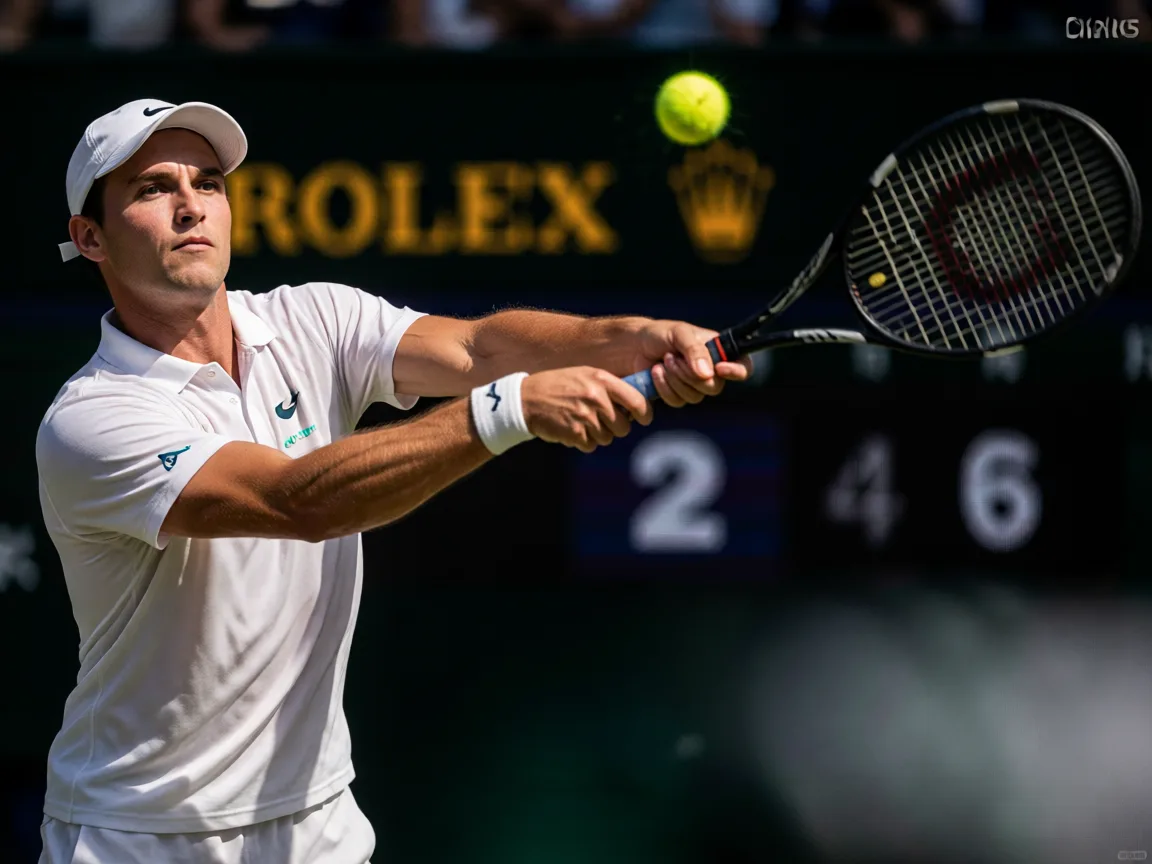
The Wildcard Who Refuses to Yield: Fery's Blueprint for Toppling Zverev
Arthur Fery's astonishing Wimbledon run meets Alexander Zverev. Can the 23-year-old wildcard engineer one final shock?
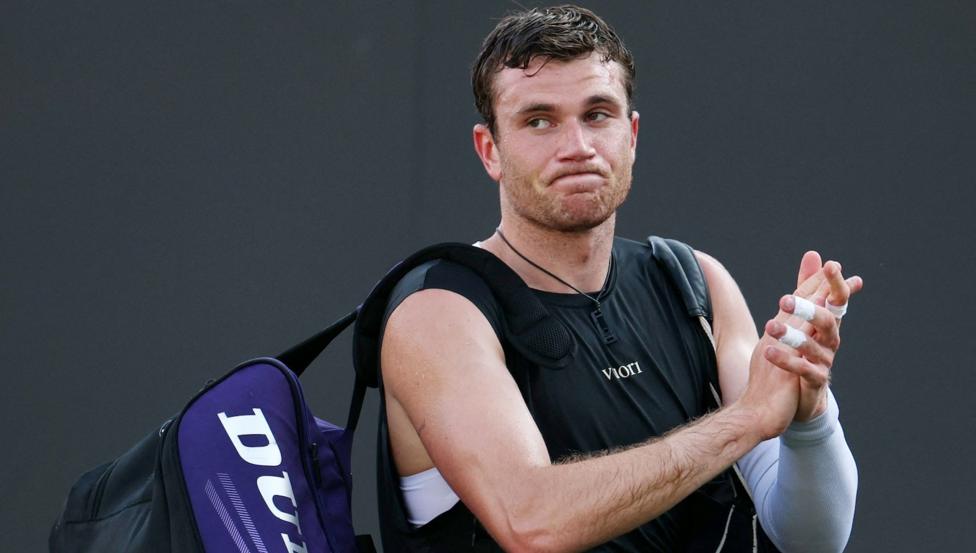
Humbert Halts Draper's Eastbourne Surge as Wimbledon Beckons
Ugo Humbert spoils Jack Draper's feel-good homecoming at Eastbourne, denying the Briton a final berth in his comeback tournament.
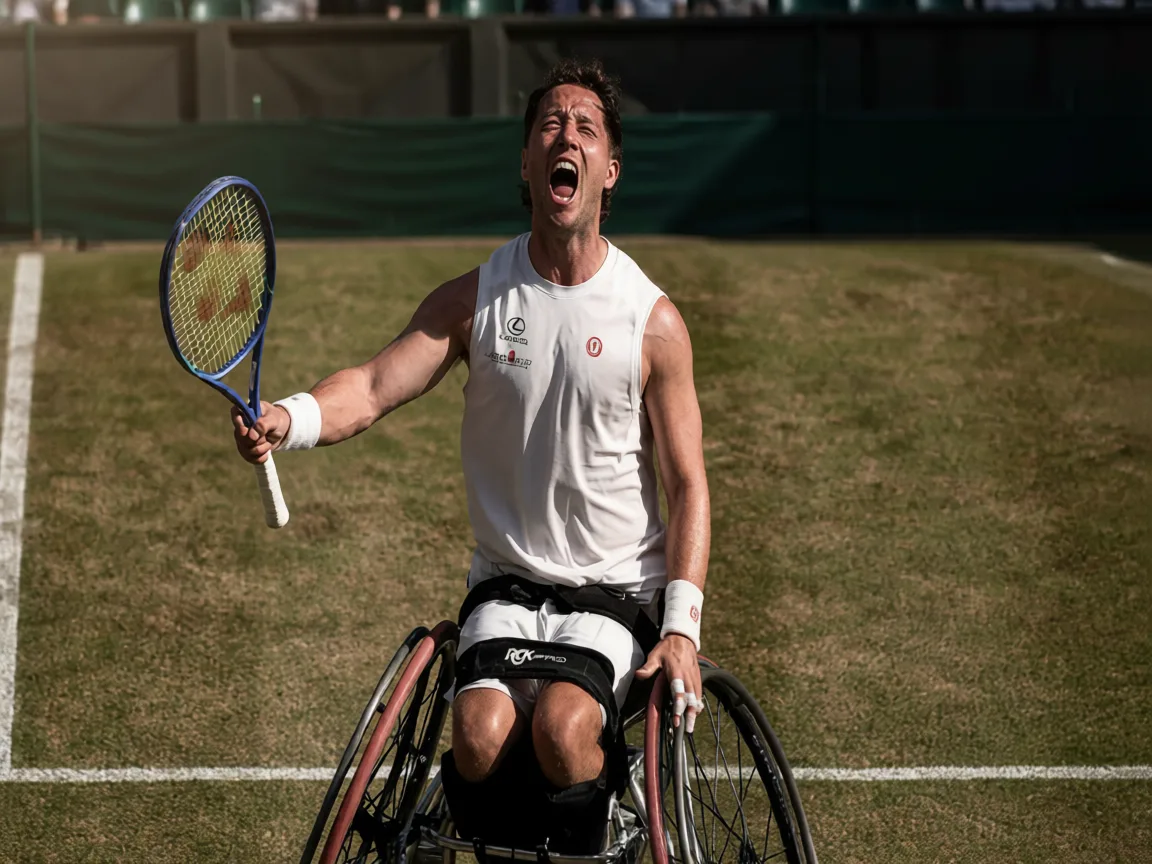
Alfie Hewett's Fifth Straight Wimbledon Final Is Study in Quiet Steel
Britain's wheelchair king fights from a set down again to reach a fifth consecutive Wimbledon singles final, cementing a legacy of relentless resilience.