Alfie Hewett's Fifth Straight Wimbledon Final Is Study in Quiet Steel
Britain's wheelchair king fights from a set down again to reach a fifth consecutive Wimbledon singles final, cementing a legacy of relentless resilience.
The ball toss was perfect. The serve cracked into the back of the service box with the kind of spin and placement that would draw a nod of approval from any able-bodied coach watching from the stands. Alfie Hewett, hunched forward in his custom-built sports wheelchair, tracked the return off his opponent's racquet, pivoted with a explosive push of his right wheel, and dispatched a forehand winner down the line that grazed the white chalk. Centre Court did not erupt. It resonated with a deep, appreciative roar from a crowd that has slowly, unmistakably, begun to understand what it is witnessing.
Hewett had started this Wimbledon in the same mold he has carried himself for half a decade now: with the quiet, almost unsettling demeanor of a player who knows his own game better than anyone else on tour. The British No. 1 is not flashy. He does not appeal for crowd sympathy. He does not perform for the cameras. What he does, with punishing regularity, is win.
Reaching a fifth consecutive Wimbledon wheelchair singles final is no small feat. The consistency required to peak at the same tournament, on the same grass, year after year, in a discipline where the physical margins are infinitesimally thin, is extraordinary. Each year brings new opponents, new conditions, and new pressure. Hewett has faced them all and refused to buckle.
The Turning Point Against Fernandez
Against Argentina's Gustavo Fernandez in the semifinal, Hewett was forced to dip into a well of resilience that has become his signature. He dropped the first set, a rare occurrence for a player of his pedigree on grass. Fernandez, a multiple Grand Slam champion himself, was striking the ball cleanly and exploiting the slightly slower conditions that an overcast South London afternoon can produce. For a set, the Argentine was the better player.
What followed was a masterclass in adjustment. Hewett, who has spent years refining a game that blends aggression with an almost mathematical precision, began to find the angles. He pushed Fernandez deeper behind the baseline. He served with greater variety. And, critically, he minimized the unforced errors that had plagued him in the opening set.
The comeback was not immediate. It was a grind. Points were long. Wheels screeched against the grass. Every changeover felt like a mini-battle in itself.
Hewett's ability to fight back from a set down is not new. He has now won multiple matches at Grand Slam level after losing the opening set. His win-loss record in five-set matches (the format for wheelchair singles when a match goes the full distance) has long been among the best on the tour. But to do it at Wimbledon, with the weight of a home nation's expectations on his shoulders, adds another layer of complexity.
The Making of a Champion
Alfie Hewett was born in Norwich with a congenital heart condition and later diagnosed with Perthe's disease, a condition that affects the hip joint. He was using a wheelchair by his early teenage years. It would have been easy, understandable even, for a young man confronting such challenges to step away from competitive sport. Instead, he leaned into it.
"When I first started, I didn't see anyone like me on TV. I didn't see a path. I had to build my own."
That path led him to the National Tennis Centre, to coaches who saw not a limitation but a different kind of athlete, and eventually to the top of the wheelchair tennis rankings. His game is built on a foundation of tactical intelligence and an aerobic engine that would rival many able-bodied athletes. The upper-body strength required to maneuver a racing wheelchair at full speed, stop on a dime, and then execute a finely-tuned groundstroke is enormous. Hewett makes it look routine. It is not.
His rivalry with Gordon Reid, his fellow Briton and frequent doubles partner, has defined an era of the sport. Together, they have dominated the doubles circuit, completing the career Golden Slam in doubles in 2021. But in singles, Hewett has had to forge his own path, often facing Reid across the net in finals that split loyalties and tested friendships.
Career by Numbers
- 5: Consecutive Wimbledon singles finals reached (2021-2025)
- 23: Age at which he first became world No. 1 in the singles rankings
- Multiple: Grand Slam singles titles, including victories at the Australian Open, French Open, and US Open
- Career Golden Slam: Achieved in doubles alongside Gordon Reid in 2021
- 30+: Total Grand Slam titles across singles and doubles combined
The Semifinal: A Tactical Reckoning
Back on Court, Fernandez was not going away quietly. The Argentine has been one of the sport's most consistent performers for a decade, a player whose own Grand Slam pedigree makes him a danger on any surface. His forehand is a weapon, and he had used it effectively in the first set to dictate play.
But Hewett's adjustments were telling. He returned deeper, denying Fernandez the chance to take the ball on the rise. He varied his own serve placement, going wide on the advantage court to open up the court for his backhand. Slowly, methodically, the match turned.
The second set went to Hewett. The third was a war of attrition.
It was in those final games that Hewett's physical conditioning shone through. The ATP tour has its marathon men, players who live for the fifth set. In wheelchair tennis, the equivalent is the three-set epic played on the hardest courts and under the most intense pressure. Hewett's legs, or more accurately his upper body and cardiovascular system, were simply stronger on the day.
When the final ball was struck, when the comeback was complete and a fifth consecutive Wimbledon singles final had been secured, Hewett barely reacted. There was no roar. No fist pump aimed at the sky. Just a clenched fist and a nod toward his box. The acknowledgment of a job not yet finished.
What This Final Means
For Hewett, the final is both a familiar destination and an opportunity to cement a legacy. He has been here before. He knows the routine, the media obligations, the increased scrutiny. But each final is a new chapter, a chance to add another chapter to a story that has redefined what wheelchair tennis looks like and what its top players can achieve.
His legacy is already substantial, particularly at Wimbledon. No British wheelchair player has dominated their home Grand Slam with such sustained excellence. He has become the face of the sport in the UK, a role model whose impact extends far beyond the court. Young disabled athletes see him and see a path. That, perhaps more than any trophy, is the most significant part of his story.
But Hewett is not done. There is a final to win, another chapter to write. The quiet man from Norwich has never been one for farewells. He is, after all, still in his prime.
As he prepares to step onto court for a fifth consecutive Wimbledon singles final, the weight of history is on his shoulders. But if anyone is equipped to carry it, it is a player who has spent his entire career defying expectations, one precise, powerful, and utterly determined groundstroke at a time. The narrative writes itself, but Hewett is not one to read reviews. He is too busy preparing for the next point.
Wimbledon is where he returns year after year, where he finds a way, where he endures. And now, once again, he stands on the edge of another title, carrying the flag for wheelchair tennis with the same quiet, unyielding force that has defined every step of his remarkable career. Fifth final and counting. The quiet man with the loudest racquet is not finished yet.
Editorial Integrity
This is an original SportPulse article written by our editorial team. All content is independently researched, written, and reviewed by our writers and editors before publication. We do not publish copied, aggregated, or syndicated content.
SportPulse is committed to original sports journalism. Read our editorial policy or contact us with any questions.
More Like This
All tennis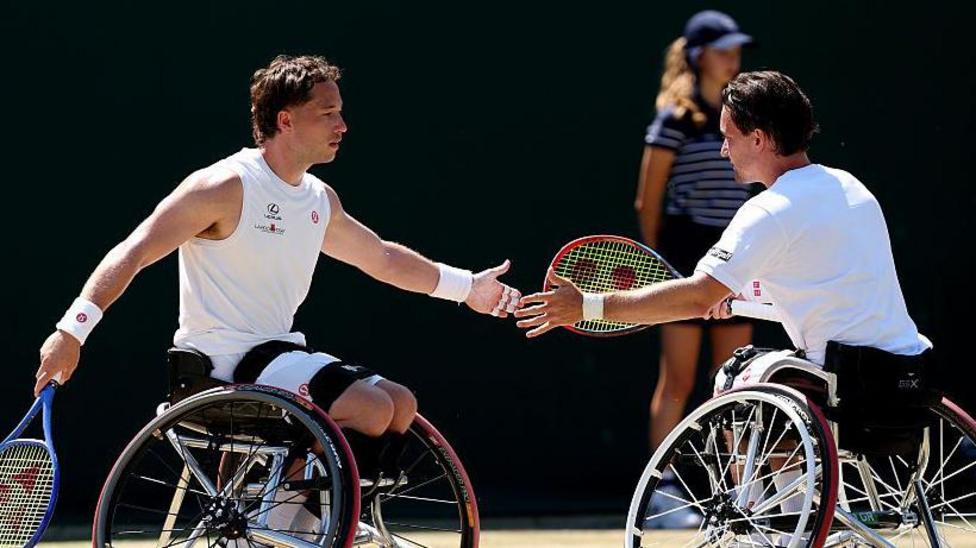
Alfie Hewett's Relentless Pursuit of Wimbledon Glory on Two Fronts
Britain's wheelchair maestro fights through a grueling Thursday double-header to keep his SW19 singles and doubles dreams alive.
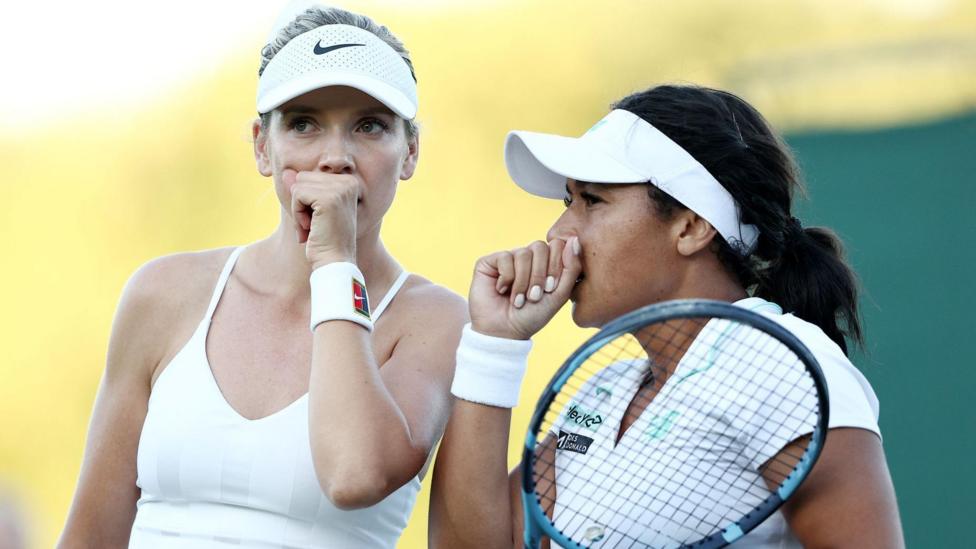
British Hopes Fade as Boulter and Watson Fall in Wimbledon Doubles Opener
Katie Boulter and Heather Watson bow out in the first round, exposing Britain's doubles depth problem on home grass.
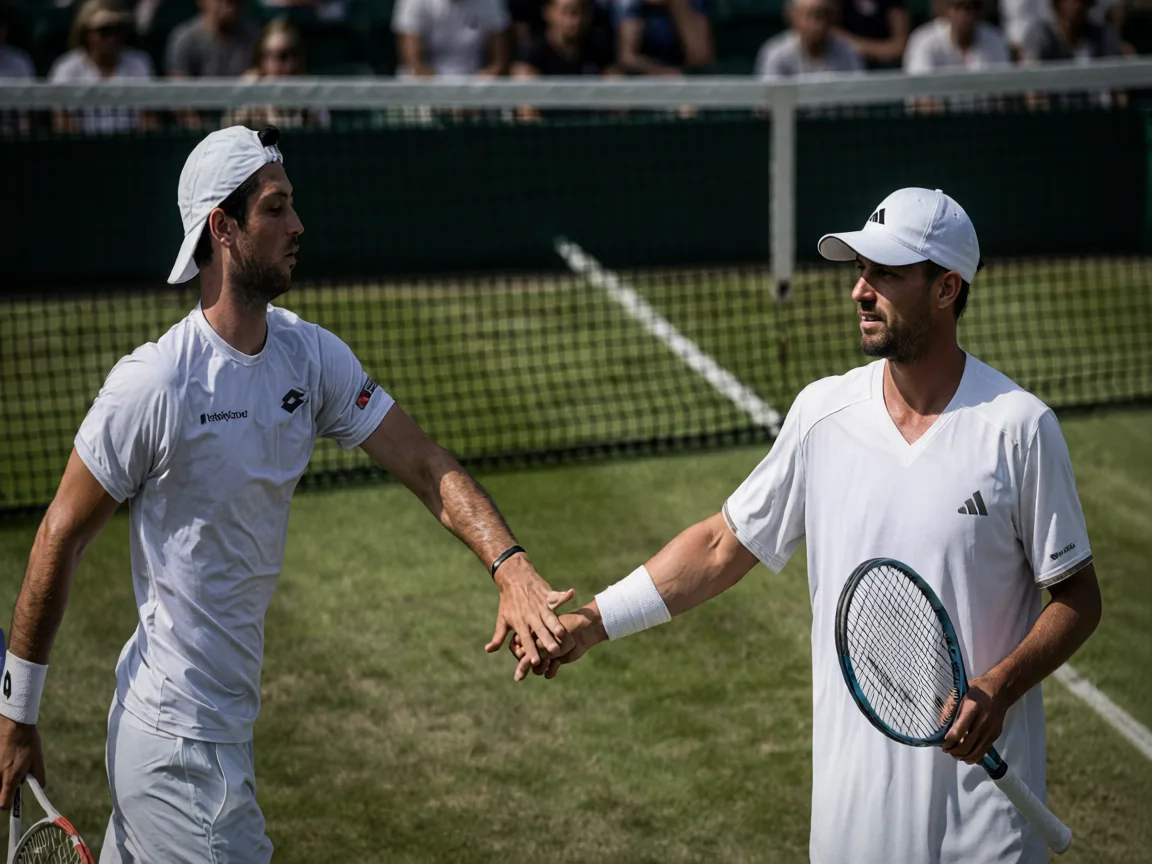
Cash & Glasspool March On: Defending Champions Refuse to Relinquish Crown
Britain's defending doubles champions grind into the Wimbledon quarterfinals, proving their title was no one-off summer romance.