Wimbledon's Most Terrifying Shot: The Overhead Smash
The overhead smash looks simple but terrifies tennis elites, exposing even Novak Djokovic's legendary complete game on grass.
Centre Court falls eerily silent. The lob arcs high into the London sky, a pale yellow speck against the gray clouds. The crowd rises in anticipation, already calculating the inevitable thunderous conclusion. The player retreats, plants, and coils beneath the descending ball. Timing must be absolute. The racket arm whips forward.
Then comes the embarrassing thud of framed leather against wind. The ball sprays wildly into the stands. An abrupt, agonizing groan ripples through the grass. The overhead smash, a shot that appears brutally simple from the safety of the sofa, remains the most treacherous execution in professional tennis.
As the grass court season reaches its crescendo at the All England Club, the overhead looms larger than at any other tournament. Wimbledon's slick, low-bouncing surface transforms the high ball into a fleeting, skidding target. Victims of the miscued smash are ubiquitous across the tour, but the shock cuts deepest when it happens to the undisputed masters of the sport.
The Djokosmash: A Crack in the Armor
Last month at Roland Garros, a journalist posed a straightforward technical question to Novak Djokovic about the overhead. The response was uncharacteristically defeated. The 24-time Grand Slam champion, a man who has built a legendary career on possessing the most complete game in tennis history, could only offer a regretful shake of the head.
“You’re talking to the wrong person,” Djokovic said, laughing.
It was a startling admission. In a sport where the elite relentlessly protect their aura of invincibility, Djokovic's self-deprecation laid bare a universal truth. The overhead smash is the great equalizer, the stroke that reduces gladiators to mere mortals.
The tennis internet has even coined a term for his misfires: the “Djokosmash.” It is a phenomenon born not from a lack of skill, but from the agonizing psychology of the shot. A player with 992 weeks in the Top 10 can dictate baseline rallies with clinical precision. Yet when forced to track a ball falling from the heavens, the mechanical certainty evaporates. For Djokovic, the occasional smash into the net has become a bizarre, endearing flaw in an otherwise impenetrable fortress of a game.
The Geometry of Panic
Why does a stroke that essentially requires a player to hit a stationary ball downward induce such panic? The answer lies in the cruel geometry of the court and the treacherous physics of the overhead.
Unlike a groundstroke, where the bounce provides a consistent rhythm and a stable strike zone, the overhead demands the player generate their own timing in mid-air. The margin for error is microscopic. Strike a fraction early, and the ball sails long. Strike a fraction late, and the frame shudders. The heart of the issue is a crisis of tracking.
Human eyes are not naturally calibrated to track an object falling directly toward the face. Players must adjust their gaze, looking up at steep angles while simultaneously moving backward. This disorients the vestibular system, the body's internal balance mechanism. The result is a disconnect between the eye, the brain, and the racket face.
At Wimbledon, the terror is amplified by the grass. Hard courts offer a forgiving, true bounce that buys a fraction of a second. On grass, a high lob that looks catchable suddenly dies and skids upon impact. Players are forced to hit the overhead from a lower, more awkward position, or rush forward to take it out of the air before the wicked bounce intervenes.
The Tactical Breakdown
The difficulties compound under pressure:
- Footwork Fragility: Executing a proper overhead requires crossover steps to retreat efficiently. Under duress, players resort to backpedaling, a cardinal sin that traps weight on the heels and renders the stroke arm-only.
- The Scissor Kick: The ideal mechanics demand a deep knee bend, a vertical leap, and a dynamic scissor kick of the legs to generate downward force. Mistime the jump, and the entire kinetic chain collapses.
- Environmental Chaos: Open arenas introduce swirling winds that can shift a lob three feet to the left in the time it takes to swing. On grass, the low sun at Wimbledon can momentarily blind a player tracking the ball's descent.
The Big Hitters' Paradox
It is a supreme irony that the game's biggest servers and most ferocious forehand strikers are often the most susceptible to smash paralysis. Consider the archetype: the 6'6" serving giant who routinely blasts 140 mph aces. These players rely on a rhythm of forward momentum, short points, and aggressive court positioning.
The smash forces them into a sudden backward retreat. Their long levers, an asset on the serve, become a liability when forced to coordinate a delicate overhead maneuver. The power they so easily summon becomes their enemy, as a mis-hit smash from a heavily muscled arm flies further out of bounds.
This paradox is why the lob-and-smash sequence has become a crucial tactical battleground in modern grass-court tennis. Opponents who recognize a weakness overhead will relentlessly test it, dragging the big hitter out of their comfort zone and into the chaotic airspace above the baseline.
The psychological toll is immense. A player who misses an easy smash does not merely lose a point. They lose a piece of their mental composure. The subsequent point inevitably brings a tight serve, a hesitant step, and an opponent who smells blood.
Match Stats: The Overhead Vulnerability
Tracking the smash during the grass court swing reveals the tension:
- Overhead conversion rate for Top 10 players drops from 94% on hard courts to 88% on grass.
- Unforced errors off the smash increase by 15% during the second week of Wimbledon due to increased pressure and wear on the turf.
- Average smash speed actually decreases on grass, as players subconsciously decelerate the stroke to ensure safety over power.
The Grass Court Crucible
Wimbledon demands aggression. The surface rewards those who take the ball out of the air, finish points at the net, and dictate play with forward momentum. Yet the very mechanism of finishing a point, the overhead smash, is the one shot that can instantly undo all the brilliant approach work that preceded it.
The players who conquer the All England Club are those who can embrace the paradox. They must stride forward to volley, yet remain composed when the opponent sends a desperate lob sailing over their heads. They must hit the overhead with the ruthless intent of a serve, ignoring the chaos swirling in their peripheral vision.
As the fortnight unfolds, the courts will harden and the stakes will rise. Every overhead will carry the weight of the tournament. The crowd will hold its breath as the ball climbs, watching to see if the execution is majestic or disastrous.
For Djokovic, the pursuit of more Grand Slam glory will once again require him to confront his own frailties. He will approach the baseline with the aura of a titan, fully aware that a simple lob can make him look entirely human. The overhead smash remains the most terrifying shot in tennis, a stark reminder that in this sport, perfection is always just one swing away from absurdity.
Editorial Integrity
This is an original SportPulse article written by our editorial team. All content is independently researched, written, and reviewed by our writers and editors before publication. We do not publish copied, aggregated, or syndicated content.
SportPulse is committed to original sports journalism. Read our editorial policy or contact us with any questions.
More Like This
All tennis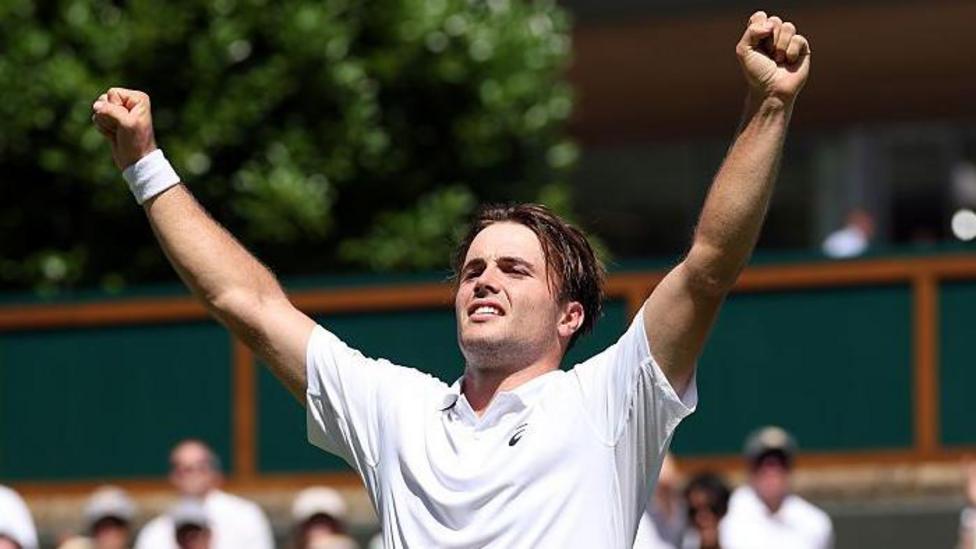
Arthur Fery Keeps British Hopes Alive With Gritty Wimbledon Comeback
The French-born Briton fought back from a set down to reach the Wimbledon third round and ignite Centre Court dreams.

The Dink Serves Up Tennis Snobbery vs. Pickleball in a Slapstick Comedy
Jake Johnson's new sports comedy mines laughs from the simmering rivalry between tennis purists and pickleball's rise.
Dimitrov Outlasts Berrettini in Five-Set Wimbledon Epic
Grigor Dimitrov survived a valiant Matteo Berrettini fightback to reach the Wimbledon last 16, exorcising the demons of his 2024 Centre Court heartbreak.