Wimbledon Qualifiers Hunt Bigger Prey After Shocking Upsets
Roman Safiullin and Shintaro Mochizuri survived qualifying chaos to reach Wimbledon's main draw, eyeing monumental assaults on Novak Djokovic and Jannik Sinner.
The walk from the Wimbledon qualifying grounds in Roehampton to the hallowed lawns of the All England Club is barely five miles. For most ranked outside the world's top 100, it feels like a chasm. For Roman Safiullin and Shintaro Mochizuki, it serves as a bridge from obscurity to the kind of opportunity that rewrites careers.
These are not players accustomed to stadium lights and prime-time schedules. Qualifiers at Grand Slams are竞技 tennis's ultimate road warriors, grinding through three best-of-five set matches against similarly hungry opponents just to earn a spot in the main draw. By the time the first ball is struck at Wimbledon, they have already absorbed immense physical and psychological punishment.
Yet here they are. Safiullin and Mochizuki have already toppled established competitors in the early rounds of the main draw, engineering the kind of upsets that send ripples through the bracket. Now, the terrain ahead shifts dramatically. They are staring down the sport's ultimate titans: Novak Djokovic and Jannik Sinner.
The Relentless Grind Behind the Shock
To understand the magnitude of what these qualifiers are attempting, one must first appreciate the cruelty of the qualifying system. Three rounds in three days. No rest days. No margin for a sluggish afternoon. It demands a specific type of psychological resilience—a willingness to burn everything today with zero guarantee of a tomorrow.
Mochizuki embodies this relentless survival instinct. The Japanese star was a junior prodigy, famously reaching the Boys' Singles final at Wimbledon in 2018. Transitioning to the brutal men's tour, however, is a Darwinian test. He has spent years toiling on the ITF and Challenger circuits, sleeping in budget hotels and playing in front of scattered crowds.
"You play many weeks where nobody is watching. You are alone with your thoughts, wondering if the sacrifice is worth it. But you keep swinging because the belief never dies." — A senior ATP coach on the qualifier mentality.
His explosive, wristy game translates beautifully to grass, exploiting the low bounce to wrongfoot opponents. Mochizuki has already turned heads with his exceptional court sense and comfort on the surface.
Safiullin's path has been equally arduous. The Russian carries the pedigree of a top-tier junior and the arsenal of a top-50 player, with a booming serve and searing baseline power. Yet his career has been a stuttering march interrupted by injuries and inconsistency. Here, he is playing the tennis of his life.
Career by Numbers: Roman Safiullin
- Career-high ATP ranking of 41, reached in early 2024, underlining his latent potential.
- Reached the quarter-finals at the Paris Masters in 2023, defeating top-10 opponents.
- Zero prior grass-court ATP titles before this Wimbledon campaign.
- Previously reached the Wimbledon mixed doubles final in 2023 alongside Lyudmyla Kichenok.
The pressure on Safiullin and Mochizuki has suddenly inverted. They arrive with house money already spent. Every round they advance now pads their bank accounts and, far more importantly, their rankings. With Wimbledon prize money rewarding first-week wins handsomely, a run to the second week provides financial breathing room to fund an entire season.
The Unforgiving Mathematics of the Upset
Statistically, what Safiullin and Mochizuki are attempting borders on the impossible. In the Open Era, male qualifiers reaching the second week of a Grand Slam are rare. Actually lifting the trophy is a phenomenon virtually monopolized by Goran Ivanisevic in 2001 and, most recently, Emma Raducanu in the 2021 US Open women's draw.
For male qualifiers, reaching the second week is a commendable fairy tale. Winning the tournament requires a confluence of peak form, favorable draws, and sheer destiny.
The challenge ahead is monumental. Djokovic on Centre Court is a mathematical nightmare. The Serbian owns seven Wimbledon titles and possesses a near-flawless grass-court game that suffocates opponents by denying them rhythm. Sinner, meanwhile, brings an aura of sustained invincibility. His four Grand Slam titles and status as the world's premier hard-court player make him a crossover terror on grass.
Yet grass remains tennis's great equalizer. The surface rewards aggression, shortens points, and rewards fearless play. A qualifier with nothing to lose can hit through the court in ways impossible on slow clay.
Djokovic, despite his recent quest for an elusive Olympic gold medal and lingering physical concerns, remains the sport's ultimate problem-solver. He absorbs early aggression, reads the qualifier's patterns within a few games, and systematically dismantles their game plan. Statistics show that qualifiers who push Djokovic early often collapse under the weight of sustained execution demanded in finals.
Sinner, currently at the peak of his powers, suffocates opponents with relentless depth and a forehand that skids through the court. His Journey to becoming the undisputed world No. 1 has been built on minimizing errors. Against disruptors like Safiullin, he generally tightens his grip and executes with chilling precision.
What These Upsets Mean for the Bracket
The immediate consequence of qualifiers advancing deep into a Grand Slam draw is widespread bracket chaos. For the established seeds, these are the matches they dread. There is no recent tape, no established tactical rhythm. A qualifier arrives as a phantom.
For Djokovic and Sinner, it means adjusting to an unpredictable opponent on the fly.
Mochizuki's playing style offers Sinner a unique challenge. The Japanese player's low-margin, aggressive return stances and willingness to approach the net disrupt the baseline rhythm that world No. 1s rely on. If he executes early, the risk of a shockescalates.
Safiullin, meanwhile, has the raw power to hit through the court. Against Djokovic, the challenge is sustaining this power over five sets without accumulating unforced errors. The Russian's heavy forehand will test Djokovic's movement. If the Serbian is carrying a knock, Safiullin's refusal to yield could stretch the match into physical warfare—an environment where the qualifier, ironically, might feel fresher.
The Legacy of the Qualifier
It is the match-up that the sport's顶层 elites dread. A Masters 1000 event affords top players the luxury of settling into the tournament. Wimbledon offers no such buffer. Two weeks of best-of-five tennis leaves no room for tropical lethargy, where every unleashed forehand and diving volley carries the weight of a personal gamble.
For Mochizuki and Safiullin, this is more than a match against the world's best. It is a referendum on their careers.
Their presence in the second week validates years of unseen labor. defeating a top-10 seed demonstrates potential; toppling an all-time great in a best-of-five format on Centre Court cements a legacy.
Whether they win or lose, Safiullin and Mochizuki embody the chaotic beauty of Grand Slam tennis. They serve as a reminder that the Roehampton-to-SW19 pipeline is not a mere administrative footnote. It is a pathway populated by players armed with nothing but belief and the slimmest of chances.
The brackets have opened up. The giants are waiting. The qualifiers are coming, and they are not satisfied with merely making up the numbers.
Editorial Integrity
This is an original SportPulse article written by our editorial team. All content is independently researched, written, and reviewed by our writers and editors before publication. We do not publish copied, aggregated, or syndicated content.
SportPulse is committed to original sports journalism. Read our editorial policy or contact us with any questions.
More Like This
All tennis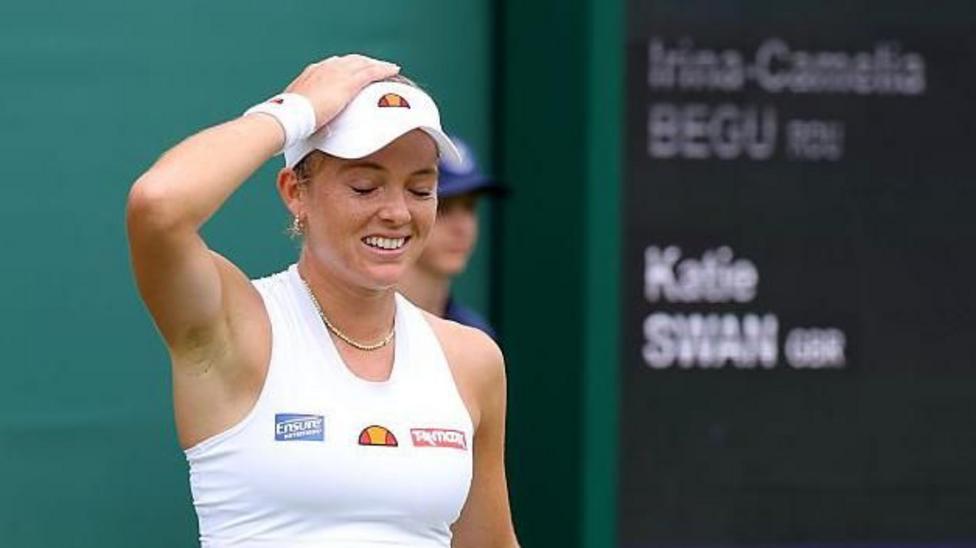
Wimbledon's Last Four Brits Carry the Weight of a Nation on Their Rackets
Naomi Broady asks whether Britain's final four singles players can turn Centre Court gloom into glory at Wimbledon.
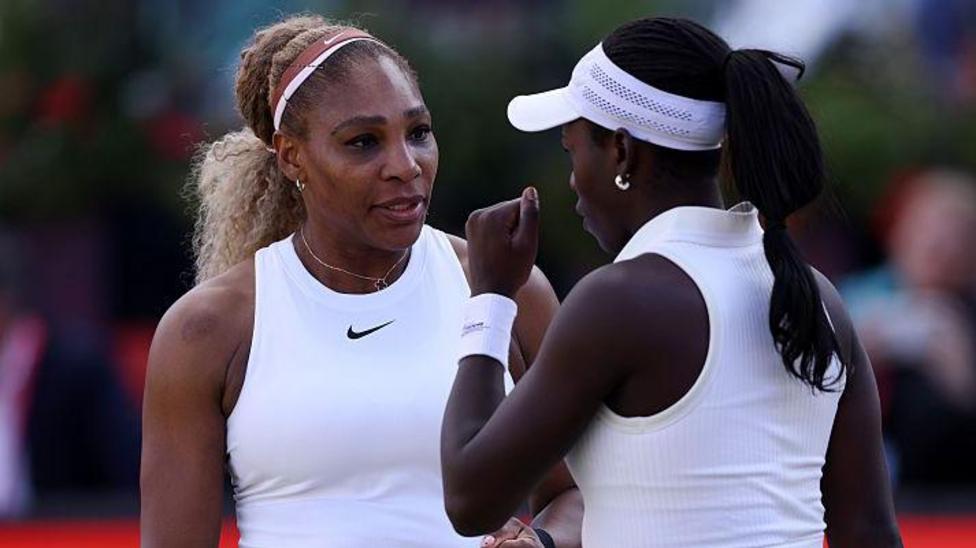
Williams' Queen's Doubles Dream Cut Short by Mboko's Knee Injury
Serena Williams' doubles partnership with rising star Victoria Mboko at Queen's ends before it truly begins.
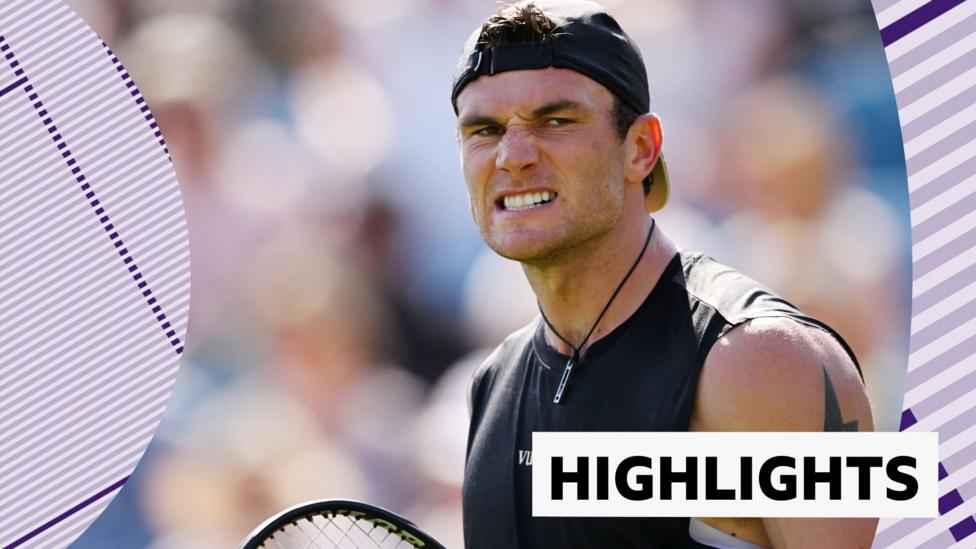
Draper Signals Intent With Gritty Eastbourne Return
Jack Draper shook off a two-month knee injury absence to grind past Marcos Giron, setting up a fiery all-British clash.