Wimbledon's Green Walls Stand Firm Against the Beautiful Game
Wimbledon bans World Cup screenings from every corner of the grounds, defending its identity as football's global fever sweeps sport.
The Fortress That Refuses to Bend
There is a particular silence that lives inside Wimbledon's grounds, a hush woven from decades of tradition, the whisper of ball on grass, and an almost sacred refusal to let the outside world intrude. It is a silence the All-England Club has guarded with the vigilance of a museum curator protecting a Vermeer. And now, as the 2026 men's World Cup collides with the Championships for the first time since 2018, that silence will extend to every screen, every lounge, every corner of the grounds where football might dare to flicker.
All-England Club chief executive Sally Bolton confirmed this week that Wimbledon's ban on World Cup screenings will be absolute, reaching even into the players' lounge, that inner sanctum where competitors retreat between matches to decompress. No projector. No communal viewing. No shared roar when a goal ripples a net somewhere in North America. If players want to check their phones, Bolton said, that is their prerogative. But the institution itself will not bend.
"If people want to watch on their phones, that's fine."
It is a sentence that sounds casual, almost throwaway. It is anything but.
The Resourceful Faithful
The football faithful, however, are nothing if not resourceful. Faced with the All England Club's ironclad rule, fans are improvising, blending their tennis pilgrimages with World Cup fandom in creative, if logistically fraught, ways. Before you pack your England shirt for SW19, be warned: Wimbledon is staying firmly in its own sporting lane. Centre Court, yes. Centre-forward, absolutely not.
"We are here to watch Senhor João Fonseca," said Luis Suassuna, attending his first tennis tournament with his brother and cousin, all three donning bright canary yellow Brazil tops. "Hopefully he gives us some good tennis but also no need for him to drag it out too much because the Seleção kick-off against Japan at 6pm. No time for us to get back to our Airbnb so we will be watching on Henman Hill." The Club's hallowed lawn, known for its communal tennis viewings, was being quietly repurposed as a makeshift World Cup fan zone.
Elsewhere, the geographic challenge of the Championships added another layer of comedy to the conflict. A group of German fans admitted they had not realised how far Wimbledon was from central London and were already plotting an escape to find a pub before their national team's match against Paraguay at 9.30pm. “We have been Googling German fan groups in south London all day,” said Karl Weber. “No luck so far!” Their mission highlighted the absurdity of the situation: thousands of football lovers locked inside a sporting paradise where their sport does not officially exist.
A Collision Eight Years in the Making
The last time Wimbledon and a men's World Cup occupied the same calendar, the year was 2018 and England were in the throes of an improbable, intoxicating run to the semi-finals. Gareth Southgate's waistcoats became a national symbol. Offices emptied at three in the afternoon. The country held its breath every time Harry Kane stepped to the penalty spot.
And yet, inside SW19, none of it officially existed. The All-England Club maintained its blockade with characteristic stoicism. Fans who tried to follow matches on their phones discovered that the grounds' notorious mobile phone policy made even that act of quiet rebellion an exercise in frustration. The juxtaposition was almost comical: a nation losing its collective mind over football while tennis's cathedral sat in monastic detachment.
Eight years on, the tension has not softened. If anything, it has sharpened. The 2026 World Cup, expanded to 48 teams and hosted across the United States, Mexico, and Canada, is a month-long spectacle designed to colonize every available screen on the planet. Its group stages alone will produce dozens of matches competing for attention during Wimbledon's opening week. For the All-England Club, the threat is not logistical. It is existential.
The Purist's Argument
Wimbledon has never been merely a tennis tournament. It is an argument, made every June and July, that sport can exist outside the gravitational pull of the global entertainment-industrial complex. The all-white dress code. The absence of corporate naming on the courts. The strawberries and cream. The royal box. These are not quaint affectations. They are deliberate acts of cultural resistance, a insistence that some spaces should remain unbranded, uncorrupted, and focused on the singular drama unfolding between two competitors and a net.
Allowing football onto the premises, even in the players' lounge, would shatter that compact in an instant. Imagine the scene: a World Cup quarter-final running on a screen while Carlos Alcaraz prepares for a fourth-round match on Centre Court. The gravitational pull would be irresistible. Coaches would glance. Ball kids would crane their necks. The entire atmosphere, cultivated over 148 years of Championship history, would tilt toward a sport that has nothing to do with what brought everyone to Church Road in the first place.
Bolton and her team understand this better than anyone. The ban is not about disrespecting football. It is about respecting tennis.
The Players' Dilemma
Here is where it gets genuinely interesting. Professional tennis players are not monks. They are elite athletes in their twenties and thirties, many of them deeply invested in football. Novak Djokovic is a lifelong AC Milan supporter. Rafael Nadal has spoken openly about his devotion to Real Madrid. A generation of younger players grew up in a digital world where football fandom is as natural as breathing.
Asking these athletes to compartmentalize, to walk past the locked door of the players' lounge knowing that just beyond it there could be a screen showing their national team's biggest match, is a psychological test as much as a logistical one. Bolton's concession about phone usage is a pragmatic acknowledgment of this reality. The institution will not facilitate distraction, but it will not pretend it can police the interior lives of its competitors.
The question is whether that compromise holds under pressure. What happens if England, or Spain, or Serbia reach a knockout round during the second week of Wimbledon? The stakes on the football pitch will be enormous. The stakes on the grass will be equally monumental. Players will be asked to perform at their physical and mental peak while knowing that a piece of sporting history is unfolding without them.
The phone in the pocket becomes both lifeline and toxin.
A Cultural Moment Larger Than Tennis
What Wimbledon is really doing, though, is making a case that feels increasingly radical in 2026: the idea that attention is finite and must be deliberately allocated. The World Cup does not need Wimbledon's help to reach its audience. It will dominate social media, streaming platforms, pub conversations, and living rooms across the globe. It has no shortage of screens.
But Wimbledon needs its own screens to stay quiet. It needs the absence of football to be felt, not as deprivation, but as presence. The quiet on the grounds is not emptiness. It is the sound of a sport demanding that you watch it, that you pay attention to the specific, irreducible drama of a serve, a volley, a break point.
This is, in its own way, a profoundly counter-cultural stance. In an era where every venue, every broadcast, every platform is in a frantic arms race to aggregate content and maximize eyeballs, Wimbledon is saying: we will show you one thing, and we will show it well, and if you want something else, you may look elsewhere.
What History Tells Us
The 2018 overlap provides a useful template, though an imperfect one. That year, Angelique Kerber won the women's title while England were dispatching Sweden in the World Cup quarter-finals. Novak Djokovic lifted the gentlemen's trophy the same weekend France were crowned world champions in Moscow. The tennis did not suffer. The atmosphere did not collapse. The Championships carried on with their customary gravity, undiminished by the spectacle raging elsewhere.
But 2018 was a different media landscape. Smartphone streaming was less ubiquitous. Social media, while powerful, had not yet reached the velocity it commands today. The temptation to steal a glance at a live stream, to check a score in real-time, to surrender to the dopamine loop of a World Cup goal notification, is exponentially greater now than it was eight years ago.
Wimbledon's policy, then, is less a wall than a levee. It may hold. It may not. But the act of building it sends a message that reverberates far beyond the lawns of SW19.
The Long Game
There is something almost defiant about Wimbledon's stance, a refusal to concede that any other sport, no matter how massive its audience, deserves equal billing on these particular grounds. It is the kind of institutional confidence that comes from 148 years of uninterrupted history, from knowing that the Championships were here before football became a global industry and will endure long after the current World Cup cycle fades from memory.
Bolton's quiet firmness reflects an understanding that Wimbledon's greatest asset is not its prize money, its prestige, or even its grass courts. It is its separateness. The moment the Championships become just another venue, just another stop on the infinite scroll of global sport, they lose the thing that makes them irreplaceable.
The World Cup will roar. The screens at home will glow. And inside the All-England Club, the only sound will be the thud of a tennis ball on immaculate grass, a sound that has not changed since the Victorian era and, if Bolton has her way, will not be drowned out by anything.
Not even the beautiful game.
Updated: 2026-06-29 — Added fan anecdotes and on-the-ground reactions to the World Cup screening ban, illustrating creative workarounds and the human side of the policy.
Editorial Integrity
This is an original SportPulse article written by our editorial team. All content is independently researched, written, and reviewed by our writers and editors before publication. We do not publish copied, aggregated, or syndicated content.
SportPulse is committed to original sports journalism. Read our editorial policy or contact us with any questions.
More Like This
All tennis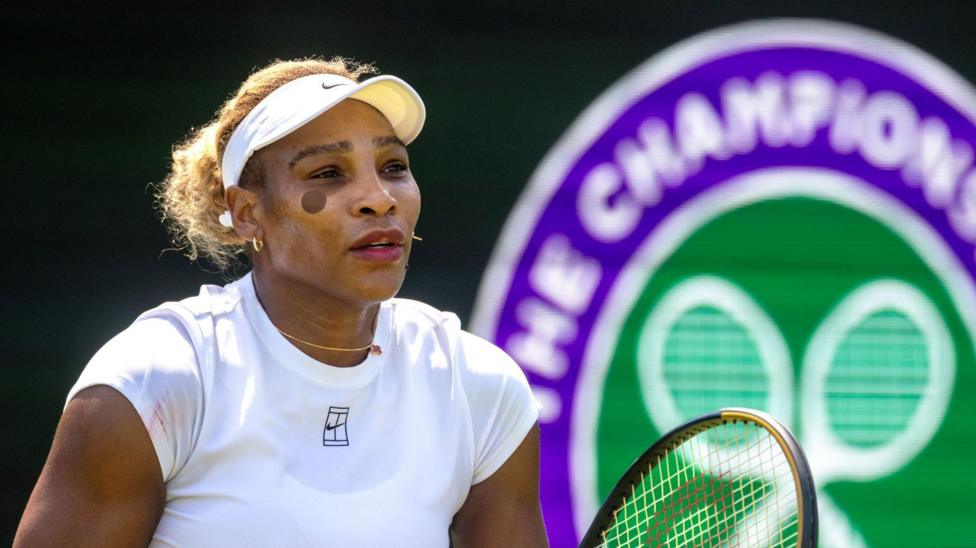
Serena Williams: Anti-Doping Protocols Nearly Killed My Comeback
The 23-time Grand Slam champion reveals gruelling drug-testing demands almost ended her return before it began.
Arthur's Seat: How Fery Stormed Into Wimbledon's Last Four
Britain's newest tennis sensation faces Alexander Zverev in a Wimbledon semifinal that could redefine the nation's relationship with the sport.
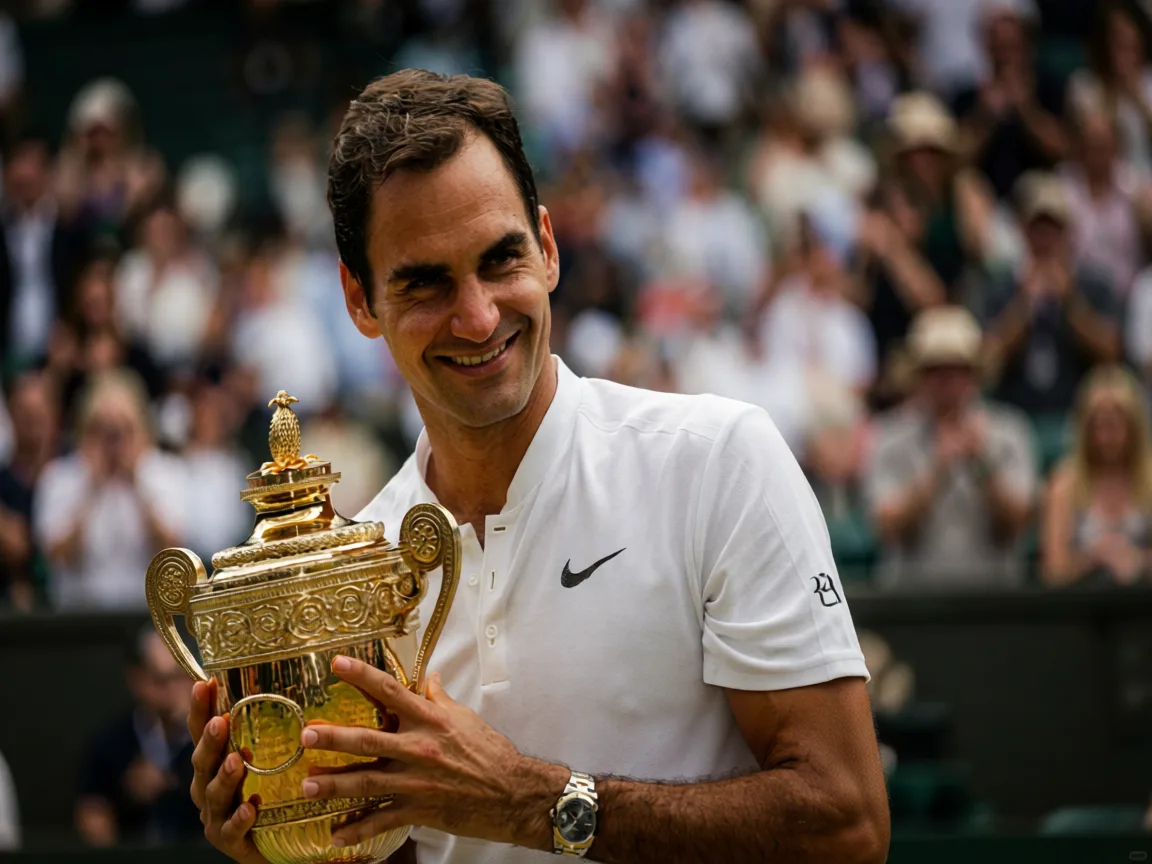
The Grass Court Gods: Wimbledon's Untouchable Record-Holders
From Navratilova's nine trophies to Federer's eight, the legends who turned Wimbledon into their personal kingdom.