The Next Mbappé? Why 2026 Will Be the World Cup of New Icons
BBC commentators have tipped 20 players to explode onto the global stage at the first 48-team World Cup.
The Names You Don't Know Yet
There is a peculiar alchemy that happens at a World Cup. Players arrive as regional curiosities and leave as global commodities. Think Kylian Mbappé tearing through Argentina's defence in Kazan in 2018. Think James Rodríguez volleying Uruguay into submission in 2014. Think Michael Owen slaloming past Argentina in 1998 at just 18 years old.
Every four years, the tournament devours reputations and births new ones in the same breath. And with the 2026 World Cup expanding to 48 teams across the United States, Canada, and Mexico, the stage has never been larger — literally or figuratively.
BBC Sport's TV and radio commentators have already begun the ritual of identifying the next generation. They've flagged 20 players they believe could break out on the biggest stage in football. Among them, nicknames have already taken root: 'Mazadona', 'Einstein', 'The Ant'. The monikers alone tell a story — football's commentariat is hungry for the next thing.
Why 2026 Is Different
This isn't just another World Cup. It's a structural revolution.
The jump from 32 to 48 teams means 104 matches instead of 64. It means nations that have never sniffed a knockout round suddenly have a legitimate path. It means players from CONCACAF, CAF, and AFC nations will receive airtime and scouting attention they've never experienced.
That expansion is the single most important variable when considering breakout potential. The 2018 World Cup gave us Mbappé because France had the squad depth to integrate a 19-year-old into a winning system. But it also gave us Aleksandr Golovin dazzling for Russia in the opener, Hirving Lozano shocking Germany, and Yerry Mina rising from Everton bench-warmer to Colombia's aerial threat.
The formula has always been the same: World Cups reward the brave and the unknown. The 48-team format simply widens the net.
The Commentator's Eye
What makes a broadcaster's pick different from a scout's spreadsheet? Context. These voices sit in press boxes week after week, watching players in the raw chaos of competitive football. They see the body language. They notice who demands the ball when the crowd turns hostile.
The nickname 'Mazadona' — a clear nod to the Argentine legend — signals a player with audacious technical ability, someone who plays with the kind of joyful recklessness that terrifies defenders and thrills neutrals. South American football has always produced these archetypes, the street-football savants who carry the weight of expectation on their first touch.
'Einstein' suggests a different profile entirely. A cerebral player. A midfielder or defender who sees angles before they exist, who controls tempo like a metronome with a PhD. These are the players who don't make highlight reels but absolutely dictate results.
And 'The Ant'? That's the industrious one. Small, relentless, everywhere at once. The kind of player managers love and opponents despise. Football's history is full of them — Javier Mascherano, N'Golo Kanté, Claudio Marchisia — players who cover ground like they've been cloned.
The Historical Blueprint
Let's look at what World Cup breakouts actually have in common.
-
Age window: 19-23. Mbappé was 19. James was 22. Owen was 18. The sweet spot is clear: old enough to be trusted by a national team coach, young enough that the world hasn't formed a fixed opinion.
-
Pre-tournament trajectory: rising, not arrived. The most devastating breakouts come from players in the ascendant. They've had a strong club season — 20+ goal contributions or a standout defensive campaign — but they haven't yet been baptized by elite European competition on a weekly basis.
-
A signature moment. Every World Cup breakout has one. Mbappé's acceleration past阿根廷. Rodríguez's chest-and-volley. Diego Maradona's slalom in 1986. These moments crystallise because the global audience is watching simultaneously — billions of eyes, one instant.
-
A team that goes deep. Breakout players need stage time. A group-stage exit caps the narrative at three matches. A run to the quarter-finals or beyond gives the world enough footage to fall in love.
The 48-Team Wildcard
Here's where things get genuinely exciting. The expanded format creates 16 groups of three, followed by a round of 32. That means even third-placed teams can advance. For players from nations like Saudi Arabia, Canada, Senegal, or Ecuador, this changes the calculus entirely.
In Qatar 2022, Saudi Arabia's stunning group-stage victory over Argentina introduced Salem Al-Dawsari to a global audience. But the Green Falcons exited in the group stage. In 2026, that same kind of upset could fuel a deep, improbable run — and a platform for an unknown name to become a household one.
MLS and Liga MX players will also benefit from the home-continent advantage. The American sports ecosystem is built for spectacle. Inter Miami, LAFC, and Club América have players who, with a strong tournament showing, could see their market values triple overnight.
"Every World Cup produces a player nobody saw coming. The 48-team format doesn't just increase the chances — it guarantees it."
What the Scouts Are Watching
For the European super-clubs, the World Cup is the final exam before a summer spending spree. 2026 arrives at a fascinating inflection point.
Manchester City, Real Madrid, Bayern Munich, and PSG are all navigating generational transitions. The post-Messi/Ronaldo era is fully upon us. Mbappé and Erling Haaland are now the establishment, not the future. The hunt for the next wave is already underway.
The scouting infrastructure has evolved, too. Clubs now track U-17 and U-19 tournaments with the same analytical rigour once reserved for Champions League knockout ties. GPS data, progressive carrying metrics, expected threat models — the modern breakout star is identified years before the World Cup gives them their stage.
But the tournament still matters. It always will. Because no spreadsheet captures what happens when a 21-year-old steps onto the pitch in front of 80,000 people in New Jersey or Mexico City and plays like the world isn't watching.
The Names Behind the Nicknames
While BBC's full list of 20 names represents a cross-section of global football, the three headline nicknames alone reveal the archetypes that define tournament football.
The flamboyant creator. The intelligent controller. The relentless engine.
Every World Cup-winning squad has all three. Every World Cup breakout story features at least one. The question for 2026 isn't whether new stars will emerge — that's a certainty with 48 nations and over 800 players in the tournament.
The question is which ones will seize the moment when it arrives.
The Countdown Begins
With roughly 18 months until the opening match, the runway is short. Club seasons will define form. Injury crises will reshape squads. Tactical evolution will determine who fits.
But the commentators have planted their flags. They've watched these players in training grounds and Tuesday night fixtures, in hostile away ends and under the floodlights of cup ties. They've seen something that data alone can't capture: the intangible belief that a player belongs on the biggest stage.
History tells us they'll be right about some and spectacularly wrong about others. That's the beauty of it.
The 2026 World Cup won't just be the biggest tournament in football history. It will be the most revealing. More nations, more matches, more chances for an unknown name to become immortal.
The only question left: which of those 20 names will you wish you'd paid attention to sooner?
The full list of BBC Sport's 20 players to watch at the 2026 World Cup is available on BBC Sport's website.
Editorial Integrity
This is an original SportPulse article written by our editorial team. All content is independently researched, written, and reviewed by our writers and editors before publication. We do not publish copied, aggregated, or syndicated content.
SportPulse is committed to original sports journalism. Read our editorial policy or contact us with any questions.
More Like This
All football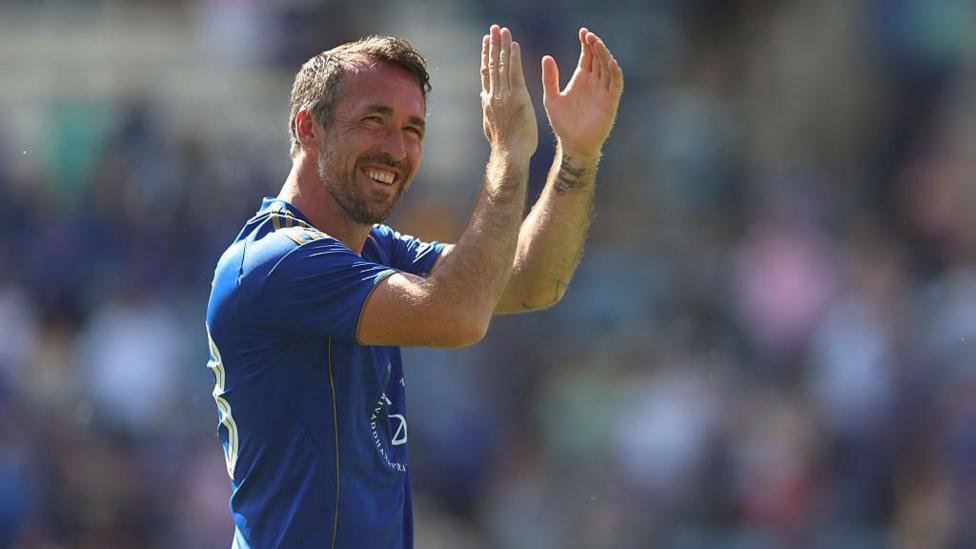
From Premier League Glory to Village Cricket: Christian Fuchs Hits a Six on Debut
Just one day after resigning as Newport County boss, Christian Fuchs swapped the dugout for the crease in Derbyshire village cricket.
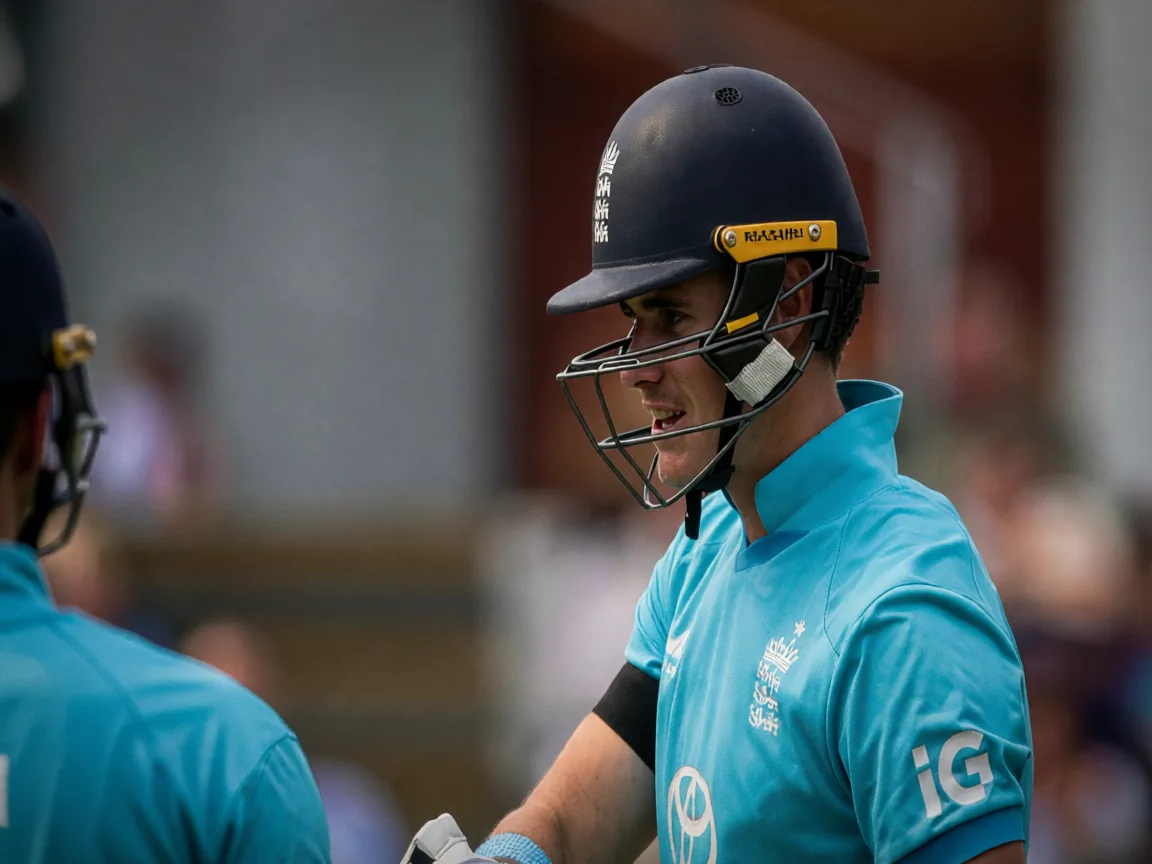
Bethell's Lord's Masterclass: England's New Star Arrives Against India
Jacob Bethell fell nine short of a maiden ODI century, but his 91 off 93 balls announced England's most exciting batting talent in years.

Why Three Points No Longer Guarantees World Cup Survival
Three points used to be the magic number for World Cup group stage survival. The expanded format has permanently altered the math.