Why Three Points No Longer Guarantees World Cup Survival
Three points used to be the magic number for World Cup group stage survival. The expanded format has permanently altered the math.
The Death of the Magic Number
For decades, the World Cup group stage operated on a beautifully brutal understood rule: get to three points, and you are almost certainly safe. Win one game, and the knockout rounds await. It was a comforting mathematical benchmark for managers and fans alike. That certainty is dead. The expanded 48-team World Cup format has fundamentally broken the old arithmetic, turning what was once a reliable safety net into a high-wire act of anxiety.
BBC Sport's recent inquiry into whether three points guarantees knockout progression touches the exact nerve of modern tournament football. The short answer is no. The long answer involves a labyrinth of tiebreakers, the statistical flattening of the global game, and a new group structure that inherently punishes conservative accumulation. The days of parking the bus after a Matchday 1 win are officially over.
How the 48-Team Format Broke the Math
To understand why three points has lost its protective glow, you must look at the structural overhaul. Under the old 32-team format with eight groups of four, history was overwhelmingly on your side with three points. From 1998 to 2022, an astonishing 85% of teams reaching the 3-point threshold advanced to the Round of 16. You could generally bank on one of the other group teams dropping points to the minnows, allowing your solitary win to carry you through.
The 2026 tournament shatters that paradigm. The competition expands to 12 groups of four, sending the top two from each group through, along with the eight best third-placed teams. At first glance, having 50% of third-placed teams advance seems like a bonus for the three-point stragglers. It is an illusion. The sheer volume of groups means the variance in results is far wider, and the mathematical clustering at three points will be suffocating.
When Four Teams Hit Three
Imagine a group where three teams beat the bottom seed, and all lose to each other. Suddenly, three teams sit on three points. Only the top two automatically qualify. The third enters a playoff lottery against third-placed teams from eleven other groups. You are now at the mercy of results hundreds of miles away. Tiebreakers become a knife fight.
- Goal difference becomes the primary survival metric, not points.
- Goals scored forces attacking intent even in defensive setups.
- Fair play points can literally decide a World Cup progression.
The Bottom Line: A single win without a complementary draw or positive goal difference is a statistical coin toss in the expanded format.
The Tactical Shift: Aggression Over Preservation
Coaches are not blind to this mathematical shift. The traditional tournament approach dictated securing a win in Matchday 1, then grinding out a draw in Matchday 2 to guarantee progression. That risk-averse blueprint is suicidal in the modern era.
Because goal difference and goals scored carry such immense weight in multi-group tiebreakers, sitting on a lead is tantamount to tournament sabotage. If you win 1-0 and your rival wins 3-0 against the same opponent, you are mathematically trailing a team on the exact same points tally. The xG revolution at the club level has already conditioned elite managers to push for higher margins; the expanded World Cup forces the mid-tier and lower-tier nations to adopt the same ruthless efficiency.
"Tournament football used to reward pragmatism. Now it punishes hesitation. A 1-0 win feels good, but a 2-0 win feels safe."
We saw this shift embryonically in 2022. Despite the old format, the creeping importance of goal difference was evident. Four years later, with eight additional teams crowding the bracket, the urgency to run up scores against weaker opponents will reach unprecedented levels. A team crawling to three points with a 0-0 draw, a 1-0 win, and a 1-0 loss is virtually guaranteed to lag behind a team exploding to three points via a 4-0 win and two narrow 1-0 defeats.
Verdict: Defensive inertia is no longer a viable path to the knockouts. Positive risk variance is the only mathematically sound strategy.
The Ghost of 2019: Historical Precedent
Skeptics might argue that third-placed teams advancing is nothing new. The European Championships have utilized the third-place safety net since 2016. But instead of providing comfort, Euro history actually proves the unreliability of three points.
At Euro 2020, four teams accumulated three points in the group stage. Only one of them advanced. At the expanded Euro 2016, Portugal famously crawled through the group stage with three points from three draws, eventually winning the entire tournament. However, Portugal only survived because their goal difference remained neutral (0), while other third-placed teams either faltered or posted negative differentials.
Ranking the vulnerability of three-point teams historically:
- 2018 World Cup: Iran eliminated with 4 points due to an inferior goal difference to Spain and Portugal.
- Euro 2020: Turkey eliminated with 3 points and a -4 goal difference.
- 2022 World Cup: Germany eliminated with 4 points despite a dramatic final-day win, edged by Spain on goal difference.
- Euro 2024: Croatia eliminated with 2 points, but a hypothetical 3-point team with a negative GD would have joined them.
The historical record is glaring. Points alone do not cushion the fall. The margin of your victories and the scale of your defeats dictate your survival.
What This Means for the 2026 Bracket
The consequences for 2026 are profound. We are entering an era of manufactured blowouts. When a top seed faces the lowest-ranked team in their group, the objective is no longer mere preservation of energy. It is systemic extraction of goals.
For the middle seeds—the teams historically fighting for that crucial second or third spot with three points—the tactical calculus is equally grim. Playing for a 0-0 draw against a peer rival is a high-stakes gamble. A single moment of defensive lapse can turn a hard-earned point into a worthless liability. Expect to see far more open, chaotic matches between evenly matched teams in Matchdays 2 and 3. Both sides will calculate that the risk of defeat is outweighed by the necessity of three points and a positive swing.
Furthermore, the introduction of the Round of 32 means advancing third brings a unique punishment. The eight best third-placed teams are unseeded, meaning they are mathematically guaranteed to face a group winner in the first knockout round. Crawling through the group on three points does not just risk elimination; it actively ensures you face the tournament's most formidable opponent. Survival offers no reward beyond a slower death.
Verdict: The expanded World Cup does not merely raise the bar for progression; it fundamentally rewrites the definition of a successful group stage campaign.
The New Mathematics of Survival
Three points is no longer a shield; it is merely an invitation to a tiebreaker casino. The expanded format, coupled with the shrinking gap in global football quality, guarantees that goal difference will decide more knockout fates than ever before. Teams that treat the group stage as a survival exercise will inevitably drown in the numbers. The only guarantee in the modern World Cup is that caution is fatal.
Editorial Integrity
This is an original SportPulse article written by our editorial team. All content is independently researched, written, and reviewed by our writers and editors before publication. We do not publish copied, aggregated, or syndicated content.
SportPulse is committed to original sports journalism. Read our editorial policy or contact us with any questions.
More Like This
All football
Merino's Spain: Where Humanity Precedes Tactics and Chocolate Is Just a Memory
Mikel Merino reveals how de la Fuente's culture-first philosophy turned Spain into World Cup finalists against Argentina.

Nine Changes, Four Debutants: Ireland's Bold Reset Against Japan
Ireland rip up the script for their Nations Championship clash with Japan — nine changes, four new caps, and a statement of intent.
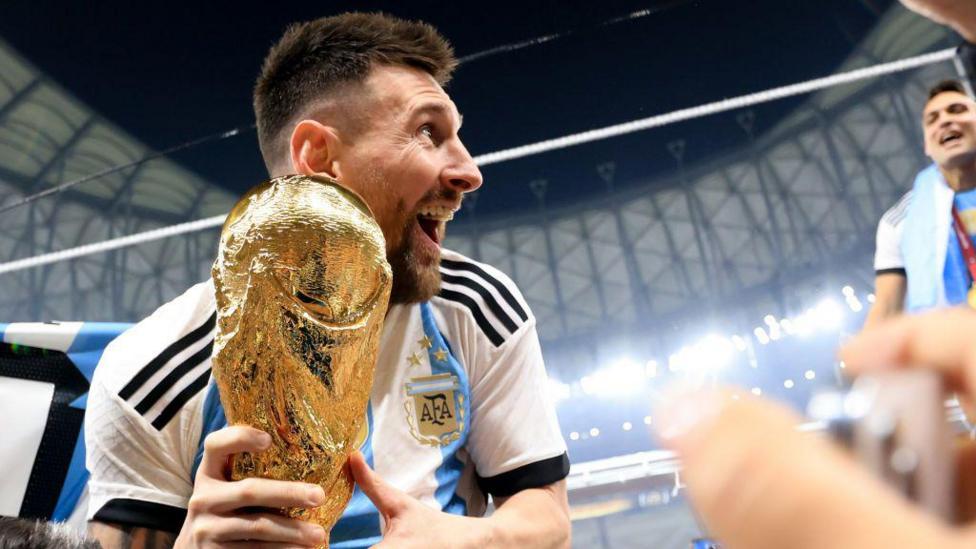
The Metamorphosis of Messi: From Explosive Winger to Tempo Maestro
Lionel Messi's sixth World Cup beckons, but the player who arrives is tactically unrecognizable from the teenager who debuted in 2006.