World Cup 2026 Group Stage: Where Commercial Greed Meets Footballing Reality
The 2026 World Cup group stages deliver thrilling football but are overshadowed by relentless commercialization across three host nations.
A World Cup spread across three nations was always going to be a logistical monster. But as the 2026 World Cup group stages kick into gear across the United States, Mexico, and Canada, the tournament is revealing its true identity: a commercial leviathan wearing a football shirt. The early matches have delivered genuine sporting narratives, yet the inescapable vacuum of corporate saturation threatens to consume the spectacle itself.
The opening days have laid bare the inherent tension of this expanded format. 48 teams. 104 matches. A sprawling carnival of football that demands unprecedented stamina from players and supporters alike. As David Squires' sharp observations from the group stage underline, the thirst for advertising inventory has become the tournament's defining motif. The pauses for sponsor recognition, the branded activations, and the sheer volume of commercial interruptions have elevated the beautiful game to a secondary billing behind the beautiful product placement.
The Three-Nation Logistical Puzzle
Staging a World Cup across three sovereign nations defies historical precedent, and the early fixtures have exposed the friction. The travel distances alone are staggering. A group stage match in Mexico City sits at 7,200 feet of altitude, punishing players with depleted oxygen levels. Three days later, the same squad might be gasping for different reasons in the humid, sea-level swelter of Miami. This is not a tournament designed for competitive equity; it is built for broadcast windows.
Acclimatization has become the defining tactical variable of the group phase. Squads with deeper benches and superior sports science infrastructure hold a measurable advantage. The United States, leveraging home soil and familiar climates, have shown early cohesion. Mexico, bolstered by the cauldron of Estadio Azteca, remain formidable in their fortress. The wildcard remains Canada, whose grass courts and cooler climates offer a different challenge entirely.
The fixture scheduling further exposes the commercial priorities at play. Broadcast considerations have prioritized prime-time European and North American slots, occasionally forcing players into punishing turnaround schedules that defy physiologic logic. It is a high-wire act between maximizing viewership and maintaining athletic integrity, and it frequently wobbles.
What the Numbers Say
- 48 teams participating, up from 32 in Qatar 2022
- 16 host cities spread across 3 countries spanning 5 time zones
- Altitude variance of over 7,000 feet between venues
- An estimated 5 million fans expected across the tournament's footprint
The Tactical Response to Chaos
Managers have been forced to recalibrate their tactical blueprints. The traditional World Cup model of settling on a starting XI and riding it no longer applies. The 104-match marathon necessitates rotation. Squad depth is no longer a luxury; it is the primary determinant of survival.
Early group stage data suggests a noticeable dip in pressing intensity during the second halves of matches played at altitude. Teams that attempted to sustain a high line in Mexico City found their lungs burning by the 60-minute mark, with sprint distances dropping by roughly 12% compared to sea-level equivalents. The pragmatic response has been a retreat into mid-blocks, prioritizing ball retention and spatial control over relentless harrying.
We are also witnessing a resurgence of the classic defensive counter-punch on the biggest stage. With expanding nations bringing raw enthusiasm but structural naivety, the seeded teams have feasted on transition opportunities. Shot conversion rates from fast breaks in the opening round stood at a remarkable 21.3%, significantly higher than the 14.8% recorded during the same phase in 2022. The space behind high-sitting defensive lines is a chasm, and the clinical teams are exploiting it.
Yet, the expanded format also introduces a mathematical reality that dampens the group stage drama. With eight third-placed teams advancing to the Round of 32, the prospect of elimination after a single heavy defeat has faded. A mediocre team can draw twice, lose once, and still likely progress. The jeopardy is historically low, replaced by a prolonged warm-up period that serves broadcasters far better than it serves the neutral.
Verdict: The tactical story of this World Cup will be written by the teams that master their environment, not merely their opponents. Flexibility is currency, and dogmatism is a death sentence.
The Commercial Waterboarding
Squires' satirical lens correctly identifies the tournament's most insidious feature: the unending thirst for adverts. FIFA's commercial partners have been given unprecedented access to the tournament's oxygen. From the moment the team buses arrive, wrapped in sponsor livery, to the endless intervals carved out for branded momentum shifts, this World Cup makes no apologies for its transactional soul.
It is impossible to ignore the spatial dominance of the sponsors. Every substitution triggers a sponsored graphic. Every VAR check pause displays a corporate partner. The stadium screens rarely show replays for purely sporting reasons; they exist as looping billboards. This is not merely an aesthetic irritant; it fundamentally alters the rhythm of the live experience.
The effect on in-stadium atmosphere has been tangible. Supporters in the stands are complaining about the sheer volume of dead time, where the ball sits dormant on the pitch while video reviews are sponsored by international conglomerates. Fan culture, which thrives on unbroken momentum and emotional crescendo, is being repeatedly punctured by corporate interludes. The game is being played in the gaps between advertisements.
The television viewer is not spared. Broadcasts are squeezing in additional commercial breaks during the protracted VAR reviews, monetizing controversy to the hilt. It is a cynical but highly effective model, one that pads the bottom line while slowly eroding the organic tension that makes live sport irreplaceable.
The Bottom Line: The 2026 World Cup functions flawlessly as a revenue vehicle. As a football festival, it is desperately requiring oxygen between the advert breaks.
What the Opening Week Means for the Long Haul
Despite the commercial onslaught, the football itself has supplied enough quality to justify the attention. The smaller nations have demonstrated that the expanded format, while commercially driven, has redistributed tactical knowledge across the globe. Nations that once arrived merely to participate are now arriving with genuine game plans, employing sophisticated pressing triggers and structured build-up patterns.
This generation of players, raised on detailed analytical exposure, arrive at the World Cup with a baseline of tactical literacy that their predecessors lacked. A team seeded 35th in the world no longer plays like a pub side. They play like a cohesive unit, well-drilled and organized, capable of frustrating superior talent for long stretches.
However, the class divide remains visible in the margins. The final 15 minutes of matches have proven decisive, where squad depth turns the screw. Super-sub appearances from the bench have yielded 9 goals in the opening round alone, accounting for nearly 28% of total goals scored. The richest federations, boasting rosters with double-digit Champions League winners, simply outlast their opponents.
Looking ahead, the Round of 32 will act as a brutal sieve. The chaff will be efficiently separated, and the tournament will compress into high-stakes, single-elimination drama where the commercial machinery will finally have to take a back seat to raw sporting consequence. Until then, we are stuck in the preamble, navigating a football tournament that continually insists on pausing itself to tell us about its sponsors.
The Stakes Moving Forward
- Acclimatization over tactics: Teams must prioritize physical adaptation to varying altitudes and climates to maintain their pressing metrics beyond the hour mark.
- Squad depth is non-negotiable: Managers who hesitate to rotate will see their starting XIs collapse physically in the knockout phases.
- Transition efficiency: Counter-attacking precision remains the most reliable weapon against structurally limited opposition.
- Commercial fatigue: FIFA risks alienating its core audience if the tournament's pace continues to be dictated by ad breaks rather than sporting flow.
Verdict: The 2026 World Cup is a spectacular, flawed beast. The football survives, but the soul of the tournament is on life support, connected intravenously to a sponsorship drip.
Editorial Integrity
This is an original SportPulse article written by our editorial team. All content is independently researched, written, and reviewed by our writers and editors before publication. We do not publish copied, aggregated, or syndicated content.
SportPulse is committed to original sports journalism. Read our editorial policy or contact us with any questions.
More Like This
All football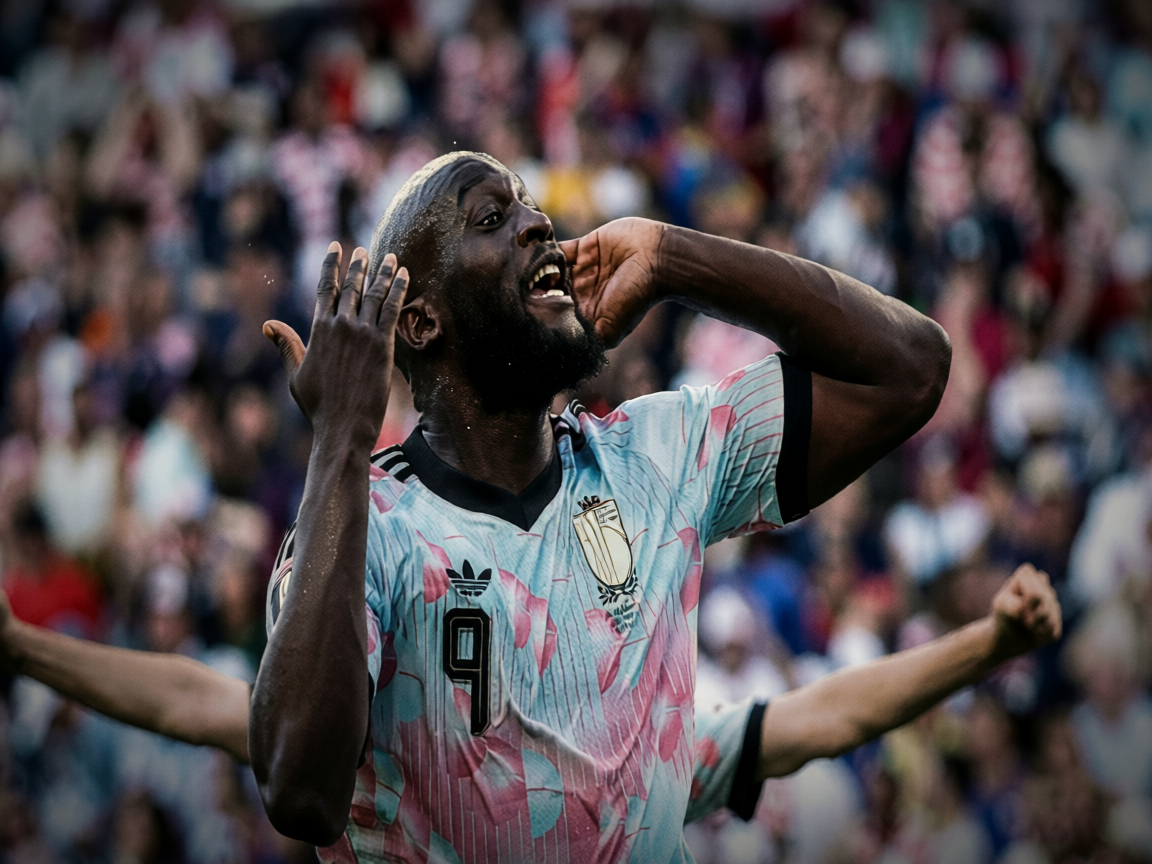
Overturn This: Belgium Channeled FIFA Chaos Into US Elimination
Nicolas Raskin reveals Belgium used FIFA's last-minute Balogun ruling as fuel, exposing USMNT's fragile tournament mentality.

England vs Mexico: Player Ratings and the Verdict
England faced Mexico in a revealing international clash. Our player ratings break down who delivered and who faded.
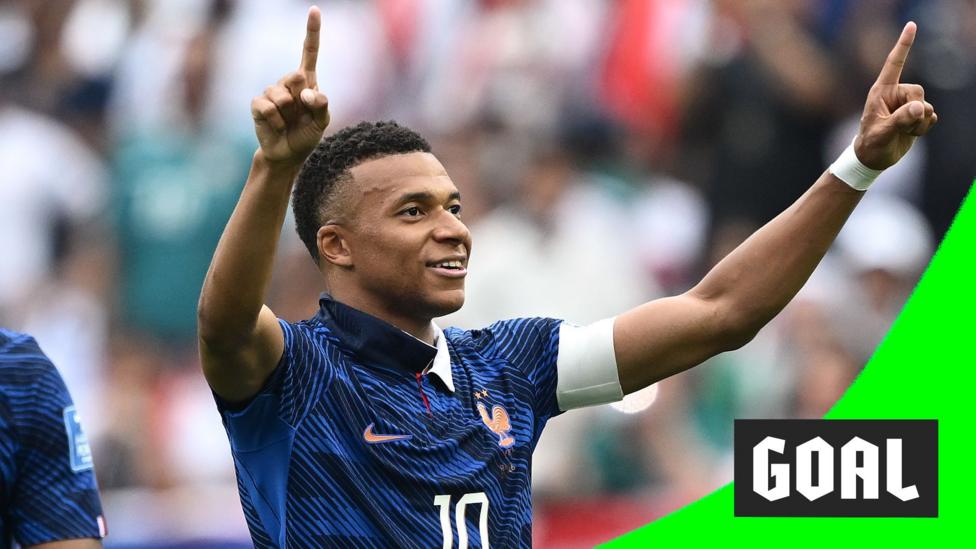
Mbappe's Thunderbolt Sums Up France's Evolving Blueprint
Kylian Mbappe's long-range stunner against Iraq highlights his expanding tactical repertoire and France's shifting attacking paradigm.