Why the 2038 World Cup Already Points Back to America
Fifa sees the US as its safest commercial bet, and Donald Trump said what the football executives were already whispering.
The Lobby Whisper That Became Public Policy
Donald Trump told Fox News what football administrators had been muttering in hotel lobbies for a month. The US president, broadcast in the buildup to the World Cup final, directed his remarks at the one man who decides the matter: "We have to do this again and we have to do it while I'm around, you hear that Gianni?"
Gianni Infantino did not need convincing. The Fifa president has spent the past four years engineering a World Cup commercial model that turns the United States into the centerpiece of his revenue strategy. Trump simply accelerated the timeline of public discussion.
The conversation about a 2038 World Cup returning to the US has grown loud enough that it is now treated by administrators as a likelihood rather than a possibility. The reasoning is financial, structural, and geographic in roughly equal measure.
What the American Market Solves for Fifa
The 2026 tournament, co-hosted with Canada and Mexico, functions as a proof of concept. Fifa has watched the figures from ticketing and hospitality, and the numbers are unlike anything the organization has extracted from previous hosts. The American market's capacity for premium pricing, its volume of large modern stadiums already built for NFL franchises, and willingness of corporate clients to pay escalating hospitality fees combine in a way no European or South American host can match.
European tournaments bring football heritage and guaranteed full stadiums, but they cap what Fifa can charge. Wage and consumer environments in South America offer prestige and history but constrain revenue ceilings. The US market offers neither ceiling nor cultural resistance to premium pricing.
The core commercial problem Fifa faces in the next rights cycle is TV income. The previous broadcast deals, negotiated in a different media economy, will come up for renewal in the early 2030s. The 2030 World Cup, already awarded to Spain, Portugal, and Morocco, will serve as the valuation benchmark. But Fifa wants a stronger argument when negotiating the subsequent cycle. A second tournament in the US within twelve years would give broadcasters and streaming platforms a premium North American product with proven revenue returns.
Madrid's Gatekeeping Problem
Spain, Portugal, and Morocco must first deliver the 2030 tournament under heavy scrutiny. If that World Cup underperforms commercially or logistically, the case for a swift US return strengthens dramatically. If it succeeds, the argument persists anyway because the American revenue argument is not conditional on European failure.
The structural advantage the US holds is stadium infrastructure. The 2026 tournament required minimal new construction because NFL venues already met Fifa capacity standards. A 2038 bid would inherit the same advantage, plus whatever adjustments were made for 2026. No European or South American host can present a comparable inventory of ready-made large footprint stadiums without spending years in public procurement.
That infrastructure reality matters because Fifa's hosting costs have become more visible as a political problem. Construction overruns, white elephant venues, and public backlash in previous hosts have made the organization cautious about awarding tournaments to countries that promise infrastructure they then struggle to deliver.
The Commercial Logic Is Not Ideological
Fifa's decision making混 has never been about rotation principles or continental fairness. The organization treats hosting rights as a commercial product and awards them to whichever bid максимизирует revenue while satisfying enough of the membership to win a vote. The American bid for 2038 would satisfy both tests.
The AFC and CAF could argue for their turns, and both regions have growing football markets that deserve tournament exposure. But neither Asia nor Africa can currently match the per capita spending power of the US market, and Fifa's revenue model depends on premium pricing more than geographic justice.
Infantino's wider strategy has been consolidating World Cup hosting into a small number of markets that can reliably deliver the financial returns Fifa needs to distribute to member associations. The expanded Club World Cup, the 32 team format, and now the prospect of a second US World Cup in twelve years all point in the same direction.
What 2038 Would Actually Look Like
If the US bids and wins for 2038, the tournament would likely build on the 2026 blueprint with refinements rather than redesign. The same NFL stadiums would anchor the bid, with potential additions from MLS specific venues built in the intervening decade. The host city footprint might contract slightly to concentrate attendance density, or expand if Fifa pushes the format further.
The key difference from 2026 would be the broadcast landscape. By 2038, streaming will dominate football rights distribution in a way that may be complete. A US based World Cup in that environment, with time zones friendly to both European evening broadcasts and American prime time, becomes a product designed for a fragmented media market where simultaneous global delivery is the pricing driver.
Fifa wants that product. Trump said so out loud. The only remaining question is whether any rival bid can assemble a commercial case compelling enough to force a competitive vote, or whether Fifa steers the process toward a predetermined conclusion that the organization has already calculated is in its financial interest.
The 2030 tournament in Iberia and Morocco is the immediate focus, but behind it, the 2038 conversation is already a commercial calculation rather than a open contest.
Editorial Integrity
This is an original SportPulse article written by our editorial team. All content is independently researched, written, and reviewed by our writers and editors before publication. We do not publish copied, aggregated, or syndicated content.
SportPulse is committed to original sports journalism. Read our editorial policy or contact us with any questions.
More Like This
All football
Ghosts at the Barbecue: England's Enduring Weight of World Cup Anxiety
A satirical barbecue image reveals the psychological baggage England's national team carries into every major tournament.
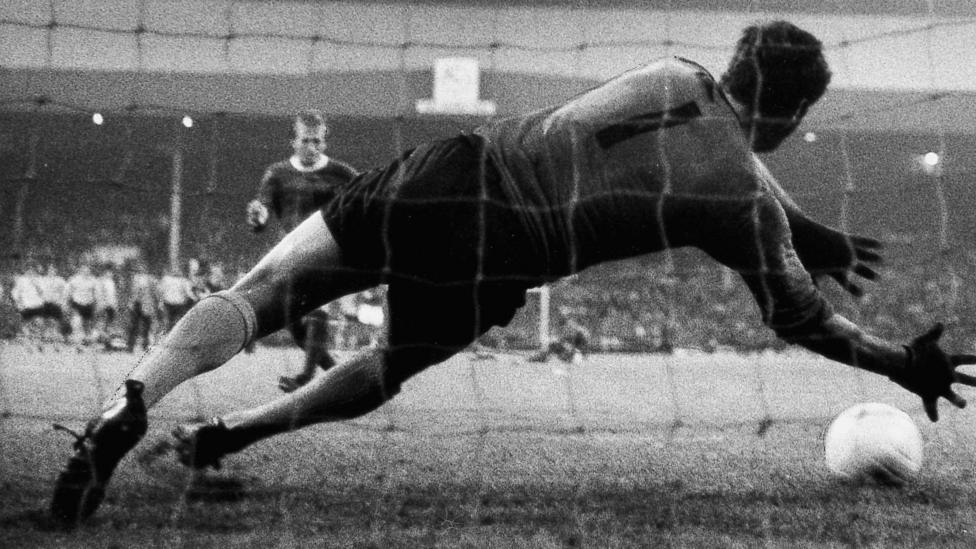
The Day Football Replaced Cruelty With Chaos: Inside the Birth of the Penalty Shootout
Before the drama of shootouts, football decided knockout ties with coin tosses and drawing of lots — until 1970 changed everything.
Ravindra's 98 off 44 powers Welsh Fire past MI London
Rachin Ravindra fell two short of a hundred but carried Welsh Fire to a second straight Hundred win, beating MI London by 15 runs.