Why the World Cup Still Conquers Our Summers
No sporting event on earth hijacks ordinary life quite like the World Cup, turning weddings and sleepless nights into folklore.
Matron prescribed the sleeping pills with the casual authority of someone who had patched up clumsy schoolboys a thousand times. The twist in the joint was bad enough to make a boarding school production of King Lear a genuine physical ordeal. But the real tragedy that night wasn't the delayed Shakespearean debut. It was the transistor radio tucked under the pillow, the commentary bleeding into unconsciousness, and the morning revelation of a scoreline that would define a nation.
England 2, Mexico 0. A result that sounds mundane on paper but resonated as a lifeline in a tournament that had opened with a suffocating goalless draw against Uruguay. For one schoolboy, the tournament happened in his sleep. For millions of others across the planet, the World Cup doesn't just happen on a screen. It happens to their lives.
Forget the Olympics and the rest. No sporting event on earth colonizes ordinary life quite like the World Cup.
The Uninvited Guest at Life's Biggest Moments
Try scheduling a wedding during a World Cup summer. Actually, don't. Unless you enjoy your vows competing with a raucous bar television or your guests checking their phones every four minutes.
Every four years, the planet surrenders weeks of its calendar to an event that demands total cultural occupation. It doesn't politely request your attention. It seizes it. The tournament barrels through wedding receptions, graduation ceremonies, and boardroom meetings with complete indifference.
"People across the planet remember where they were for their biggest World Cup matches."
And they do. Vividly. Painfully. Joyfully.
You remember the venue. You remember who you were sitting next to. You remember the terrible pint you were drinking when the ball hit the net. The World Cup burns itself into biography unlike any other sporting spectacle.
When Sleep Becomes Collateral Damage
That stolen radio under the pillow is an artifact of a lost era, but the underlying instinct is entirely modern. The World Cup operates on a schedule entirely indifferent to local time zones. It forces choices that no other sporting event can mandate.
In 1966, it was a transistor radio and a struggling actor trying to stay awake. By 1986, it was dawn alarms for the Hand of God. By 2002, it was setting multiple alarms across a sleepless house to catch South Korea's improbable run.
The mathematics of World Cup viewing are universal. The time differences dictate everything.
- Mexico '70: Late afternoons in Europe, perfect post-school viewing.
- Argentina '78: Breakfast table football for a generation of European children.
- Japan/South Korea '02: 7:30 AM kickoffs that turned pubs into morning institutions.
- Qatar '22: The unprecedented winter disruption that broke traditional rhythms entirely.
Each timezone shift creates its own specific subculture of exhaustion. Employers brace themselves. Productivity metrics dip. Entire national economies absorb a hit that no analyst can accurately quantify.
The Hand of God and the Anatomy of Shock
Then there are the moments that rewrite the rules of what we think we are watching. June 22, 1986. Mexico City. Argentina versus England.
You know the images. You can probably reconstruct the footage frame by frame in your head without trying. Maradona's fist above Peter Shilton. The swinging left foot four minutes later that made the illegality almost irrelevant.
"A little with the head of Maradona, and a little with the hand of God."
But the moment itself only tells half the story. The other half belongs to the gasps in living rooms across the world. The collective paralysis of processing the impossible.
Gary Lineker was on the pitch that day. He would later absorb the most famous red card in English tournament history, leaving the field with Nelinho's shot still rattling the crossbar and a nation's hopes collapsing around him.
These aren't just football memories. They are the shared coordinates of generations. Where were you when Maradona punched the sky? It is a question that demands the same gravity as any geopolitical milestone.
The Modern Fan and the Impossible Escape
The 1966 schoolboy falling asleep to a muffled commentary is a charming relic. The modern equivalent is the phone screen glowing under the desk. The notification buzz during a meeting. The illegal stream buffering at the exact wrong moment.
You cannot hide from the World Cup. The algorithmic architecture of our digital lives practically prohibits it. Your timeline becomes a rolling broadcast. Your group chat becomes a partisan war room. Your feed becomes a chronological record of joy and despair.
The isolation of the transistor radio has been replaced by the forced community of the timeline. The experience is louder, faster, and infinitely more shared. But the fundamental transaction remains untouched.
The World Cup asks for your summer. You give it. You always give it.
The Distinction That Endures
The Olympics are magnificent. They are the pinnacle of human athletic achievement across dozens of disciplines. But they occupy a different psychological space entirely.
The Olympics are a buffet. You sample. You watch gymnastics for an afternoon. You catch the swimming finals. You check the medal table. It is consumption by selection.
The World Cup is a siege. It locks you into a single narrative. It demands that you invest in the tension of a single ball and its consequences for an entire month. There is no sampling. There is only survival.
Olympic moments are often beautiful. World Cup moments are existentially personal. They track alongside your own life's timeline, marking eras not by calendars but by tournaments.
- 1966: The post-war nation finding its voice.
- 1970: The golden broadcast that defined television sport.
- 1986: The individual genius that broke the system.
- 2010: The vuvuzela drone and the African dawn.
- 2022: The winter anomaly and Messi's coronation.
2026 and the Next Occupation
Now the machine rolls toward 2026. The tournament expands. The United States, Mexico, and Canada prepare to host a 48-team behemoth that will test the limits of what the World Cup can physically become.
More teams. More matches. More disruption. More mornings lost. More wedding receptions interrupted by screens dragged into corners of the venue. More group chats approaching dangerous levels of toxicity. More transistor radios under pillows, in whatever form that technology takes eight decades on from the original.
The scale will change. The specific.LOCATIONS will shift. But the central hallucination of the World Cup will remain untouched.
It will still ask you to hand over your summer. And you, like every generation before you, will hand it over without a fight.
Because the World Cup doesn't just fill your screen. It writes itself into the story of your life. And when the next iconic moment arrives, you won't just remember the goal. You'll remember the room you were in, the person beside you, and the exact angle of the light coming through the window.
That is the power no other event possesses. That is why it conquers.
Editorial Integrity
This is an original SportPulse article written by our editorial team. All content is independently researched, written, and reviewed by our writers and editors before publication. We do not publish copied, aggregated, or syndicated content.
SportPulse is committed to original sports journalism. Read our editorial policy or contact us with any questions.
More Like This
All long-reads
Jenkins Blow Leaves Wales Scrambling for Lock Solutions
Dafydd Jenkins' injury robs Wales of their most important forward as summer Tests approach.
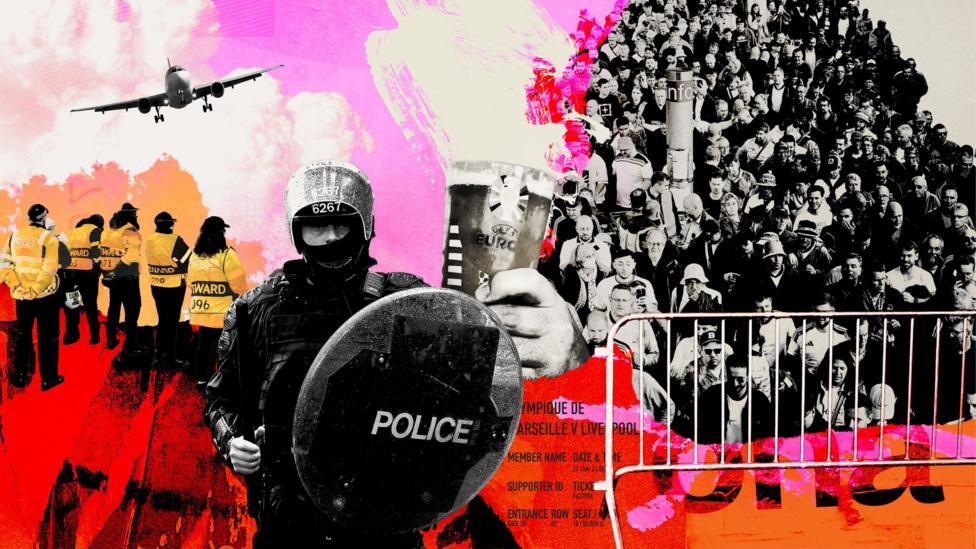
Away Days From Hell: Europe's Fan Safety Crisis Is Getting Worse
From cage-like holding pens to knife attacks, following your team across Europe has become genuinely dangerous.

The Metamorphosis of Declan Rice: From Released Prodigy to England's Tactical Anchor
Released by Chelsea, forged at West Ham, and refined by Arteta, Declan Rice enters the World Cup as England's vice-captain and complete midfield architect.