The Beautiful Game's Beautiful Mystery: Decoding World Cup's Anonymous Heroes
Every World Cup creates legends whose names fade. Here is why identifying mystery tournament stars has become football's most addictive treasure hunt.
The Beautiful Game's Beautiful Mystery
The poster on the bedroom wall has faded. The name that once rolled off the tongue of every schoolyard pundit now sits at the tip of your tongue, stubbornly refusing to drop.
You remember the face. You remember the celebration. You remember the way the commentator's voice cracked when the ball hit the net. But the name? It has slipped through the cracks of memory, buried under two decades of subsequent tournaments, transfer sagas, and managerial sackings.
This is the essence of football's most addictive mental exercise. The mystery player identification game. And today, we are diving deep into World Cup star number 32.
Can you name the player? The answer lies somewhere between a moment of brilliance and a career that defies easy categorization.
The Psychology of the Football Puzzle
Why does this simple format captivate us so completely?
The answer lies in what psychologists call the tip-of-the-tongue phenomenon. That agonizing space between knowing you know something and actually being able to retrieve it. In that gap lives an entire industry of trivia games, quiz apps, and social media challenges.
Football's global stage produces a unique breed of player. The tournament specialist. The player whose club career may have been modest, unremarkable, even forgettable. But for four weeks every four years, they transcend their circumstances and become immortal.
These are the players who define the mystery genre.
They are not the Maradonas or the Pelés. They are not the obvious answers. They are the grinders, the surprise packages, the tactical surprises deployed by cunning coaches who spotted something nobody else saw.
What Makes a Mystery Star?
The profile of a quintessential World Cup mystery player involves several recurring traits.
- A breakthrough tournament where they exceeded all expectations
- A memorable moment that etched them into tournament folklore
- A club career that never quite matched their international heroics
- A position or role that often flies under the radar
- A national team that either overachieved or harbors deep footballing heritage
Think about the defenders who shackled superstars. The midfield destroyers who broke up attacks with relentless efficiency. The fullbacks who provided width nobody knew they needed.
These players rarely feature on promotional posters. They do not sign lucrative boot deals. Their highlight reels consist of intelligent positioning and crucial interceptions rather than rabona crosses and scissor kicks.
The Anatomy of Player 32
World Cup star number 32 presents a fascinating case study in the art of footballing identification.
The clues, when assembled correctly, paint a picture of a player who arrived at football's grandest stage with something to prove. Not to the world. The world did not know him yet. But to himself, to his coach, and to the nation that had selected him from a pool of more deserving candidates.
Or so the pundits claimed.
The transfer market that summer told its own story. Clubs scrambled, agents fielded calls, and suddenly a player who had been available for a modest fee months earlier commanded triple that valuation.
Behind every mystery World Cup star is a transfer window feeding frenzy that rarely ends well for anyone except the selling club.
The Transfer Intel
This is where the football puzzle transforms from a game into a business lesson.
The World Cup inflation tax. It is the most predictable yet consistently devastating phenomenon in football economics. A player enters the tournament valued at 5 million euros. Three weeks and one standout performance later, his valuation jumps to 15 million euros or more.
Clubs know this. They budget for it. They earmark funds specifically for post-tournament moves.
Yet they still fall into the trap every single cycle.
The trap is seductive. You watch a player dominate a high stakes match against elite opposition. You see composure under pressure. You see tactical intelligence that suggests adaptability across leagues and systems.
What you do not see is the context.
The Context Problem
- The opposition may have been carrying injuries
- The tactical setup may have flattered individual performances
- The pressure of a World Cup can elevate players to levels they never replicate
- Club football demands consistency over 38 league games, not four tournament matches
- The player's role within a national system may not translate to their new club
The history of World Cup driven transfers is littered with cautionary tales. For every James Rodríguez who justified the hype, there are a dozen others who faded into obscurity after their mandatory number of substitute appearances.
The Identification Game as Football Education
But here is the deeper value of the mystery player exercise.
It is not just about testing memory. It is about preserving football history.
Every generation has its heroes. Every era has its defining players. But the tendency of the modern game is to compress football history into an ever shrinking highlight reel of the same dozen names. Maradona. Pelé. Cruyff. Messi. Ronaldo. Zidane.
The mystery player format pushes back against that compression.
It forces us to remember the supporting cast. The players who made the stars look good. The tactical cogs that allowed the creative engines to flourish.
World Cup Star 32: The Reveal Approach
So how do you crack the code efficiently?
The strategic approach to football trivia involves elimination rather than guessing. Each clue narrows the field. Each detail removes a set of possibilities until only one answer remains.
Start with the era. The World Cup in question immediately cuts the potential pool of players from thousands to a squad of 23.
Then consider the role. A forward is instantly more memorable than a defender. A starter is more recognizable than a substitute. But mystery players often occupy the margins. The late game substitute. The utility player who filled in for an injured teammate.
The country matters enormously. A Brazilian player from any World Cup is more recognizable than a Costa Rican. Not because of talent. Because of exposure. The mystery player format often deliberately selects from the less heralded football nations.
The position is the final filter. Goalkeepers are memorable for their gloves. Strkers for their celebrations. It is the midfielders and defenders who blend into the fog of tournament football.
Strip away the obvious candidates first. What remains is almost always the answer.
The Deeper Game
Football's obsession with identification puzzles reveals something profound about the sport.
It is a game of infinite detail. No two matches are identical. No player's career can be reduced to a Wikipedia summary. The mystery format acknowledges this complexity.
It nods to the fact that football history is not a hierarchy but a tapestry. The stars need the role players. The legends need the teammates. The moments need the context that obscure players provide.
World Cup star number 32 exists in that space between fame and anonymity. Between the headlines and the fine print. Between the goal that sent a nation into delirium and the tackle that made it possible.
Identifying such a player? That is the triumph.
But the enjoyment comes from reacquainting yourself with a footballer who earned their place in the story. Then lost it to the relentless churn of the news cycle.
The game asks you to remember. The challenge is to remember quickly. The reward is memory itself.
In a football landscape increasingly dominated by highlight reels and immediate gratification, the deliberate exercise of historical recollection feels almost radical. It demands patience. It rewards persistence. It punishes shortcuts.
Every mystery star was once an unknown. Every unknown had a tournament that changed everything. The puzzle is not really about the player at all.
It is about us. And our refusal to let football's supporting cast disappear entirely.
Editorial Integrity
This is an original SportPulse article written by our editorial team. All content is independently researched, written, and reviewed by our writers and editors before publication. We do not publish copied, aggregated, or syndicated content.
SportPulse is committed to original sports journalism. Read our editorial policy or contact us with any questions.
More Like This
All football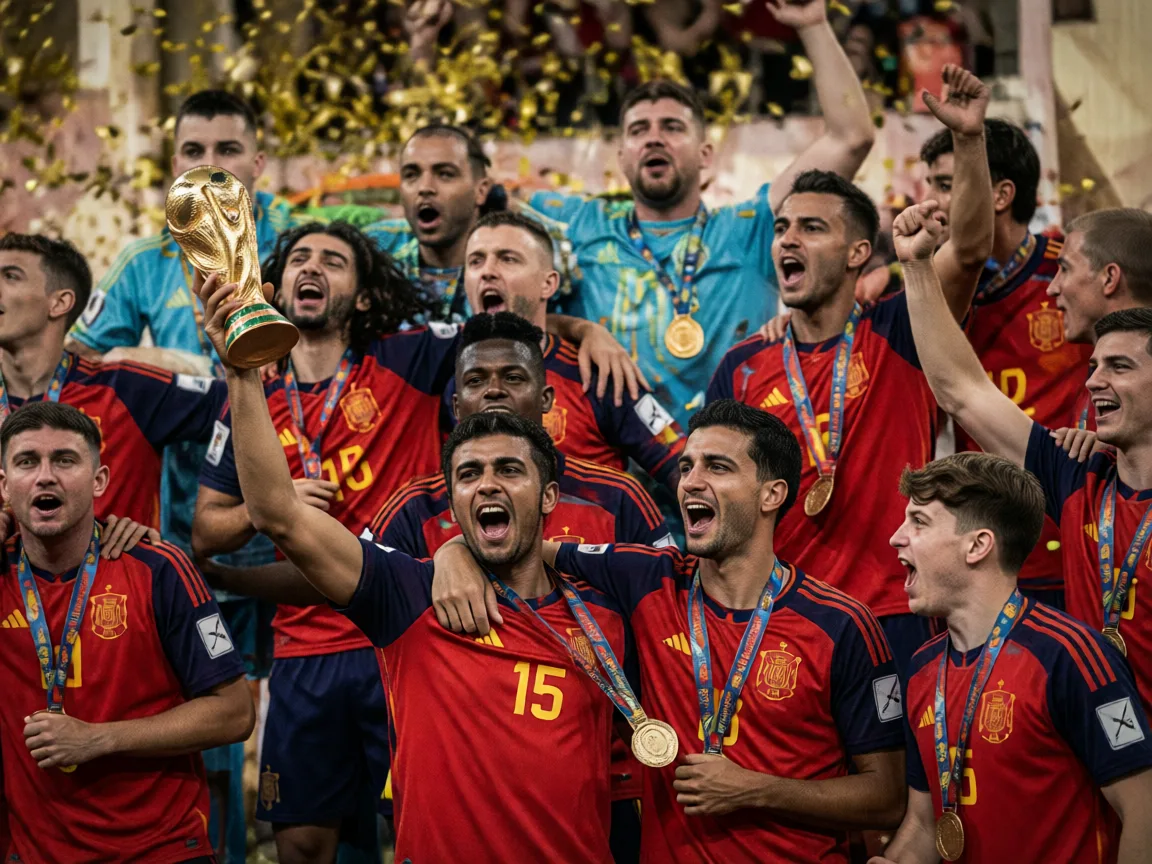
Spain Crowned 2026 World Cup Champions in Historic Second Triumph
Spain capture their second World Cup title, completing a generational rebuild with tactical brilliance and undeniable dominance on the global stage.

Bilic Back: Croatia Gamble on Nostalgia to Reignite Golden Generation
Croatia reappoint Slaven Bilic as national team manager, betting on the man who launched their golden era to salvage a fading generation.

Tactical Blueprint: What Scotland Can Learn From Norway’s Historic Rise
Norway’s quarter-final run offers a tactical masterclass for Scotland’s evolving identity.