Behind the Lens: What World Cup Portraits Reveal Beyond the Corporate Mask
FIFA's obligatory portrait sessions expose the tension between institutional uniformity and the individuality that makes football magnetic.
The Stage No One Chose
There is a peculiar ritual that greets every player at a World Cup, one that arrives before the tactical briefings, before the anthems, before the roar of 80,000 strangers willing you to succeed or fail. It is the official portrait session, and no one escapes it. Not the superstars, not the debutants, not the 48 managers who will spend the next month living and dying by every substitution. 1,248 footballers arrived at this tournament, and every single one of them stood, at some point, in front of FIFA's camera.
The results are fascinating, not because of their technical quality or artistic ambition, but because of what they reveal when the veneer of corporate obligation cracks. Lionel Messi, the most documented athlete of his generation, stands rigidly before the lens, the same controlled stillness he brings to press conferences, the same careful curation that has defined his public persona for two decades. Contrast that with Marc Cucurella of Spain, whose portrait captures him mid-whip of his unmistakable hair, seemingly dancing, radiating the chaotic energy he carries onto the pitch every weekend.
These images, compulsory and often dismissed as background noise of tournament logistics, are quietly one of the most revealing documents in professional sport.
A History of Forced Stillness
FIFA's portrait tradition stretches back decades, evolving from black-and-white headshots into the slick, high-production media assets that now flood every broadcast, app, and matchday programme. The format is deliberately uniform: same backdrop, same lighting, same framing. The institution provides the canvas. The player provides... well, that is where it gets interesting.
The genius of a standardised portrait lies in what it forces to the surface. When the context is identical for everyone, the differences become magnified. A slight tilt of the head, the decision to smile or not smile, the angle of the shoulders, whether the eyes meet the camera or drift slightly off-centre. These micro-decisions, made in the space of a few seconds, become permanent records.
Harry Kane, for instance, leans awkwardly onto one knee in his official image. It is the posture of a man who has scored hundreds of professional goals and yet still looks slightly uncomfortable inhabiting the performative space between athlete and model. There is something endearing about it, and something honest. Kane has never been the most natural showman. His brilliance has always lived in movement, in the economy of a striker's run, not in the static pose.
Diego Moreira and the Art of Resistance
Then there is Diego Moreira. The Belgian winger, relatively unknown to casual audiences compared to his teammates, produces arguably the most arresting image of the entire session. He drapes his forearm across his eyes, obscuring his face almost entirely, and in doing so reveals a striking tattoo that transforms the portrait from corporate headshot into something approaching art.
Whether this was deliberate commentary or simply a young man's instinct to do something different, the effect is the same. Moreira challenges the fundamental premise of the exercise. FIFA wants a face to attach to a squad number, a clean image for broadcast graphics and social media templates. Moreira gives them mystery. He gives them an image that makes you stop scrolling, that makes you want to know more about the person behind the arm.
This small act of creative defiance mirrors a broader tension in modern football. The sport's governing bodies and commercial partners increasingly demand that players function as content pipelines, brand-safe and endlessly reproducible. The portrait session is, in its purest form, a branding exercise. The player is a product, and the photograph is packaging.
What makes these behind-the-scenes glimpses so compelling is that they document the pushback, however subtle. Ronald Araújo of Uruguay, with his intense gaze and physical presence, brings the same gravitas to his portrait that he brings to a defensive line. Every player, consciously or not, makes choices that reveal something authentic.
The Mechanics Behind the Curtain
The logistics alone are staggering. Coordinating portrait sessions for 1,248 players across 48 national teams requires military-grade scheduling. Each team is allocated a window. Within that window, every squad member cycles through the setup in sequence. There is a production team managing lighting, backdrops, and camera settings. There are media officers ensuring the right kit is worn, the right badges are visible, the right sponsors are represented.
The backstage photographs, glimpsed through these behind-the-scenes images, tell their own story. Players waiting in corridors, phones in hand, chatting with teammates, some visibly bored, some visibly nervous. A portrait session is an intimate thing, even when it is institutional. It is you and a lens and the knowledge that this image will travel the world.
For younger players experiencing a World Cup for the first time, this is part of the awakening. The tournament is not just football. It is a machine, vast and intricate, and the portrait session is one of its smallest but most symbolic cogs. You are being processed, catalogued, distributed. You are becoming a World Cup player in the institutional sense, not just the sporting one.
Personality in the Age of Homogeneity
What strikes an observer most forcefully, surveying the full spread of portraits, is how much personality survives the process. FIFA's format is designed to minimise variation, yet variation persists. It persists in Cucurella's kinetic energy, in Moreira's refusal to give the camera what it wants, in Kane's endearing stiffness, in Messi's practised composure.
This matters because football's cultural power has always rested on personality as much as performance. The sport needs its characters. It needs the player who dances for his portrait and the player who hides behind his arm. It needs the contrast between Messi's control and Cucurella's chaos, because that contrast is the same energy that makes a football match worth watching.
The official portraits, for all their corporate intent, become a democratic space. The frontrunners and the unknowns share the same backdrop. A Ballon d'Or winner and a squad player who might not see a single minute of action receive identical treatment. The camera does not care about your transfer value or your Instagram following. It cares about what you choose to do in the moment the shutter opens.
What These Images Mean for the Tournament
There is a temptation to dismiss the portrait session as a footnote, a trivial obligation in the grand narrative of a World Cup. That would be a mistake. These images become the visual language of the tournament. They appear on team sheets, in stadium screens, in every piece of broadcast coverage across the globe. They are how millions of viewers first encounter a player they have never watched before.
A young fan in Buenos Aires sees Moreira's portrait and becomes curious. A casual viewer in Tokyo notices Cucurella's energy and decides to watch Spain's next match. The portraits are not incidental to the tournament experience. They are foundational to it.
For the players themselves, the session is a marker of arrival. You are here. You are in the programme. You are part of the largest football tournament on earth. Whatever happens next, whether you lift the trophy or sit on the bench for three group-stage exits, this photograph exists as proof that you were present.
Looking Ahead
As the tournament progresses and the knockout rounds tighten the field, the portraits will fade from conversation, replaced by the drama of results and the agony of elimination. But they will remain, archived in FIFA's media library and scattered across the internet, a permanent record of how 1,248 individuals chose to present themselves to the world in a single, strange, institutional moment.
The best football photographs capture action, movement, the blur of a goal or the sprawl of a save. The official portrait captures something quieter and, in its own way, just as revealing. It captures the person inside the player, however briefly, however imperfectly.
And sometimes, as with Diego Moreira's arm draped across his eyes, it captures something no tactical formation or post-match interview ever could: the irreducible strangeness of being a human being asked to stand still while the whole world looks.
Editorial Integrity
This is an original SportPulse article written by our editorial team. All content is independently researched, written, and reviewed by our writers and editors before publication. We do not publish copied, aggregated, or syndicated content.
SportPulse is committed to original sports journalism. Read our editorial policy or contact us with any questions.
More Like This
All long-reads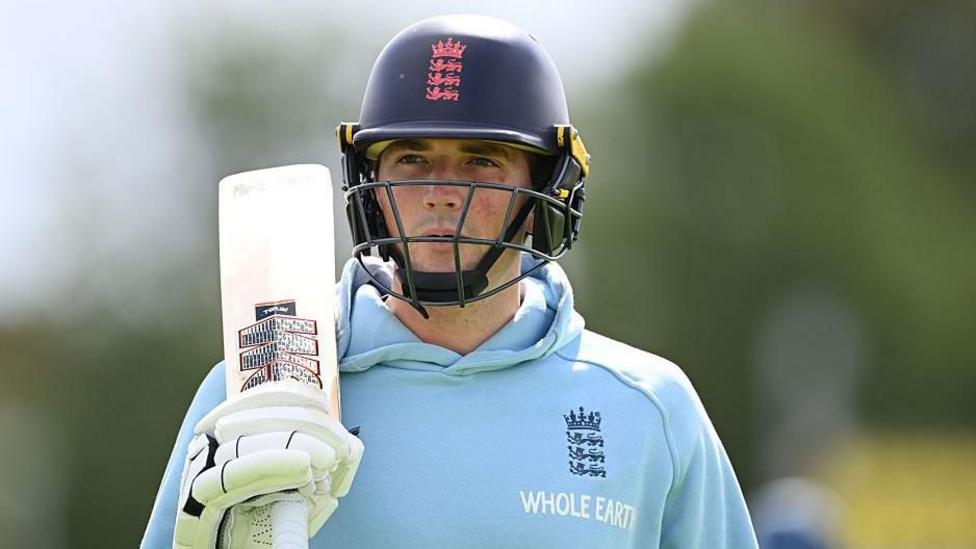
Uncapped Coles Reward as England Reset T20 Vision
Sussex's James Coles gets the shock T20 call-up for England's India series, signaling a bold new white-ball direction.
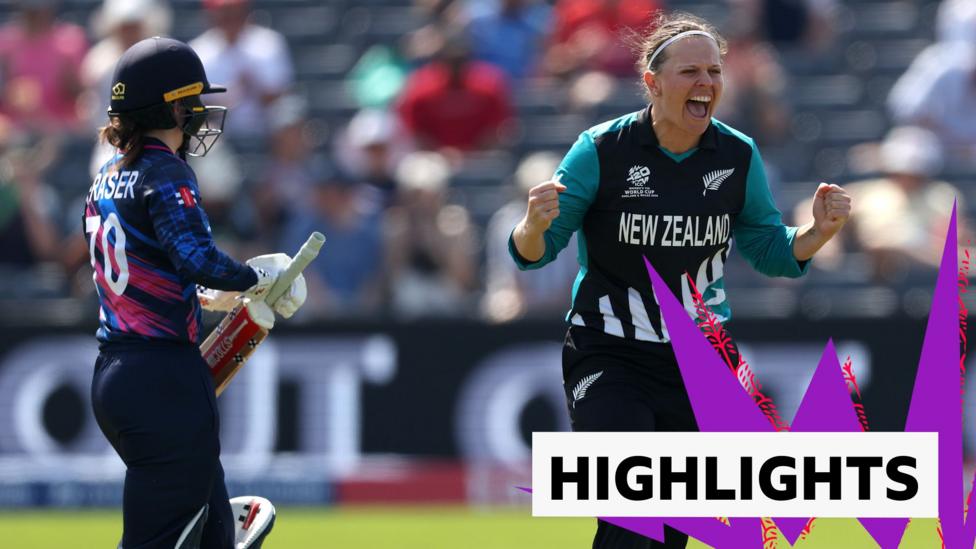
Carter's Heroics Not Enough as New Zealand End Scotland's Dream
Darcey Carter's stunning 72 went unrewarded as holders New Zealand sent Scotland crashing out of the T20 World Cup.
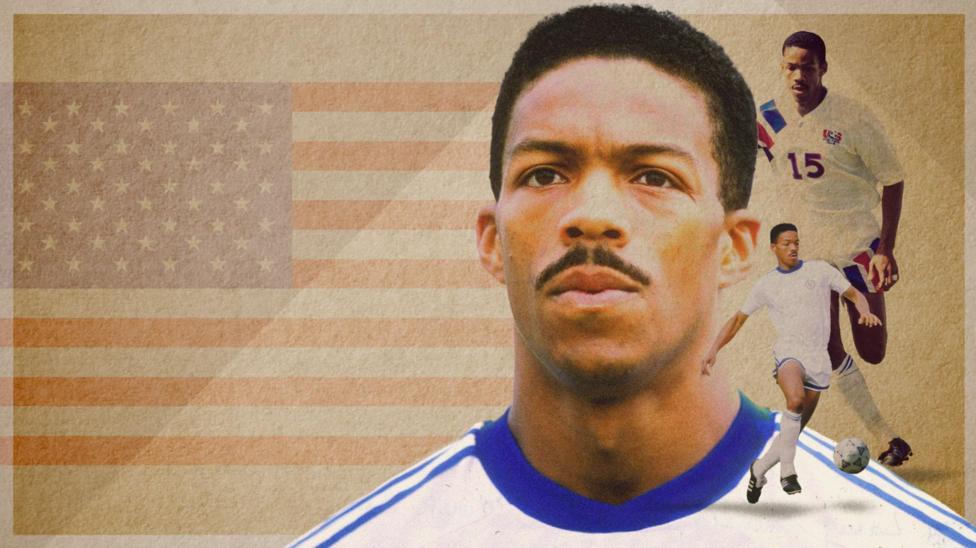
The Unthinkable Question That Drove USMNT Pioneer Desmond Armstrong
Desmond Armstrong faced ignorance at Italy 90, but his resolve reshaped the USMNT identity for a generation.