World Cup Semi-Finals: Where One Mistake Outlives a Thousand Good Games
The World Cup's rarefied spotlight distorts legacy: one error can define a career forever while a league season's worth of brilliance fades into footnotes.
The Distorting Lens of Football's Biggest Stage
The World Cup is football's ultimate magnifying glass, and it does something genuinely strange to the sport: it compresses an entire career's worth of narrative into 90 minutes. That distortion is not a side effect. It is the entire mechanism by which legends are forged and careers are unmade.
Consider the sheer scarcity. England have played exactly 79 matches in World Cup finals across 76 years of participation. That is barely more than two full Premier League seasons compressed into nearly eight decades. Every single touch, every tackle, every save carries a density of meaning that domestic football simply cannot replicate. When a league fixture goes poorly, there are 37 more to correct the narrative. When a World Cup knockout match goes sideways, there is no next week. There is only four years of waiting.
This scarcity explains the audience figures. Over 17 million people in the UK alone tuned in to watch England's weekend victory over Norway, despite the match concluding after midnight local time. That viewership eclipses anything club football produces domestically. The Premier League's biggest fixtures typically draw between 2 million and 4 million on UK television. The World Cup multiplies that audience by a factor of five, and those viewers are not passive consumers. They are emotionally invested in a way that transcends normal sporting fandom.
The Mathematics of Memory
The data points behind the World Cup's psychological weight reveal something deeper than simple patriotism.
- 79 England World Cup matches in 76 years, versus 38 per Premier League season
- 17 million+ UK viewers for a post-midnight knockout fixture
- Global audience estimated at over 3 billion cumulative across a tournament
- Four-year gap between opportunities for redemption
When a match is watched by 17 million people in a single country, and billions more across the globe, individual moments stop belonging to the players who created them. They become cultural property. References to matches from six decades ago can be dropped into casual conversation with reasonable expectation of recognition. Not many cultural artefacts achieve that staying power.
This is where the World Cup's distorting effect becomes visible. Far too much is read into individual games in a way that would never happen in domestic league football. A Premier League defeat in September is contextualised within a broader campaign. A World Cup quarter-final exit defines an entire generation.
The Lammens Problem: When Error Becomes Identity
Senne Lammens's mistake against Spain has become the defining image of this tournament's knockout phase. The Belgian goalkeeper's error directly contributed to his side's elimination, and the sheer size of the audience that witnessed it transforms a momentary lapse into a permanent tattoo.
Here is the uncomfortable arithmetic. Lammens's error was watched by a global audience that dwarfs the typical audience for even the biggest Manchester United fixtures. A high-profile Premier League match might draw 500 million to 1 billion cumulative viewers across a season. A World Cup knockout match with Belgium versus Spain reaches that figure in a single evening.
"There is not another match in three or four days that would mean Lammens's mistake would be readily forgotten."
In domestic football, a goalkeeper who makes a costly error on a Saturday is back in training on Monday, facing another fixture by the following weekend. The narrative moves on because the fixtures demand it. There is no such mercy at the World Cup. Lammens will carry this moment into every future interview, every profile, every mention of his name. The error becomes a permanent fixture in his professional biography.
The Asymmetry of Redemption
The troubling aspect of this dynamic is the asymmetry between failure and success. Lammens's error will be remembered. A brilliant save in the same match, had he made one, might already be fading from collective memory. World Cup history is littered with goalkeepers whose names are permanently associated with single moments of failure, while the saves that defined the preceding 120 minutes dissolve into the statistical record.
The only path to rewriting that narrative is equally brutal in its demands: a genuinely brilliant performance in a future World Cup. Redemption at the highest level, under the brightest spotlight, years later. Nothing else carries sufficient weight to dislodge the original moment.
What the Semi-Finalists Are Walking Into
The remaining four teams, and specifically Spain, France, Argentina, and England, are now entering the phase of the tournament where the magnifying glass intensifies further. Semi-finals are the threshold at which a tournament's narrative crystallises. Players who perform well in the last four join a pantheon. Players who falter become cautionary tales.
The psychological demands are unique. League football rewards consistency across a sample size large enough that anomalous performances regress toward the mean. World Cup semi-finals offer no such safety net. A player can deliver 38 strong performances across a domestic campaign and still be remembered primarily for what happens in one match on a Tuesday evening in July.
- Spain carry the weight of a golden generation's legacy, with their tactical identity scrutinised under conditions that would not exist in qualifying
- France enter with expectations shaped by recent tournament success, where anything less than a final is reframed as failure
- Argentina navigate the emotional intensity that transforms tactical decisions into national conversations
- England face the accumulated pressure of decades of semi-final disappointments, each new campaign haunted by the previous one
The Verdict
The World Cup's power lies not in the quality of its football, though the quality is often exceptional. Its power lies in the convergence of scarcity, scale, and finality. 79 matches in 76 years. Audiences of 17 million in a single nation, watching past midnight on a weekday. No opportunity for immediate correction.
This is why World Cup games live longer in the memory. It is also why they are crueller than any other fixture in football. Lammens will not be forgotten. The semi-finalists who falter will not be forgotten. The tournament does not offer the mercy of a next game. It offers only the merciless accuracy of posterity.
The Bottom Line: the World Cup does not reward the best teams. It rewards the teams that perform in the matches that people remember. And those are the only matches that matter.
The Tyranny of the Single Match
Domestic football builds its narratives incrementally. A team's identity across a season is a composite of dozens of performances, trends, tactical adjustments, and moments of individual brilliance. The sample size is large enough to tell a relatively truthful story about quality.
The World Cup inverts that principle entirely. A team's identity is not composite. It is singular and absolute. One performance in the semi-final can retroactively transform everything that preceded it. A side thatNavigate innovative football across five group-stage matches can be reduced, in historical memory, to a confused outfit that lost composure when it mattered most. The five previous displays dissolve.
For the remaining four nations, this is the reality of the days ahead. Spain, France, Argentina, and England are not preparing for football matches. They are preparing for moments that will outlive their careers. Every tactical selection, every substitution window, every VAR review is conducted under conditions that no domestic fixture can replicate.
Some players rise to that magnification. Others buckle under its weight. The difference between the two has very little to do with technical ability and a great deal to do with psychological architecture. Assembly line talent, the kind that thrives over 38 league fixtures, is insufficient here. The World Cup demands a different kind of player entirely.
The players who understand that distinction, who have internalised the mathematics of scarcity and the permanence of the single match, are the ones who navigate these days successfully. Everyone else becomes a reference point for future generations. Another cautionary tale in a tournament that has been producing them for nearly a century.
Editorial Integrity
This is an original SportPulse article written by our editorial team. All content is independently researched, written, and reviewed by our writers and editors before publication. We do not publish copied, aggregated, or syndicated content.
SportPulse is committed to original sports journalism. Read our editorial policy or contact us with any questions.
More Like This
All football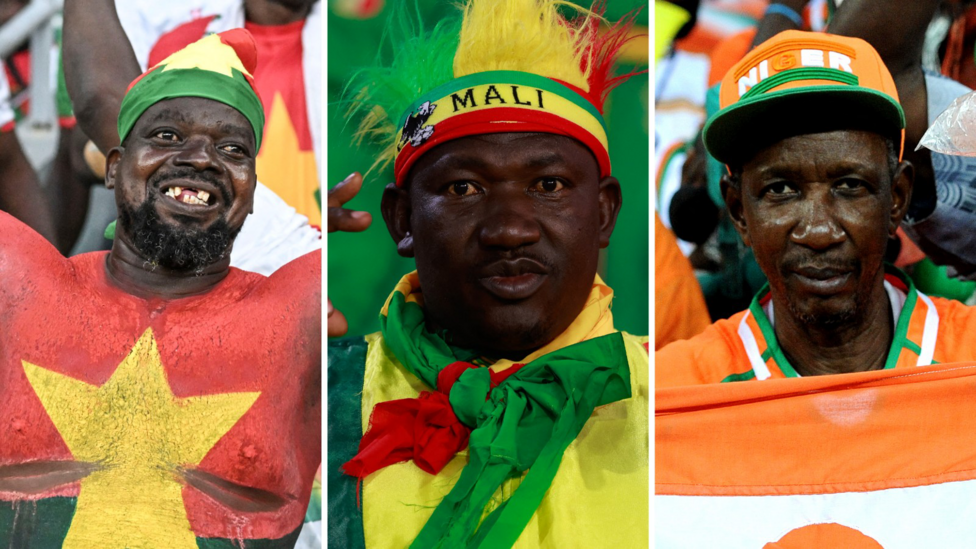
Three Sahel Military Governments Launch Surprise 2032 AFCON Bid
Burkina Faso, Mali and Niger pool resources in an unprecedented joint bid from Africa's most politically isolated bloc.

The World Cup's Two Faces: Brilliant Football Can't Mask Deepening Disgrace
The 2026 World Cup delivers stunning football, but ticket gouging, immigration crackdowns, and Iran's mistreatment tell a darker story.

Hull City's Decade-Long Exile Ends: McBurnie's Clinical Edge Seals Premier League Return
Oli McBurnie's goalscoring instinct proved decisive as Hull City ended their ten-year Premier League absence through the EFL playoffs.