From Refugee Camps to World Cup Glory: Football's Defiant Story
Behind every World Cup star from a refugee family lies a story of survival that reshapes the beautiful game.
The Beautiful Game's Deepest Roots
Football has always been more than tactics, formations, and scorelines. It is a game of human stories, and few are more powerful than those of World Cup stars who trace their origins to refugee families.
The World Cup is the planet's biggest sporting stage. Yet some of its most celebrated figures did not start their journeys in gleaming academies. They began in camps, in exile, in displacement.
UNHCR estimates that over 110 million people are forcibly displaced worldwide. For a select few, football became the improbable bridge from uncertainty to global glory.
From Camp to World Cup Champion
France's near-consecutive World Cup triumphs are partly a story of immigration and displacement. Several key players in the squad that won in 2018 and reached the final in 2022 came from families that fled conflict.
N'Golo Kanté, the heartbeat of France's midfield, is the son of Malian immigrants. While not strictly a refugee story, his family's journey from the Sahel to the suburbs of Paris reflects a pattern of migration.
Steve Mandanda, who served as a backup goalkeeper for France, was born in Kinshasa but moved to Belgium before settling in France. The Democratic Republic of the Congo has been gripped by decades of instability.
The French squad was thus a mosaic. It was a testament to how football integrates stories from across the Francophone world.
Switzerland's Balkan Connection
Switzerland has become one of Europe's most reliable international teams. But look closer at the roster and you'll see the deep imprint of the Yugoslav wars.
Granit Xhaka, who captained Switzerland at multiple tournaments, was born in Basel to Albanian parents who had fled Kosovo. The family's story is one of displacement from a region that saw brutal ethnic conflict in the late 1990s.
Xhaka's brother, Taulant, also represented Switzerland at youth level before choosing Albania. Their father, Ragip, spent years as a political prisoner in Yugoslavia.
Xherdan Shaqiri, one of Switzerland's most gifted players, was born in Gjakova, Kosovo. His family fled the war when he was just an infant.
Shaqiri moved to Switzerland with his parents and siblings. The country became home, and football became his language.
In Switzerland's famous 2-2 draw against Serbia at the 2018 World Cup, both Xhaka and Shaqiri scored. Their celebrations, which made gestures tied to the Albanian eagle, were seen as more than triumph. They were declarations of survival and identity.
The Rise of Alphonso Davies
Canada's rise to the 2022 World Cup was one of the tournament's most intriguing storylines. Central to that story was Alphonso Davies.
Davies was born in Monrovia, Liberia, in 2000. At the time, the Second Liberian Civil War had displaced hundreds of thousands. His parents, Debeah and Victoria, fled with him as a child.
The family spent time in a refugee camp in Ghana. They eventually resettled in Edmonton, Canada.
Davies took up football in Canada and rose through the ranks with remarkable speed. He debuted for the Vancouver Whitecaps at 15 years old, becoming one of the youngest players in MLS history.
A move to Bayern Munich followed. There, Davies won the Champions League in 2020 and established himself among the world's elite fullbacks.
At the World Cup, Davies carried the hopes of a nation making its first appearance since 1986. He did not just represent Canada. He represented everyone who started in a camp like the one where he was raised.
"It is a great honour to come from where I come from and to be in this position." — Alphonso Davies, reflecting on his journey.
Forza Azzurri, From Ghana to Italy
Italy may have missed the 2022 World Cup, but its football history is deeply tied to migration. One of the players who symbolized that connection was Mario Balotelli.
Born in Palermo to Ghanaian immigrants, Balotelli was placed in foster care as an infant. His biological parents struggled financially. The Balotelli family, who were of Ghanaian descent, faced significant hardship.
While his story is not a classic refugee tale, it highlights a thread that runs through the sport: the rise of players who overcome displacement, poverty, and social exclusion to reach the top.
Football's Migration Mirror
Every World Cup provides a mirror to global migration patterns. The tournament often sees players representing one nation while having roots in another.
23 players in the 2018 World Cup were born in France but represented other nations. That tournament also featured players born in over 80 different countries.
The trend is not just about big European nations poaching talent. It also reflects how refugee families rebuild in new countries and how their children adopt new nationalities.
Syrian refugees have featured in youth academies across Europe. Afghan and Sudanese children are among those being scouted in camps such as Kakuma in Kenya.
Football, as a universal language, offers these young people a pathway. It is not just about stardom; it is about belonging and recognition.
The Role of Global Football Bodies
FIFA has increasingly recognized the role of football in refugee communities. In partnership with UNHCR, FIFA has launched initiatives to use the sport as a tool for integration.
There is also the Football for Refugees campaign, which aims to bring the game to refugee camps globally.
These programs are not just charitable efforts. They are investments in potential. For every Alphonso Davies, there are thousands of children in camps with talent and determination.
When Football Gives A Voice
The World Cup is the ultimate platform for athletes from refugee families. It is not just a stage for sport, but for human stories.
In the cramped corridors of refugee camps, a football is often the one thing that kids have. It can be an escape from the harsh realities of life.
Few scenes capture this better than the images of children playing the game on uneven dirt pitches, improvising goals from scrap. Their pitches are not manicured. Their jerseys are often donated and imperfect. But the game is the same.
The locker room of every World Cup team is more than just a place for tactics. It is a place where stories converge. Talents from favelas, war zones, and displacement routes come together.
The quiet before a World Cup match is filled with reflection. For some players, the whistle is a reminder of a journey that once seemed impossible.
What It Means
The World Cup can be viewed as a mass of stats, goals, and tactics. But behind the numbers are human stories that alter how we understand the sport.
When a player from a refugee family scores at the World Cup, they do more than add to their team's tally. They show how football can transform lives that could have been lost to conflict.
Stories like those of Xhaka, Shaqiri, and Davies are not just about football. They are about human resilience. They remind us that the sport is global in its reach and universal in its appeal.
The challenge for football's governing bodies is to ensure that the pathway from refugee camp to World Cup is not dependent on miracles. It must be built into the system.
Football can be a force for good. The World Cup provides the biggest stage, but the work begins in the camps and continues long after the final whistle.
Editorial Integrity
This is an original SportPulse article written by our editorial team. All content is independently researched, written, and reviewed by our writers and editors before publication. We do not publish copied, aggregated, or syndicated content.
SportPulse is committed to original sports journalism. Read our editorial policy or contact us with any questions.
More Like This
All football
Tuchel Channels Ramsey: England's 35 Crosses Tell a Tactical Story
England's 35 open-play crosses against DRC signal a deliberate tactical shift echoing Alf Ramsey's 1966 blueprint under Thomas Tuchel.
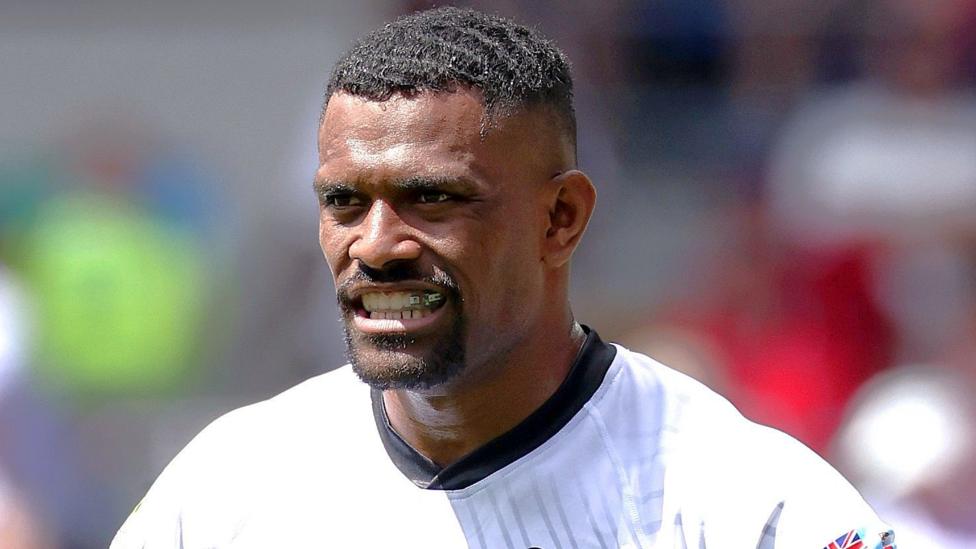
Jiuta Wainiqolo: The Fiji Phenomenon England Cannot Contain
Fiji's flying wing is outscoring rugby's elite finishers and now faces a vulnerable England side with nowhere to hide.
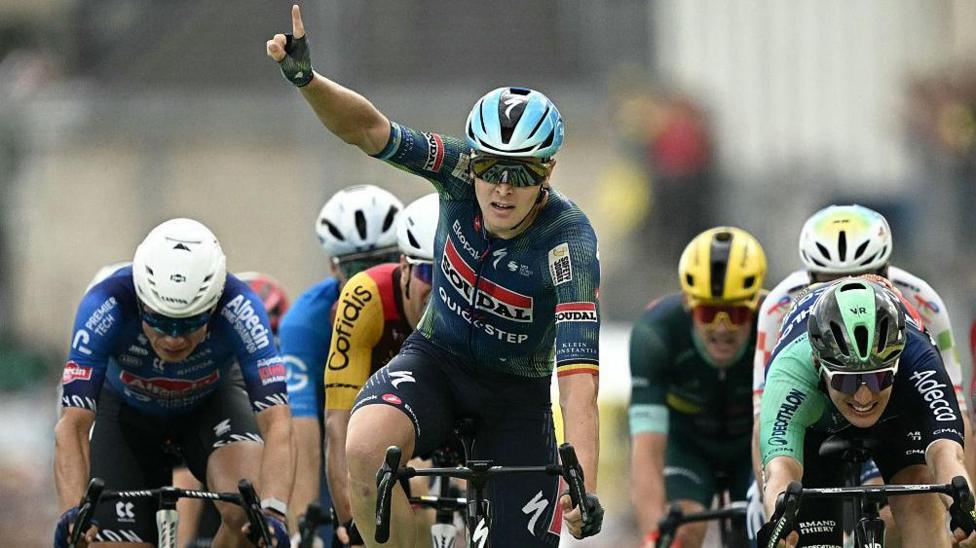
Tim Merlier's Stage 12 Sprint Mastery Reshapes the Tour's Green Jersey Battle
Tim Merlier storms to his third Tour de France stage win in a chaotic sprint, tightening his grip on the green jersey.