The World Cup Shop Window: How PL Clubs Hunt Tournament Gold
Every World Cup reshapes the Premier League transfer market — and the smartest clubs are already scouting their next breakthrough signing.
The Tournament That Writes Transfer Cheques
There is no shop window quite like a World Cup. Every four years, the planet's grandest sporting stage doubles as football's most chaotic recruitment fair, where unknown quantities become £80 million assets over the course of three group-stage matches and a knockout round.
Premier League clubs know this better than anyone. The league's financial muscle means they are not merely observers when the tournament circus rolls into town. They are predators. Scouting departments are already cross-referencing their shortlists with the squads announced for the next edition, and the question echoing through every recruitment meeting at every top-flight club is brutally simple: Who is about to explode?
The answer to that question can define a club's trajectory for half a decade.
A History Written in World Cup Moments
The pattern is as old as the Premier League itself, but it has accelerated dramatically in the analytics era. James Rodríguez went from Monaco curiosity to Real Madrid galáctico after lighting up Brazil 2014 with six goals and the tournament's Golden Boot. Before him, Michael Owen parlayed his wondergoal against Argentina at France 98 into global superstardom.
But the Premier League has been the most voracious consumer. After the 2022 Qatar World Cup, the January window that followed was seismic.
Enzo Fernández delivered a midfield masterclass for Argentina, winning the tournament's Best Young Player award. Within weeks, Chelsea shattered the British transfer record with a deal worth in excess of £107 million to prise him from Benfica. Fernández had been on the radar of multiple English clubs before a ball was kicked in Qatar. His performances in that tournament turned a long-term target into an emergency acquisition.
Cody Gakpo was another beneficiary. The Dutch forward scored in all three group-stage games, and Liverpool moved with ruthless speed to sign him from PSV Eindhoven for a reported £37 million before the knockout rounds had even concluded. Manchester United had been considered the frontrunners for months. Liverpool's decisive intervention changed the trajectory of that January window entirely.
Then there was Sofyan Amrabat, Morocco's midfield engine during their historic run to the semi-finals. His tireless performances attracted interest from virtually every top-six club. Manchester United eventually secured him on loan from Fiorentina, though the move never quite delivered the impact the tournament promised.
Behind the Deal: The Scouting Arms Race
What makes World Cup recruitment so distinctive is the compression of timelines. Normally, Premier League clubs operate on scouting cycles that span 12 to 18 months. Data analysts compile profiles. Recruitment staff attend dozens of live matches. Background checks on character, family situation, and lifestyle habits take weeks.
A World Cup collapses all of that into a frantic 28-day window where a single performance can override months of cautious deliberation.
"The smart clubs don't go to a World Cup to discover players. They go to confirm what they already suspect. The tournament is the final interview, not the first one." — A senior Premier League recruitment source
That distinction matters enormously. The clubs that consistently get World Cup signings right — Liverpool under Jürgen Klopp's era being a prime example — are the ones whose shortlists are already populated before the first ball is kicked. They arrive with conviction, not curiosity.
The clubs that get burned are typically the ones reacting to the spectacle itself, making emotionally driven decisions on the back of three or four matches played in extreme conditions, often against opponents of wildly varying quality.
Which Clubs Are Prowling?
The Premier League's hierarchy of aggression in the World Cup market tends to follow predictable patterns.
Chelsea under their new ownership have shown a willingness to move at breathtaking speed and with staggering financial commitment. Their approach is volume-driven: cast the net wide, secure targets early, and worry about squad balance later. The Enzo Fernández deal was the headline, but the broader strategy involved acquiring multiple players identified during the tournament cycle.
Manchester United, by contrast, have historically been slower to act and more vulnerable to gazumping. Their interest in Gakpo before Liverpool's intervention is a case study in how hesitation can cost you a generational talent.
Liverpool under their current structure remain the gold standard. Their recruitment team, built on a foundation of data-driven decision-making, treats the World Cup as a validation exercise. When they move, they move with purpose.
Arsenal's approach under Mikel Arteta and sporting director Edu Gaspar has been characteristically methodical. They tend to identify World Cup standouts early but resist the premium pricing that comes with tournament hype, preferring to negotiate patiently or pursue alternative targets.
Manchester City operate in a different stratosphere entirely. Their scouting infrastructure is so deep and so data-rich that World Cup performances rarely constitute a revelation. For City, the tournament confirms rather than discovers.
The Dark Horses
Do not overlook the clubs outside the traditional top six. Brighton have built a reputation as shrewd tournament recruiters, identifying undervalued talent in lesser-discussed squads and developing them into players worth multiples of their original fee.
Newcastle United, armed with Saudi-backed wealth and an increasingly sophisticated recruitment operation, are expected to be aggressive buyers in the next tournament cycle. Their Champions League participation gives them a gravitational pull that did not exist even two years ago.
The Risk Nobody Talks About
For every Enzo Fernández, there is a cautionary tale. The World Cup is a notoriously unreliable predictor of Premier League success.
The sample size is tiny. The emotional intensity is unlike anything a player will experience in a 38-game league season. Tactical systems are often simplified. And the pressure environment of representing your nation creates performances that can be almost impossible to replicate at club level.
El Hadji Diouf won the 2002 World Cup's joint-top scorer award with Senegal and subsequently flopped spectacularly at Liverpool. James Rodríguez never replicated his 2014 form consistently at the highest club level. Amrabat, for all his heroics in Qatar, struggled to adapt to the Premier League's relentless pace.
The data backs this up. Analysis of major tournament signings across the last four World Cup cycles suggests that roughly 40 percent of players signed directly off the back of tournament performances fail to meet expectations at their new clubs within the first two seasons.
That figure should give pause to any recruitment team making a snap decision based on a handful of electrifying performances.
What Changes This Time?
The dynamics of the next World Cup transfer window will be shaped by factors that did not exist in previous cycles.
Financial Fair Play regulations have tightened significantly across European football. The Premier League's own Profitability and Sustainability Rules (PSR) have already claimed victims, with clubs forced to sell academy graduates before they can buy. This means the reckless spending sprees of past post-tournament windows may be tempered by fiscal reality.
The expanded format of the next World Cup also alters the scouting calculus. With more teams and more matches, there is theoretically more footage, more data points, and more opportunities to evaluate targets. But there is also more noise, more false positives, and more scope for a player to look world-class against weaker opposition.
"The expanded tournament means you'll see players putting up incredible numbers against nations ranked 60th, 70th, 80th in the world. The challenge is filtering out what's real and what's a mirage." — Premier League data analyst
Then there is the agent factor. The most powerful representatives in world football understand the World Cup's leverage better than anyone. They will use the tournament to manufacture urgency, create bidding wars, and extract premium fees for clients who may or may not sustain their tournament form.
Clubs that fail to maintain discipline in the face of that pressure will overpay. They always do.
The Names to Watch
Without naming specific targets for ongoing or future windows — the scouting world is, by nature, secretive — the profile of a successful World Cup signing tends to follow a consistent pattern.
The player is usually between 22 and 26 years old. They have already established themselves as a starter in a competitive domestic league. Their tournament performance enhances an existing reputation rather than creating one from scratch. And critically, they fit a specific tactical need at their buying club rather than being a luxury addition.
The Premier League's appetite for World Cup talent is insatiable and enduring. Every tournament produces a new generation of stars whose lives are changed in an instant by a goal, a tackle, or a through ball played on the biggest stage imaginable.
The smartest clubs in England are already watching. They have been watching for months.
The question is never whether Premier League clubs will raid the World Cup. It is whether they will raid it wisely.
Follow SportPulse for the latest transfer intel and scouting analysis throughout the tournament cycle.
Editorial Integrity
This is an original SportPulse article written by our editorial team. All content is independently researched, written, and reviewed by our writers and editors before publication. We do not publish copied, aggregated, or syndicated content.
SportPulse is committed to original sports journalism. Read our editorial policy or contact us with any questions.
More Like This
All football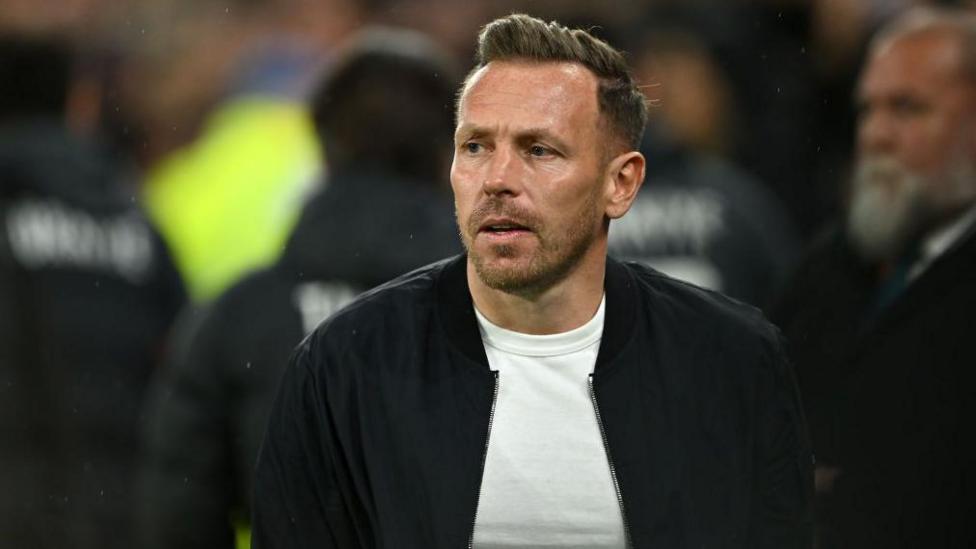
Bellamy and Burnley: A Reunion That Could Reshape Two Futures
Craig Bellamy is in advanced talks to replace Scott Parker at Burnley, triggering a high-stakes dilemma for Wales.
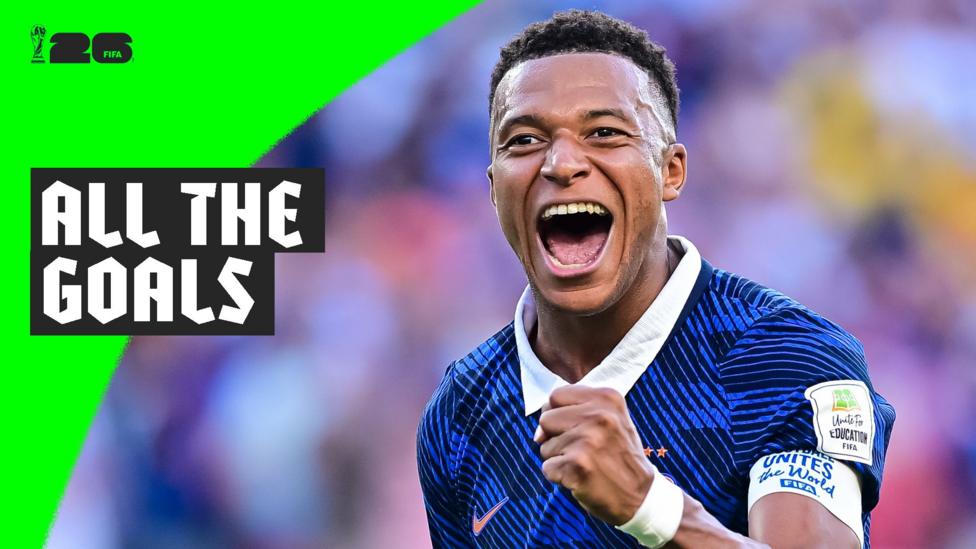
Les Bleus Arise: France's Goal Machine Marches Into World Cup Semi-Final
France's devastating attacking firepower earns a 2026 World Cup semi-final showdown against Spain in a blockbuster continental clash.

Morgan, Cusack, and the Power Imbalance Plaguing the WSL
Jonathan Morgan's testimony reveals a systemic coaching culture where dissent is punished and players silenced.