WRU Kicks the Can: Plan to Axe a Pro Side Gets Another Delay
The Welsh Rugby Union once again postpones revealing which professional region faces the axe under its 2028 restructuring plan.
The Announcement That Won't Come
The Welsh Rugby Union has confirmed it will not reveal the details of its plan to cut a professional men's rugby region by 2028 in the immediate future. The governing body, which oversees one of the sport's most storied nations, said specifics will now emerge "in the coming weeks" rather than on the previously suggested timeline. It is the latest in a string of postponements that have left players, coaches, supporters, and politicians staring at an anxious calendar.
The core decision was made public back in July 2023: Wales, which currently fields four professional sides in the United Rugby Championship, will consolidate to three by the end of the 2027-28 season. The rationale is financial sustainability. The rationale is also painfully simple. Welsh rugby does not generate enough money to run four competitive professional outfits, and the performances on the pitch have reflected that reality for years.
Yet the WRU keeps delaying the moment it must name which region gets the chop, or which two get merged. That hesitation speaks volumes about how politically and emotionally charged the decision truly is.
Why Four Becomes Three
Wales's four professional regions, Scarlets, Ospreys, Cardiff Rugby, and Dragons, were born out of the controversial restructuring of 2003. The old club system was deemed too fragmented to compete with the centralized powerhouses of English, French, and Irish rugby. Two decades on, the experiment has produced mixed results.
The national team enjoyed glorious peaks: Grand Slams in 2005, 2008, 2012, 2019, and 2021. But the regional model has never achieved financial self-sufficiency. All four sides rely heavily on WRU funding. Combined annual losses across the regions have routinely stretched into the millions of pounds. The COVID-19 pandemic accelerated the bleeding. A governance crisis within the WRU itself, including allegations of a toxic culture that led to an independent review and the departure of senior leadership, further eroded confidence.
The numbers tell the story with brutal clarity. Welsh regions have won just one URC title since the competition's inception in various formats. In European competition, progress beyond the quarterfinals has become an exception rather than the norm. Player retention is a chronic headache. Wales's best talents, Louis Rees-Zammit's shock move to the NFL pathway being the most dramatic example, have increasingly looked abroad for both money and ambition.
The Political Minefield
Identifying which region to cut means picking a fight with an entire community. The Dragons, based in Newport, have long been considered the most vulnerable. They play out of Rodney Parade, a ground with limited commercial upside, and their on-field results have been the weakest of the four for the better part of a decade. But the Gwent region carries deep historical roots and a passionate, if small, fan base.
The alternative, a merger between Scarlets and Ospreys in the west, has also been widely discussed. That would create a single "super-region" spanning Llanelli and Swansea, two cities separated by barely 40 miles but divided by a fierce sporting rivalry. Telling those communities they must share a team is a combustible proposition.
Every option carries political fallout. Welsh Assembly Members and Members of Parliament have already weighed in. The WRU is acutely aware that cutting a region could depress grassroots participation in areas that see their professional pathway removed. For a union still rebuilding trust after its governance scandal, mismanaging this process would be catastrophic.
"We understand the anxiety. This is a decision that will shape Welsh rugby for a generation, and we owe it to everyone involved to get it right rather than get it fast." — WRU spokesperson, as reported by BBC Wales
The Delay Pattern
This is not the first time the WRU has pushed back its own deadline. The original announcement in 2023 suggested details would follow within months. Then it was early 2024. Then later in 2024. Each delay has allowed speculation and uncertainty to fester, creating a corrosive atmosphere inside the regions themselves.
Coaches trying to recruit players for next season cannot offer certainty about the club's future beyond a couple of years. Players in the final year of contracts are weighing whether to re-sign with an organization that may not exist in its current form. Sponsors are reluctant to commit long-term money to a brand with an expiry date hanging over it.
The WRU says it is still conducting stakeholder consultations, modeling financial scenarios, and reviewing the findings of external consultants. All of that is plausible. But the perception of indecision has become its own story, and it is damaging.
What the Global Picture Demands
Wales is not operating in a vacuum. World Rugby's high-performance review has encouraged tier-one nations to concentrate resources on fewer, stronger professional teams. South Africa realigned its franchise model when it joined the URC. Australia has flirted with cutting Super Rugby sides multiple times. Argentina consolidated its professional presence.
The direction of travel is clear: fewer teams, better-funded, more competitive. The WRU is not inventing a painful idea. It is belatedly following an industry trend. But the execution matters as much as the concept, and right now the execution looks hesitant at best.
Financial projections suggest a three-region model could free up between £2 million and £4 million per year in WRU funding, money that could be redirected into player retention, academy systems, and facilities. That is the prize. The cost is the anger and grief of whichever community loses its professional team.
What It Means
The WRU's latest delay is not a sign that the plan is in doubt. Four to three remains the stated policy. The postponement reflects the sheer difficulty of choosing which region gets sacrificed.
For Welsh rugby, the stakes could not be higher. The national team's results have declined sharply, finishing fifth in the 2024 Six Nations after a dire campaign. Player exodus continues. Attendances at regional games are falling. The game in Wales needs a clear plan, and it needs it now.
Every week of delay is another week of uncertainty bleeding into recruitment, sponsorship, and supporter engagement. The WRU says the details are coming "in the coming weeks." Welsh rugby has heard that before. This time, the governing body cannot afford to disappoint again.
Editorial Integrity
This is an original SportPulse article written by our editorial team. All content is independently researched, written, and reviewed by our writers and editors before publication. We do not publish copied, aggregated, or syndicated content.
SportPulse is committed to original sports journalism. Read our editorial policy or contact us with any questions.
More Like This
All long-reads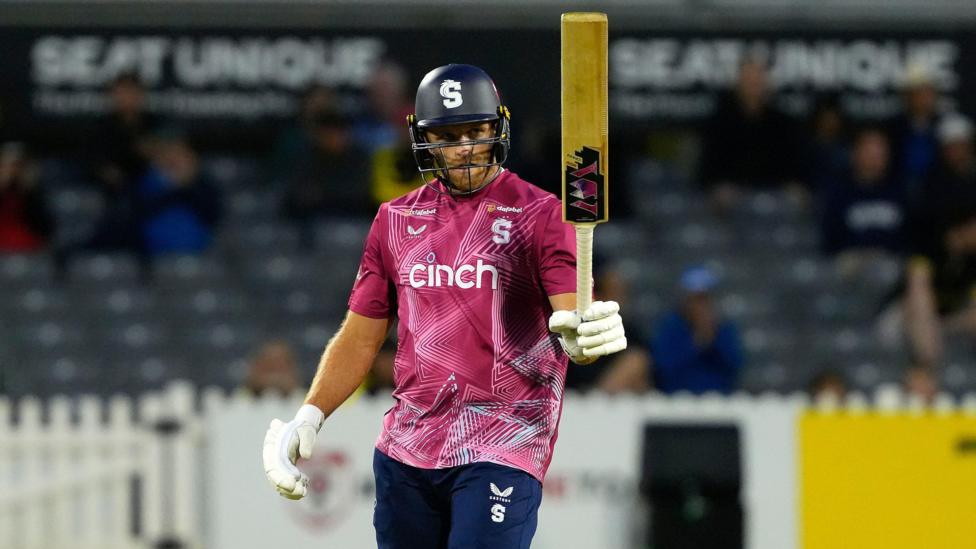
Northants Steelbacks Keep Perfect T20 Blast Record Alive
Northamptonshire Steelbacks extend their flawless T20 Blast campaign with a statement win at Bristol against Gloucestershire.

Julián Quiñones and the Mirror Mexican Football Refuses to Look Into
From racial slurs in Guadalajara to national team hero: Quiñones forces Mexico to confront its deepest contradictions.

Chaos, Cash, and Cooling Breaks: Has the 2026 World Cup Worked?
Expanded to 48 teams and stretched across a continent, the 2026 World Cup balances spectacle against soaring costs and logistical headaches.