Zverev's Wimbledon: A Crowd Carried Him Home, But Sinner Waited
Alexander Zverev reached his first Wimbledon final carried by the Centre Court crowd, only to find Jannik Sinner immovable at the summit.
A Cathedral Finds Its Unexpected Pilgrim
There is a particular sound the Centre Court crowd makes when it decides to adopt someone. It is not the deafening roar reserved for undisputed champions or the polite murmur of acknowledgment for a capable opponent. It is something gentler, deeper, and far more intimate. It is a willful act of collective belief, a low hum that rises into full-throated endorsement whenever the adopted son threatened to break through. For two weeks under the London sun, Alexander Zverev was not merely a participant in the gentlemen's singles draw. He was a project. The Wimbledon crowd, that most discerning and stubbornly tribal of sporting audiences, took the tall German with the explosive backhand and made him their own.
It carried him, by his own admission, to places his body and mind могли not have reached alone. But it could only carry him so far. At the end of the road, waiting with the cold patience of youth and the terrifying certainty of a player who has already mastered his era, stood Jannik Sinner.
The Weight of an Unexpected Bond
Zverev's relationship with the Wimbledon crowd was not preordained. This is a arena that reveres certain archetypes: the relentless serve-and-volleyer, the grass-court aesthete, the player who understands the geometry of a lawn that plays differently on day one than it does on day thirteen. Zverev, with his massive baseline game, his powerful but sometimes wayward serve, and his history of deep runs on clay and hard courts that never quite translated to SW19, had always seemed slightly out of place. He was the annual visitor who admired the architecture but never quite felt comfortable enough to rearrange the furniture.
This year was different. Perhaps it was the cumulative weight of his recent performances, the deep runs at other majors that established him firmly in the conversation of the sport's elite. Perhaps it was the simple, human narrative of a player chasing a first Wimbledon final, a milestone that had eluded him while contemporaries and rivals collected the sport's greatest prizes. Wimbledon crowds love a quest. They love the visible yearning. And in Zverev's powerful, often impersonal style, they found something they decided to champion.
The Wimbledon crowd played a big part in me reaching the final.
That admission, offered in the quiet aftermath of a straight-sets defeat in the championship match, was not a deflection or an excuse. It was an act of gratitude from a player who understands, perhaps better than most, how fragile the margins can be at the very summit of the sport and how much the invisible weight of twelve thousand willing voices can tilt them.
The Unyielding Wall of Sinner
For all the crowd's collective will, for all the energy that poured down from the stands every time Zverev unleashed one of his devastating backhands down the line, there was a fundamental, structural problem standing across the net. Jannik Sinner does not deal in sentiment. The Italian, who has established himself as the defining player of this current era with a relentless, almost robotic efficiency, does not care about the crowd's adopted narratives. He does not care about quests or milestones or the warm, romantic pull of a Wimbledon afternoon. He cares about geometry, about depth, about the ruthless exploitation of the half-meter of space his opponent leaves behind the baseline.
The final was, in many ways, a collision between two different kinds of power. Zverev, who had ridden the wave of crowd support through the earlier rounds, found that the wave crashed against a cliff face. His serve, which had been a weapon of immense destructive capability throughout the fortnight, met a returner who reads the ball toss like a book and takes it early with a contemptuous flick of the wrist. His baseline rallies, built on sheer physical force, were neutralized by a player who generates pace from nothing, who turns defense into attack with a single, impossibly quick change of direction.
Sinner's victory was not just a triumph of talent, though his talent is prodigious. It was a triumph of systems. The Italian's game is a closed loop, self-sustaining and self-correcting. It does not require external fuel. It does not rise and fall with the mood of the crowd. It simply operates, at a level of consistent excellence that leaves very little room for the kind of emotional surges that had carried Zverev to the final.
The Specific Geometry of Defeat
To understand the gap between Zverev and Sinner in the final is to look beyond the scoreline. The statistics tell a story of a match that was competitive in individual points but utterly decisive in the moments that defined the shape of the contest. Zverev hit his spots, but not enough of them. He won his first-serve points at a percentage that would have won most matches on most days, but not this day and not against this opponent.
- Sinner won a higher percentage of second-serve return points, a category that defines the modern baseline game
- Zverev created break-point opportunities but converted at a rate far below his tournament average
- The Italian's unforced error count remained remarkably stable across all three sets, while Zverev's fluctuated with the tide of the match
The numbers paint a picture of a player who was competitive but never truly in control, who was always one step behind in the crucial points, whose moments of brilliance were matched and exceeded by an opponent whose brilliance was simply more consistent.
What the Crowd Gave, and What It Could Not
The question that lingers after Zverev's admission is not whether the crowd played a part in his journey. It clearly did. The more interesting, and more difficult, question is what the crowd could not give him.
Wimbledon crowds are powerful, but they are not unlimited in their power. They can lift a player through the early rounds, through a difficult quarterfinal, through a grueling semifinal that stretches into the fifth set. They can fill a player's legs when fatigue sets in. They can make a marginal ball feel like a moment of destiny. But they cannot, in the end, hit the ball over the net. They cannot create the kind of sustained, unyielding pressure that breaks down a player of Sinner's caliber. They cannot grant the gift that Sinner possesses in abundance and that Zverev, despite all his talent and all his achievements, still lacks: the ability to simplify the game, to reduce its infinite possibilities to a handful of repeatable truths.
The Historical Context of Zverev's Run
Zverev's journey to the Wimbledon final must be understood within the broader context of the last few seasons. His trajectory has been defined by near-misses and what-ifs. He is a player who has lived in the shadow of the very pinnacle. His career has been a parade of deep runs, of semifinal appearances and Masters titles, all of which mark him as one of the elite players of his generation.
The narrative around Zverev is changing. This Wimbledon run, built on the back of his most consistent season at the majors, was a culmination of that quiet evolution. It was the first time he had reached the final at the All England Club, a milestone that places him in a different category of player. The defeat to Sinner does not erase that. It does not diminish the significance of what he achieved to get there.
But it does define the gap. And it is a gap that Zverev, as he enters the phase of his career where the physical gifts begin to require more and more tactical compensation, will need to find a way to close.
The Long Walk and the Longer Road Ahead
There is a moment, after every Wimbledon final, when the runner-up walks off Centre Court. The crowd stands. They applaud. It is a gesture of respect, of acknowledgment, of a shared experience that transcends the result. For Zverev, that walk must have felt longer than most.
He had given everything. He had been carried by the crowd, by the occasion, by the sheer force of his own ambition. And he had come up short, not because of any failing of will or spirit, but because he had met a player who is, at this moment, simply better. Sinner's consistency, his ability to execute the same shot under the same pressure at the same level, is the defining characteristic of his game. It is the wall that every player of this era must find a way over, or around, or through.
For Zverev, the road ahead is clear, if not easy. He has proven he can reach the final. He has proven he can harness the energy of a crowd and the occasion. Now he must find a way to do what Sinner does: to play the same game, at the same level, regardless of the noise, regardless of the moment, regardless of whether the crowd is with him or against him or simply silent. He must find a way to be his own crowd.
The Wimbledon crowd gave Zverev a gift. They gave him their belief, their energy, their collective will. It carried him further than he might have gone alone. But the final reminded him, and all of us, that belief, however powerful, is not enough. At the very pinnacle of the sport, where the air is thin and the margins are measured in millimeters, the only thing that matters is the cold, relentless, beautiful truth of the ball in play. And in that truth, Jannik Sinner reigns supreme.
Zverev will return. He is too good, too driven, too close to the summit not to. The question that will define the rest of his career is whether he can bring to his own game the quality that the Wimbledon crowd gave him: the ability to believe, even when belief is not enough.
Editorial Integrity
This is an original SportPulse article written by our editorial team. All content is independently researched, written, and reviewed by our writers and editors before publication. We do not publish copied, aggregated, or syndicated content.
SportPulse is committed to original sports journalism. Read our editorial policy or contact us with any questions.
More Like This
All tennis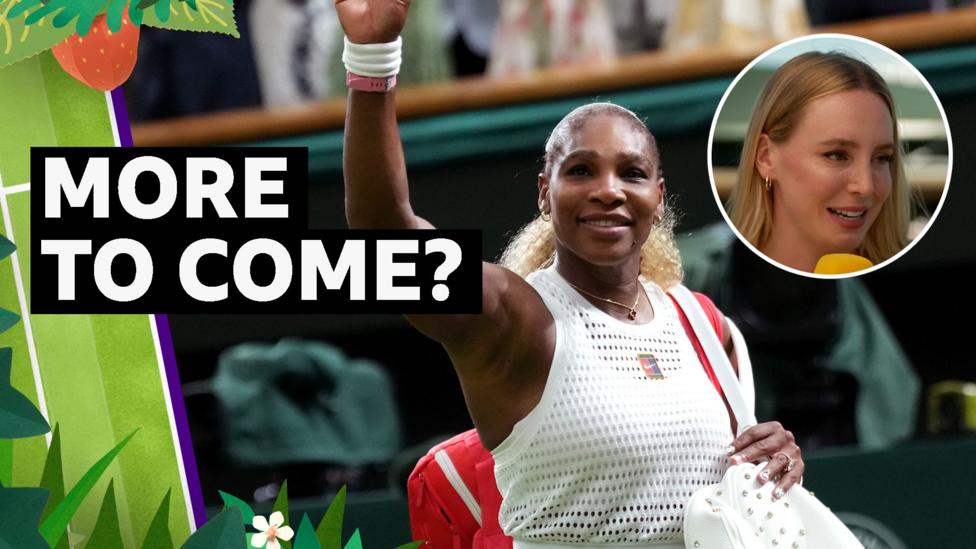
Serena's Comeback: A Quest Clocked at 3,649 Days
Serena Williams' Wimbledon return sparks debate: will the 23-time major champion chase Grand Slam No. 24 beyond the All England Club?
12,000 Abusive Posts: The Silent Opponent Crushing Women's Tennis
Female tennis players faced 12,000 abusive posts in 2025, a digital plague weaponizing anonymity into a career-threatening assault.
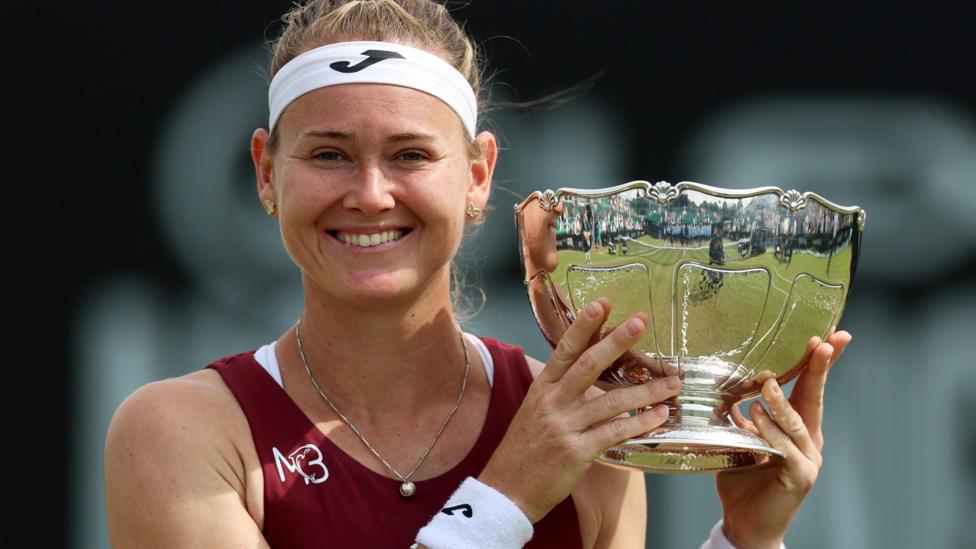
Bouzkova's Grit Shines Through Pain to Claim Nottingham Crown
Marie Bouzkova fought through an ankle injury to capture her first grass-court title at the Nottingham Open.