The 2026-27 Football Calendar: A Tactical Earthquake
The 2026-27 season calendar forces a structural rethink of squad rotation, pressing intensity, and tactical planning across Europe.
A Calendar Reshaped by the World Cup Hangover
The 2026-27 men's football season arrives not as a fresh beginning but as a structural aftershock. With the expanded 2026 FIFA World Cup in the United States, Canada, and Mexico running through July 19, 2026, European domestic leagues face a compression unlike anything in modern history. The calendar has always dictated tactical choices. Now, it threatens to dictate entire philosophies.
Consider the fundamental arithmetic. If the World Cup final occupies the third Sunday of July, elite internationals will require a minimum three-week physiological and psychological reset. That pushes pre-season reporting dates into the second week of August. Traditional domestic campaigns begin in early to mid-August. That window effectively collapses, forcing managers to choose between fitness foundations and tactical preparation.
The Premier League has historically scheduled its opening matchday for the second weekend of August. The 2026-27 edition will almost certainly shift to the weekend of August 14-16, granting roughly 28 days between the World Cup final and league kick-off. For any player reaching the semi-final stage or beyond, that is barely three weeks of genuine off-season. It is insufficient, and every coaching staff in Europe knows it.
The Compression Problem Across Europe
Continental bodies face the same arithmetic. La Liga, Serie A, and the Bundesliga cannot afford significant delays without cannibalizing their winter breaks or extending into late June. The likely compromise: a two-week delay across the board, with leagues beginning between August 14 and August 22.
This compression ripples through the entire campaign. Consider what it means for the ** Champions League** league phase. UEFA's expanded format requires eight matchdays before the knockout play-off round. Wedging those into a calendar already squeezed by a late start means maximum midweek congestion from September through January.
The Tactical Cost of Congestion
- Pressed pressing systems become physically unsustainable across three-match weeks
- Man-to-man marking schemes (e.g., pressing triggers requiring full-back tucks) such as those favored by Arteta and Gasperini require elevated mental freshness that fatigue disintegrates
- Mid-block 4-4-2 defensive shapes gain renewed value as low-energy, high-efficiency alternatives
- Double pivots re-enter fashion as insurance for press-resistant transitions—the functional equivalent of a tactical shock absorber
The Boxing Day Squeeze and Winter Contractions
This is where continuity with historical scheduling patterns collides oddly with the 2026-27 anomalies. The Premier League maintains Boxing Day fixtures as an inviolable tradition, meaning matchday 19 or 20 lands on December 26, 2026. That requires a compressed pre-Christmas schedule—19 matchdays in approximately 16 weeks, or a game every 5.9 days.
That figure defines the tactical reality. No elite team can sustain high-line pressing at that frequency without encountering muscular injuries that would destroy a squad's structural integrity. The clubs that invested in deep squads during the preceding 2025 summer window earned dividends. Those still constructing will pay compound interest.
"The game has changed completely—the league forfeits its duty of care by scheduling at this intensity post-World Cup. We will see more strange results, more injuries, more teams forced into playing five at the back just to survive the schedule."
Tactical Shift: The Return of Pragmatism
The 2026-27 season may mark a stylistic inflection point. The last decade favored ever more aggressive pressing systems: Pochettino's 4-2-2-2 hyper-press, Klopp's 4-3-3 heavy metal, Fonseca's vertical intensity. These systems operate near the edge of physiological tolerance across a normal 38-game league season. They become liabilities when fixture density increases.
Expect a measurable shift. Analysts should track PPDA (Passes Allowed Per Defensive Action) figures across the opening months. Clubs that previously averaged 8.5-10.5 PPDA may drift toward 11.0-13.0, signaling deeper, more pragmatic defensive lines. The tactical elite will not abandon proactive football. Rather, they will selectively deploy it.
Consider the accounts of Madrid and Munich. Real Madrid can sustain their 4-3-3 hybrid because they rotate front-line talent effortlessly, maintaining qualitative depth across four attackers who could start anywhere. Bayern Munich, under Vincent Kompany, faces a different equation. Their high line demands Guardians occupying the deepest blocks—systems built for compactness rather than proactive pressing—will proliferate because they are cheaper to maintain across schedules with 30% less recovery time.
The Tactical Basket
What systems will emerge with structural advantage in 2026-27?
- Deep-block 4-4-2 with flat banks, demanding only 70% of pressing intensity at minimum but yielding counter-attacking potential
- Asymmetric 3-5-2 with ball-side wing-backs occupying high positions while the opposite wing-back tucks inside, creating a back-three out of possession—solving depth without exhausting personnel
- Box midfields with two holding players and two advanced interiors, enabling transitional ball retention without full systematic pressing—protecting central corridors with minimal running
- Flexible 4-2-3-1 systems with inverted wingers cutting inside rather than hugging the touchline, reducing horizontal coverage demands
The December Crucible
The congestion reaches a crucible in December. 欧冠 Matchday 7 lands in late January 2027, with matchday 8 following in the final week of that month. Concurrently, domestic cups enter their quarter-final stages. The combined effect: for clubs still in European competition, 8-9 fixtures across 28 days.
No system survives that unscathed. Rotation ceases being a choice; it becomes a tactical instrument as critical as any formation choice. Managers will field B-lineups loaded with youth products against lower-tier cup opposition. This is standard practice. What changes in 2026-27 is that those lineups will be deployed in league fixtures too.
The clubs best positioned are those with the deepest academies and the most integrated developmental pipelines. Manchester City's multi-club model provides natural depth. Chelsea has assembled a roster so large that tactical selection barely recurs. But the most interesting case is Real Sociedad. Their core international group—Mikel Oyarzabal, Martin Zubimendi, Takefusa Kubo—performs at sustained intensities because the bench is stocked with equal-quality Basque talent warming on the periphery.
What This Changes for Player Valuation
The calendar should alter how wearing directors evaluate transfers. Durability historically measured in appearances becomes a secondary metric. Recoverability—the rate at which a player's physical metrics return to baseline after matchday—becomes the primary analytic.
Clubs will overpay for profiles who demonstrate physiological resilience across congested periods. That favors certain demographics: attackers aged 23-27, physically peaking and relatively injury-free. It disfavors aging stars whose output derived from being the sole focal point of a team's pressing structure. The market will reprice accordingly.
Looking Ahead: Ajax and The Big Quiz
The fixture list does not relax in 2027. Domestic matchdays 21-24 occupy February. The Champions League knockout round play-offs land the same month. For clubs drawn into a knockout tie, that period delivers 6 fixtures in 21 days with European elimination hanging over each selection.
Defenses planned around high-press triggers face malfunction. Accumulated fatigue degrades pressing intensity synchronizations across two-to-three lines by 15-20% according to GPS tracking studies. Without adequate rest, the defensive block goes from proactive to reactive; the triggers delay; the transitional corridors widen.
The 2026-27 season will not reward the most talented team. It will reward the most intellectually coherent one.
Editorial Integrity
This is an original SportPulse article written by our editorial team. All content is independently researched, written, and reviewed by our writers and editors before publication. We do not publish copied, aggregated, or syndicated content.
SportPulse is committed to original sports journalism. Read our editorial policy or contact us with any questions.
More Like This
All football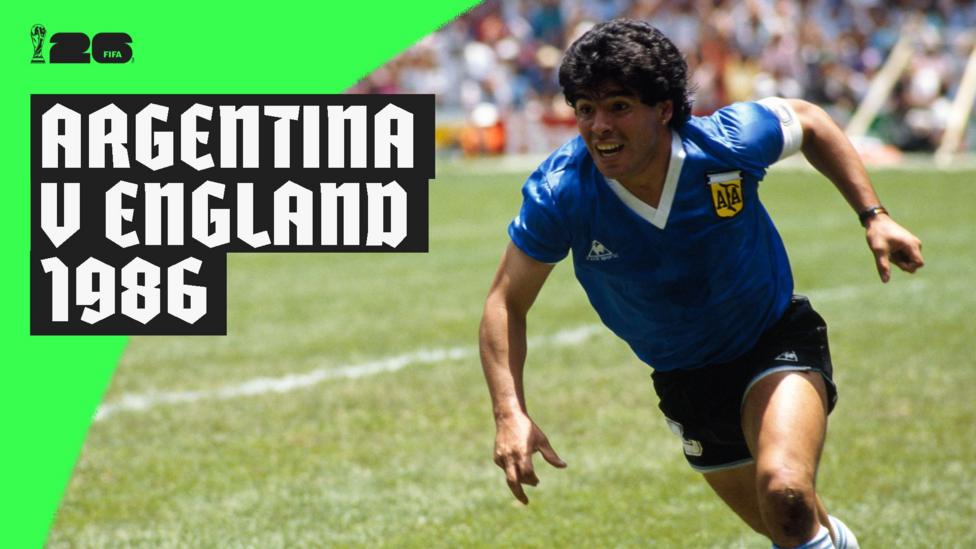
Maradona vs England: The Day One Man Rewrote Football History
Four years after the Falklands War, Diego Maradona single-handedly dismantled England in a match soaked in politics, brilliance, and controversy.
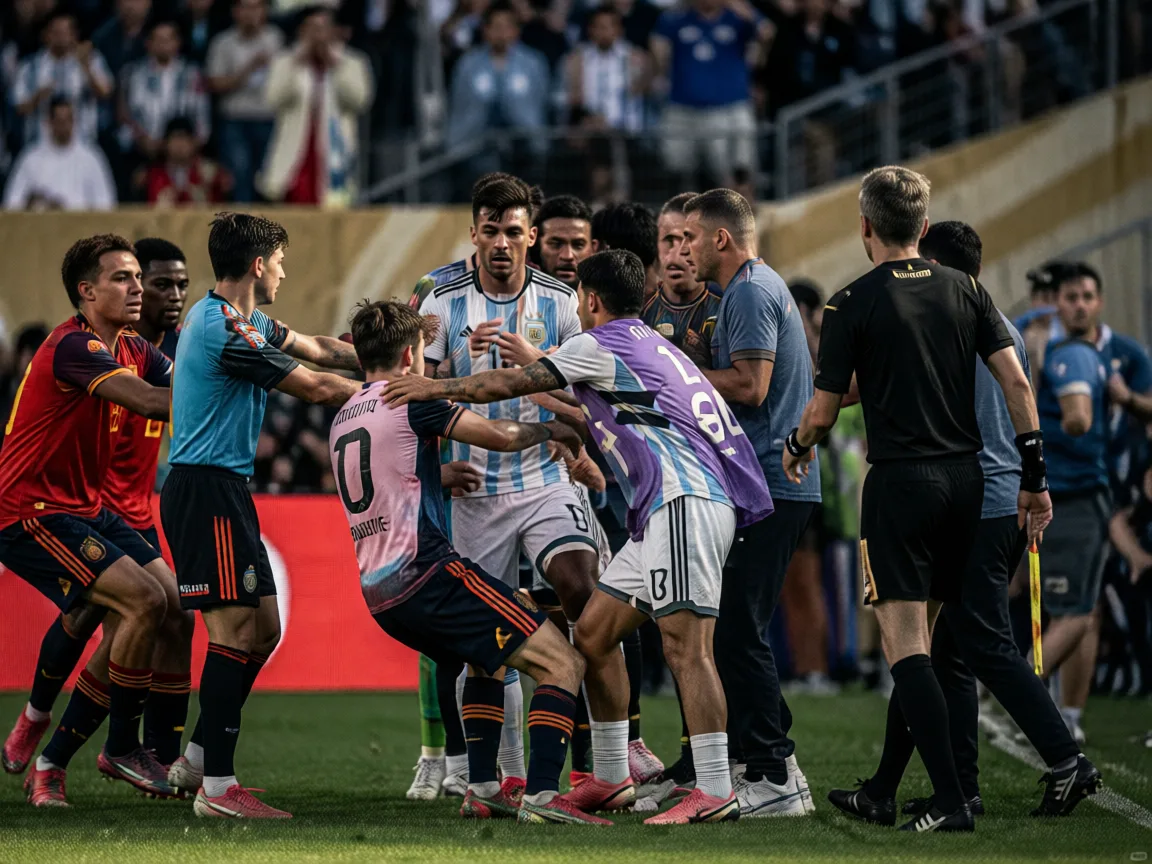
Argentina's World Cup Final Meltdown Shames Messi's Legacy
Spain conquered the World Cup but Argentina's post-match violence stole the headlines, turning a coronation into a controversy.

Germany's World Cup Trauma Deepens as Paraguay Expose Structural Decay
Another round of 16 exit via penalties demands the same soul-searching that birthed Das Reboot after 1998.