How Andy Burnham Quietly Reshaped English Football From the Political Stands
The prime-minister-in-waiting built his political philosophy through football governance, Hillsborough justice, and structural reform.
The Structural Intervention
The 4-1-4-1 deployed by Steve McClaren on a sodden November evening at Wembley in November 2007 collapsed under the weight of its own structural contradictions. Luka Modrić and Niko Kranjčar occupied the half-spaces with an intelligence England's midfield triangle could not match. The rain hammered down. Croatia won 3-2. England failed to qualify for Euro 2008, and McClaren earned a nickname that would define his entire managerial career.
What went largely unnoticed that evening was the presence of a political figure in the directors' box whose own structural intervention in the national game would prove far more consequential than anything the FA attempted tactically. Andy Burnham, then the minister for culture, media and sport under Gordon Brown's fledgling premiership, sat alongside James Purnell and Richard Scudamore, the Premier League's chief executive. He watched the wreckage unfold and understood, perhaps more clearly than anyone in that stadium, that English football's problems were not merely about who managed the senior team.
Burnham recognised that the dysfunction ran deeper than tactical selection errors or the fitness levels of overpaid stars. The entire architecture of the sport required political oversight that the FA, by its very constitution, could not provide. This was a moment when English football needed someone willing to look beyond the immediate spectacle and address the governance vacuum at the heart of the professional game.
Beyond the Whitehall Shadow
For the continental observer, the idea of a politician sitting in the directors' box at Wembley might seem incongruous. In France, the Ministry of Sport operates at arm's length. In Germany, the DFB maintains a careful distance from Bundestag interference. Yet English football has always existed in a peculiar symbiotic relationship with Westminster, and Burnham grasped this dynamic with an acuity that eluded many of his cabinet colleagues.
His background informed his approach. An Evertonian educated at Cambridge, Burnham understood football not merely as a policy area rough file but as a living, breathing manifestation of community identity. When he spoke about the sport, the language was authentic. There was no Blairite detachment, no treating working-class football culture as an anthropological curiosity.
The Shape of Reform
Burnham's interventions came at moments when English football's internal mechanisms had failed. The sport had experienced several crises of confidence over the preceding two decades, each exposing a different layer of structural weakness.
- 1992: The breakaway formation of the Premier League, which divorced elite club football from its civic responsibilities
- 2004: The failed England bid structure revealed deep faults in how the FA operated under government scrutiny
- 2007: The McClaren collapse and the realisation that coaching infrastructure lagged behind continental rivals
- 2012: The Hillsborough Independent Panel, Burnham's most sustained political campaign
The reformist instinct was always the same. Where the football authorities saw self-regulation as a principle worth defending, Burnham saw it offered no accountability. He treated English football as a public good rather than a privately managed entertainment product, and that philosophical foundation shaped every intervention he made.
The Hillsborough Work
Any serious assessment of Burnham's influence on English football must centre on Hillsborough. The April 1989 disaster at Sheffield Wednesday's Leppings Lane end claimed 96 lives and produced a cover-up that lasted more than two decades. Burnham's role in establishing the Hillsborough Independent Panel was not a political gesture bolted onto a football story; it was the application of institutional power to a moral failing that the football establishment had refused to confront.
The Panel, established in 2010, examined documents from South Yorkshire Police, Sheffield City Council, the South Yorkshire Coroner and other public bodies. Its September 2012 report demolished the narrative that Liverpool supporters had been responsible for their own deaths. The findings led to fresh inquests, criminal investigations, and ultimately a coroner's verdict of unlawful killing in April 2016.
What Burnham understood, and what many football administrators did not, was that the Hillsborough cover-up required a political resolution because the institutions involved were political. Police forces, coronial offices, and local councils operated within statutory frameworks that football's internal disciplinary processes could never touch. The FA's passivity in the aftermath of the disaster was itself a form of complicity, but only a politician with ministerial authority could crack open the evidentiary trail.
"For 23 years, the families were lied to. They were treated with contempt. And they were failed by the very institutions that should have protected them. The truth was buried, and our job was to dig it out." — Andy Burnham, speech to the Hillsborough families
The tactical parallel is instructive. Just as a coach adjusts a midfield pressing trigger when the existing structure concedes the initiative, Burnham recognised that the Hillsborough families required a structural advantage they could not generate themselves. The Panel provided that advantage by compelling evidence disclosure under threat of statutory power.
The Governance Playbook
Burnham's influence extended beyond crisis intervention. He was a consistent voice for reform of football ownership structures long before the Newcastle United takeover or the failed European Super League made governance reform politically fashionable. He argued for supporter representation on club boards, for regulatory oversight of ownership transactions, and for a financial redistribution model that would protect clubs below the Premier League from the gravitational pull of broadcast revenue concentration.
These positions were not crowd-pleasing. The Premier League under Scudamore resisted them with considerable political skill, deploying the league's economic contributions as a shield against regulatory interference. Burnham's calculations were more long-term. He saw that a league generating £3 billion in domestic broadcast rights could not sustain a model where clubs in the lower divisions faced annual existential crises.
The 2017 restructuring of the FA, which reduced the board from 12 to 10 members and introduced greater independent oversight, owed something to the intellectual groundwork Burnham had laid during his ministerial tenure. The organisational culture at Wembley changed slowly, and many within Soho Square resisted the encroachment of political logic into what they regarded as their exclusive administrative territory.
Tactical Shift: From Crisis to Architecture
The pivotal transition in Burnham's football interventions came when he stopped responding to individual crises and began constructing institutional frameworks. The McClaren night at Wembley in November 2007 taught him that ministerial presence without structural reform was ornamental. You could attend every England match, commiserate with every defeat, and the sport would continue to decline because the incentives within the system rewarded short-termism over sustainability.
The Hillsborough Independent Panel was the first manifestation of this architectural thinking. Rather than demanding an inquiry that would produce a report and be filed away, Burnham designed a mechanism that compelled document disclosure, subjected findings to public scrutiny, and created an evidentiary foundation for legal challenge. The methodology was subsequently studied by campaigners seeking similar panels for other institutional cover-ups.
If England win a major tournament in the coming years, the credit will flow to the manager, the players, and the academies that developed them. But the infrastructure beneath those achievements was built in part by a politician who understood that football, like any complex system, requires governance frameworks that can withstand the pressure of commercial interests and institutional self-preservation.
What Comes Next
Burnham now stands as the prime-minister-in-waiting within Labour's ranks, and the template he developed through football governance may well shape his broader political philosophy. The sport taught him that structural reform outlasts individual charisma, that institutional accountability cannot be delegated to the institutions themselves, and that communities will trust political figures who demonstrate authentic understanding of the cultures that define them.
The next test for English football governance arrives with the Independent Regulator, legislation that embodies many of the principles Burnham advocated during his ministerial career. Whether that body succeeds in balancing commercial dynamism with structural sustainability remains uncertain, but the framework was constructed by people who learned from the same crises Burnham navigated.
For the continental observer, the lesson is clear. Football governance is not an administrative afterthought; it is the tactical system within which everything else operates. Get the structure wrong, and the most gifted players and managers will falter. Get it right, and the sport sustains itself across generations. Andy Burnham understood this earlier than most, and English football is the stronger for it.
Editorial Integrity
This is an original SportPulse article written by our editorial team. All content is independently researched, written, and reviewed by our writers and editors before publication. We do not publish copied, aggregated, or syndicated content.
SportPulse is committed to original sports journalism. Read our editorial policy or contact us with any questions.
More Like This
All long-reads
Chaos, Cash, and Cooling Breaks: Has the 2026 World Cup Worked?
Expanded to 48 teams and stretched across a continent, the 2026 World Cup balances spectacle against soaring costs and logistical headaches.

The World Cup America Didn't Know It Needed
As the 2026 World Cup approaches, football may hold up the mirror America least wants to look into.
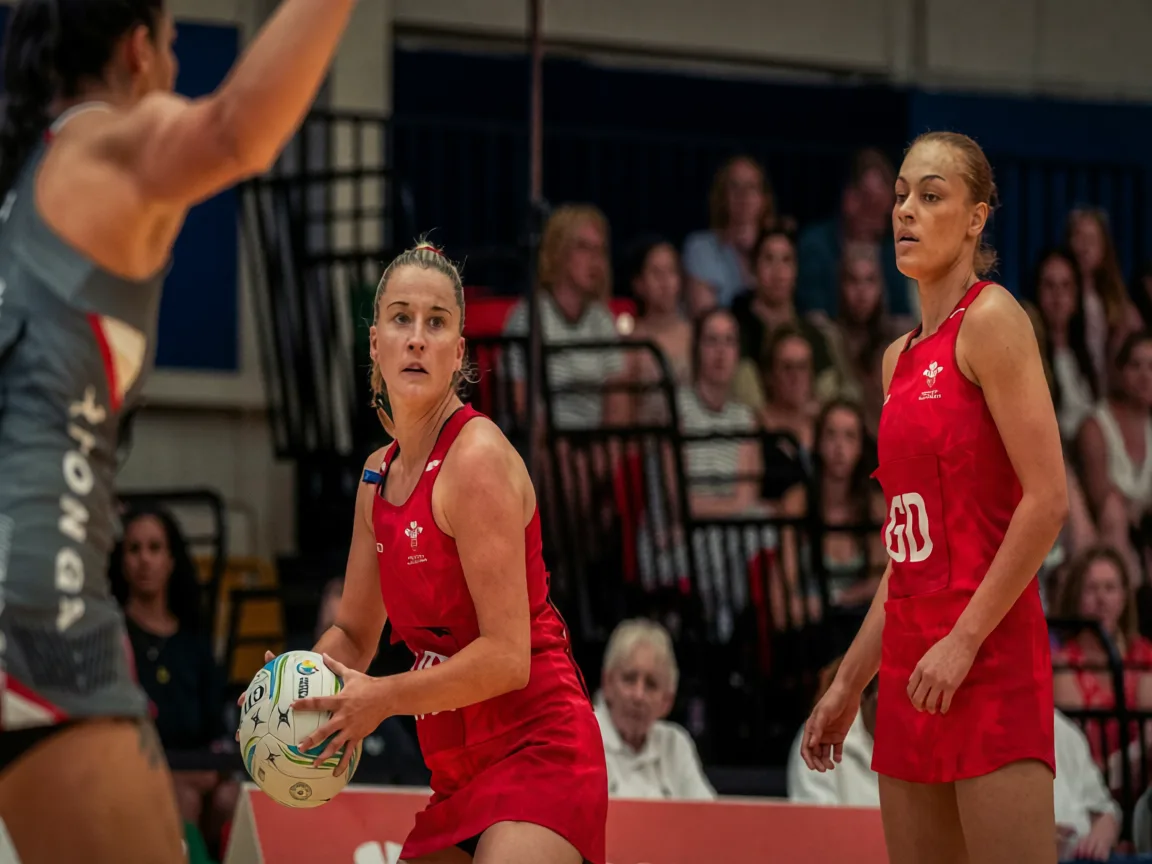
Wales Send Commonwealth Message With Tonga Win
Wales dispatched Tonga 65-52 in their final Commonwealth Games warmup, signaling they arrive ready to compete, not participate.