Antonelli's Monaco Masterclass Leaves Rivals Chasing Shadows
Kimi Antonelli's dominant Monaco victory proves pole is everything, leaving an awestruck paddock wondering how to catch the teenager.
The harbor was glassy, the Monte Carlo sky a flawless cerulean, and the barrier walls radiating the kind of early-summer heat that transforms the Monaco street circuit into a high-speed oven. Formula 1 returned to the principality for its annual game of architectural chess, where the narrow, unforgiving layout demands absolute precision and the margin for error is measured in millimeters. In this crucible of mechanical sympathy and driver bravado, track position is the ultimate currency. Serve that context onto a silver platter, and you begin to understand the sheer scale of what Kimi Antonelli achieved on Sunday.
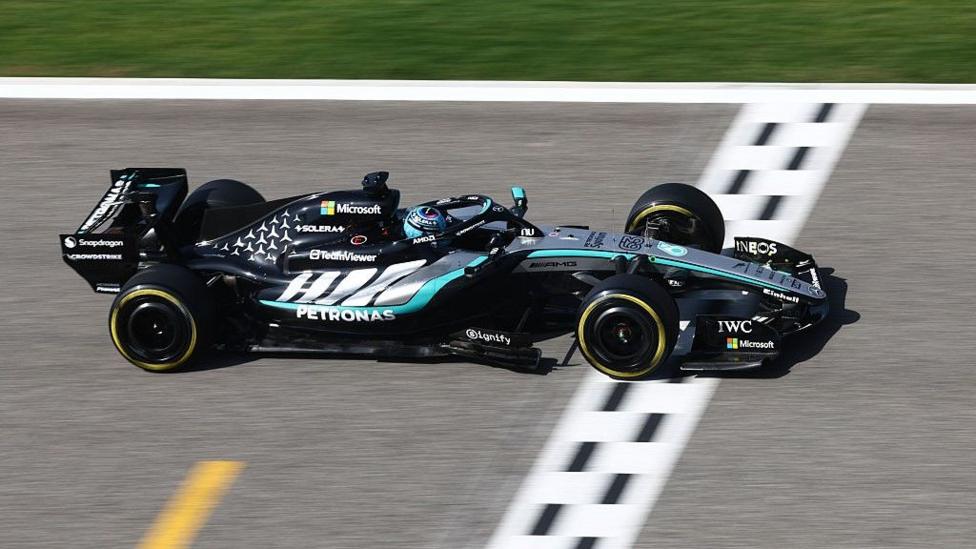
Monaco has always been a qualifying race. The acute difficulty of overtaking on the tight, twisting streets means the winner is overwhelmingly decided on Saturday afternoon, provided the lead car maintains its composure and manages its tires through the inevitable safety car phases. Antonelli understood this assignment perfectly. The Mercedes W16 machinery was hooked up, the tire preparation flawless, and the young Italian delivered a pole lap that left the timing screens trembling and the paddock searching for superlatives.
He crossed the line to secure the top spot, becoming the youngest winner in the history of the Monaco Grand Prix in the process. This is a race that has historically rewarded veterans who have spent years learning its rhythmic peculiarities. To see a teenager conquer the circuit on his first visit in top-flight machinery is a statistical anomaly that forces a total recalculation of the season's competitive landscape. But this was no straightforward procession. The race was a chaotic affair, featuring a red flag and multiple driver penalties that tested the composure of the entire grid. The dramatic ending included two safety car periods and a red flag, with Lewis Hamilton finishing as runner-up.
The Anatomy of an Untouchable Weekend
Antonelli's performance was not merely about outright pace. It was about the strategic and mental composure required to execute a perfect race from the front. On a circuit where following another car within 1.5 seconds results in catastrophic aerodynamic washout, getting out front and controlling the pace neutralizes the raw performance advantages of rival teams.
The Mercedes pit wall opted for a conventional approach once the lights went out. The objective was simple: cover the undercut threat from the chasing pack during the initial tire window, then manage the hard compound through the graining phase. Tire degradation on the front-left is historically brutal around the slow-speed hairpins and heavy braking zones of the Loews and Nouvelle Chicane, but Antonelli managed the thermal loading of his rubber with the discipline of a seasoned veteran.
When the late drama unfolded, injecting a pulse of anxiety into the Mercedes garage, Antonelli barely flinched. The restart procedure was clinical. He backed the pack up perfectly through the final corner, manipulated the acceleration phase onto the start-finish straight, and was safely into the braking zone of Sainte Devote before his closest challenger could even launch an offensive.
- Kimi Antonelli — Mercedes — +0.000s (Youngest Monaco winner)
- Lewis Hamilton — Ferrari — +3.274s at the flag
- Third Place — +5.112s after late safety car restart
To Wolff's point, this was not just a victory born of superior powertrain deployment or an aerodynamic sweet spot. It was a victory of supreme driver confidence. The younger generation of drivers often struggles with the patience required to lead a Monaco Grand Prix. They push too hard, overwork the front-left tire, and fall off the performance cliff after lap 40. Antonelli demonstrated a tire-management algorithm in his own head that matched the engineers' projections perfectly.
Hamilton's Resurgence in the Twists
While Antonelli controlled the race from the front, Lewis Hamilton has appeared fresh and full of his previous self. The Ferrari driver pushed hard, utilizing the strengths of his car through Monaco's tortuous layout to secure second place.
The car has repeatedly demonstrated how good it is in the slower corners but has struggled with drag on straights and in using a smaller turbocharger than their rivals. It has proved costly on traditional circuits this season where, even when competitive at the off, the Ferrari has been unable to match the Mercedes' formidable race pace, or that of the upgraded McLaren.
Ferrari's pace through the twists – Hamilton was quickest in the slow speed corners at the last round in Canada – and that smaller turbo will be vital in Monaco. Energy management should not be an issue with ample recharging, while the smaller turbo will enable it to remain spooled up to be most effective in punching quicker out of the corners. On a circuit where the power unit's characteristics align, Hamilton was a persistent presence in Antonelli's mirrors, ultimately finishing a close but never threatening second.
Verstappen and the Pursuit
Some quotes from Max Verstappen, second on the grid in his Red Bull, captured the pre-race tension: "Try not to overthink it too much, that works best. We will try to do the best start we can. It is a long race, anything can happen. It is not always easy and I hope today, we can have a normal start."
Strategy Breakdown: The Pit Wall Poker
The defining strategic decision from the Mercedes camp arrived during the late safety car period — compounded by the earlier red flag that had completely reset the field's tire strategies and forced a tactical rethink from every garage. With the field bunched up and the pit lane open, Toto Wolff and his strategy engineers faced the classic Monaco conundrum: pit for fresh medium tires and sacrifice track position, or stay out on worn hard rubber and defend the win on pure track geometry.
The decision to stay out was rooted in cold, hard mathematics. On a circuit where the time penalty for running in dirty air is roughly 1.8 seconds per lap, giving up physical track position is a sporting sin. The team calculated that even on six-lap-old hard tires, the aerodynamic wake created by the leading car would prevent the chasing cars from ever getting close enough through the famous tunnel sector to attempt an overtake into the chicane. It was a defensive masterclass orchestrated from the pit wall, validating their absolute trust in Antonelli's ability to nail the restart.
Team radio captured the brief, sharp exchange. The engineer fed him the delta, the tire temperatures, and the gap to P2. Antonelli's response was a single, clipped acknowledgment. No panic. No extraneous chatter. Just cold execution. The boy is driving like a man who has done this a hundred times before.
An Awestruck Principal and Rattled Rivals
Toto Wolff is a notoriously difficult man to impress. Having overseen the most dominant dynastic run in Formula 1 history, the Austrian has seen generational talents walk through the doors at Brackley. His public statements are usually calibrated to manage expectations rather than shower praise. Yet even Wolff was moved to genuine awe by the performance he witnessed on the Côte d'Azur.
"The lap on Saturday was outstanding. We all saw it. But what happened on Sunday, the maturity, the restart, the management — that is not something you can teach a teenager in a simulator."
In the rival garages, the atmosphere was markedly more tense. Paddock drivers are experts at the art of constructive framing. They will point to 0.2s gaps in sector two as signs of convergence. They will talk about upcoming circuits suiting their aero philosophy better. But the body language in the post-race pen told a different story. Slumped shoulders, curt replies about tire temperatures, and a palpable sense of resignation. Antonelli is untouchable on present form, and the paddock knows it.
The psychological impact of a Monaco victory extends well beyond the immediate 25 points. It signals to the entire grid that the driver has the mental architecture to handle the highest-pressure environment in motorsport. For the rivals, the realization that Antonelli is already operating at this level, only six races into his fledgling career, is a terrifying proposition.
The Championship Implications
The mathematics of the title fight are beginning to shift, and the Constructors' standings have taken a decisive tilt toward Brackley. Antonelli's haul of 25 points in Monaco, coupled with the compromised afternoon for his primary championship rival, extends his lead at the summit of the Drivers' Championship to a daunting margin. This is no longer a rookie learning the ropes. This is a championship contender extracting maximum yields from every available session.
The Constructors' picture looks equally bleak for the chasing pack. With the power-sensitive circuits of Canada and Spa-Francorchamps looming on the horizon, Mercedes' straight-line efficiency advantage and Antonelli's newfound momentum could create a cascading effect. By the time the European season reaches its crescendo at Monza, the points gap may require binoculars to bridge.
For the rest of the grid, the immediate challenge is technical as much as psychological. Solving the Monaco aerodynamic puzzle requires a low-downforce configuration that prioritizes mechanical grip and traction out of the slow-speed corners. Teams must now pivot their development philosophy toward the high-speed downforce demands of Barcelona, hoping to find the silver bullet that can pierce the Mercedes armor.
But development takes time. And right now, time is the one commodity Antonelli's rivals do not have. The teenager has arrived, the record books have been rewritten, and the sport is watching a generational talent reshape the competitive order in real time.
Updated: 2026-06-23 — Added runner-up (Lewis Hamilton) and details of chaotic ending including two safety cars and a red flag
Editorial Integrity
This is an original SportPulse article written by our editorial team. All content is independently researched, written, and reviewed by our writers and editors before publication. We do not publish copied, aggregated, or syndicated content.
SportPulse is committed to original sports journalism. Read our editorial policy or contact us with any questions.
More Like This
All f1
Haas's Upgrade Backfires: Komatsu Admits 'We Weren't Good Enough'
Haas started hot with Bearman's points haul, but their upgrade package has triggered a brutal slide into midfield mediocrity.
Silverstone Showdown: Five Flashpoints That Define the British Grand Prix
Silverstone's high-speed corners, unpredictable weather, and McLaren vs. Red Bull tension make the British GP a strategic chess match.
Sandbagging in F1: The Engineering Art of Hiding Speed
Every team does it. No one admits it. Here's how sandbagging actually works in Formula 1's technical arms race.