Aramco's World Cup Deal Is Football's Dirtiest Sponsorship Yet
Saudi Aramco, the world's largest corporate polluter, now stands at the heart of FIFA's showcase tournament.
Aramco is the world's single largest corporate emitter of carbon dioxide. It is also FIFA's official "energy partner" for the World Cup. The juxtaposition is not accidental. It is the entire strategy.
When viewers tune into the biggest sporting event on the planet, those branded perimeter boards don't just sell a product. They sell legitimacy. They sell the idea that a fossil fuel empire responsible for more cumulative emissions than any other company in human history is a natural partner for global celebration.
This is sportswashing at industrial scale.
The Petrodollar Pipeline Into Football
Saudi Arabia's relationship with FIFA has deepened dramatically over the past five years. The kingdom's Public Investment Fund already controls Newcastle United. Saudi Pro League clubs spent over $1 billion in transfer fees during the 2023 summer window alone, luring stars like Cristiano Ronaldo, Neymar, and Karim Benzema with wages that dwarfed European salaries. The 2034 World Cup was awarded to Saudi Arabia in what critics called a predetermined process with no rival bid.
Now, Aramco sits at the center of that web. The company's sponsorship of the World Cup is not merely a logo on a board. It is the embedding of fossil fuel branding into the emotional fabric of the sport's greatest event.
Saudi Arabia has, for decades, been the single greatest obstacle to meaningful international climate action. The kingdom's negotiators have consistently blocked, weakened, or delayed emissions targets at every major COP summit. When the world needed commitments, Riyadh offered delay. When delay was no longer viable, it offered Aramco sponsorship deals.
A History Written in Carbon and Concrete
Football's entanglement with polluting industries is not new. The sport's origins are inseparable from the industrial capitalism that shaped Victorian Britain. The Factory Act of 1850 gave workers Saturday afternoons free from 2pm onward, which is why the traditional kick-off settled at 3pm. Football was, from its organized inception, a product of industrial labor rhythms.
The sport then became a cultural export of the British Empire, spreading along trade routes and colonial infrastructure. Clubs were founded by factory owners, railway companies, and munitions manufacturers. The connection between heavy industry and football is baked into the game's DNA.
But there is a difference between a mill owner sponsoring a local club in 1882 and a state-owned petrochemical giant using the World Cup to launder its environmental record in 2026. The scale has changed. The intent has changed. The stakes have changed.
What the Numbers Tell Us
The financial footprint is staggering. Aramco reported revenues exceeding $440 billion in its most recent fiscal year. The company's cumulative historical emissions are estimated at over 59 billion tonnes of CO₂ equivalent since 1965, according to the Climate Accountability Institute. That figure dwarfs every other corporation on earth.
FIFA, meanwhile, has grown increasingly dependent on sponsorship revenue from state-linked entities and petrochemical companies. The governing body's commercial income has surged past $7 billion per World Cup cycle. Aramco's deal sits alongside partnerships with Saudi Arabia's Tourism Authority and Visit Saudi, creating what environmental groups describe as a "carbon curtain" draped over the tournament.
Fan organizations have not been silent. Football Supporters Europe and campaign groups like Fossil Free Football have staged protests, organized banner displays, and published open letters demanding FIFA reconsider fossil fuel partnerships. The response from FIFA has been silence or vague commitments to "sustainability initiatives" that critics call greenwashing layered on top of sportswashing.
The Locker Room Doesn't See It
Inside the tournament itself, players are largely shielded from the controversy. The changing rooms hum with pre-match music and tactical briefings, not carbon accounting. Post-match mixed zones are dominated by questions about goals and injuries, not emissions data.
But the silence is itself a statement. When Lionel Messi or Kylian Mbappé stand in front of an Aramco-branded backdrop for post-match interviews, they become unwitting ambassadors for the brand. Their global reach, their billions of social media followers, their emotional connection with children in every country on earth, all of it flows through the same pipeline as Saudi crude.
The players didn't choose this. FIFA chose it for them.
The Three Eras of Football and Fossil Fuels
Historians and environmental scholars divide football's industrial entanglement into three distinct periods.
The first era, as noted, was football's emergence as a working-class sport shaped by factory schedules and industrial paternalism. Mill owners funded clubs as tools of social control and community cohesion.
The second era began in the 1970s and 1980s, when petroleum money flooded into European football through shirt sponsorships and stadium naming rights. PSV Eindhoven wore Philips branding. German clubs took money from energy companies. English football embraced commercial sponsorship wholesale after the Hillsborough disaster and the creation of the Premier League in 1992.
The third era is the one we are living through now. State-owned oil companies don't just sponsor clubs. They buy them. They bid for tournaments. They embed themselves into the governance structures of the sport itself. Saudi Arabia's relationship with FIFA represents the most complete fusion of fossil fuel interests and football administration in the sport's history.
"We have always believed in the power of sport to bring people together and drive positive change." — Aramco corporate statement on World Cup sponsorship.
Critics point out the obvious tension. The "positive change" Aramco champions does not extend to its own emissions trajectory. The company continues to expand production capacity, targeting 12.6 million barrels per day by 2027. Its climate pledges remain voluntary, unverifiable, and widely regarded as insufficient by climate scientists.
What the Fans Are Saying
Supporter backlash has been vocal but uneven. In Western Europe, where climate consciousness intersects with football culture, protests have been visible. Banner drops at Anfield, Signal Iduna Park, and Parc des Princes have featured slogans like "Kick Oil Out" and "FIFA Burns, Planet Burns."
In other markets, particularly in Asia and Africa where football viewership is surging and where Saudi investment is welcomed as a counterweight to European dominance, the criticism is quieter. The sportswashing strategy works precisely because it is unevenly distributed. It targets the global majority while absorbing criticism from a vocal minority that FIFA can afford to ignore.
The governing body's calculation is clear. Sponsorship revenue is guaranteed. Fan protests are not. Until boycotts hit attendance figures or broadcast numbers, the financial incentive to maintain the Aramco partnership will outweigh any reputational cost.
The Greenwashing Layer
FIFA has attempted to defuse criticism by pointing to its own environmental commitments. The organization published a Sustainability Strategy ahead of recent tournaments, pledging carbon-neutral events and legacy programs for host nations.
Independent audits have challenged those claims. The 2022 Qatar World Cup was initially marketed as the first "carbon-neutral" tournament. A subsequent analysis by Carbon Market Watch found that FIFA's emissions calculations dramatically undercounted the true environmental cost, particularly the emissions generated by stadium construction, cooling systems, and international air travel by over 1.5 million visiting fans.
The pattern is consistent. FIFA announces sustainability goals. Independent observers find the numbers don't add up. FIFA moves on. The sponsors remain.
What It Means
Aramco's presence at the World Cup is not a footnote. It is the headline. It represents the logical endpoint of a decades-long process in which football's governing structures have been captured by the same industries driving the climate crisis.
For fans, the challenge is structural. Individual boycotts accomplish little against a tournament watched by 5 billion people across its cycle. The leverage lies in collective pressure on broadcasters, national federations, and sponsors who are more sensitive to brand perception than FIFA itself.
For the sport, the question is existential. Football has always been a mirror of the society that plays it. In an era of accelerating climate breakdown, a sport that wraps itself in petrochemical branding is reflecting something deeply uncomfortable about the world's priorities.
The 2034 Saudi World Cup will bring this tension to its breaking point. A tournament hosted by the world's largest oil exporter, sponsored by the world's largest polluter, broadcast to a planet that is running out of time to address the crisis that same oil has created.
Football will survive. The question is whether its soul will.
Editorial Integrity
This is an original SportPulse article written by our editorial team. All content is independently researched, written, and reviewed by our writers and editors before publication. We do not publish copied, aggregated, or syndicated content.
SportPulse is committed to original sports journalism. Read our editorial policy or contact us with any questions.
More Like This
All long-reads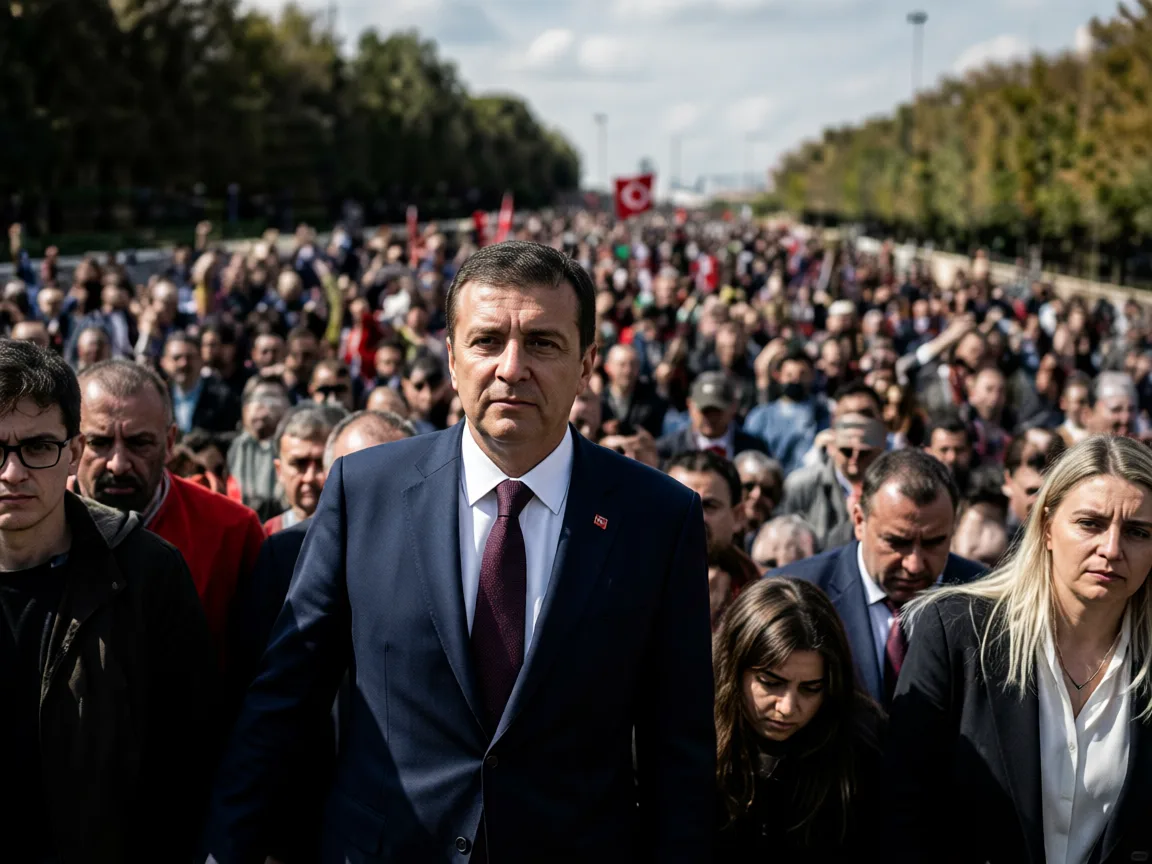
Silivri Is Cold: Erdoğan's Rival Behind Bars
Ekrem İmamoğlu won Istanbul, eyed the presidency, and now faces a trial that could drag on for 12 years inside Europe's largest prison.

The 2015 Netball Superleague Season That Redefined English Rivalries
A dramatic 2015 Netball Superleague campaign reshaped the competitive hierarchy and set the stage for a new era of domestic dominance.

Tour de France Night Testing Raises Questions About Anti-Doping Protocol
Night-time anti-doping controls on the Tour de France's biggest names have sparked debate about testing methods and timing.