Arthur Fery Delivers Eastbourne Thriller to Reach the Last 16
British rising star Arthur Fery outlasts Argentina's Burruchaga in a gripping Eastbourne Open contest to keep his grass-court surge alive.
The Match That Told a Story Bigger Than the Scoreline
There is a particular kind of British tennis player who lives for these weeks. The grass-court window, compressed and chaotic, offers a narrow corridor where raw talent can ambush experience, where a wildcard becomes a weapon, and where the road to Wimbledon forks in unexpected directions. Arthur Fery stepped into that corridor at the Eastbourne Open and delivered exactly the kind of performance that makes the tennis world sit up and recalibrate.
The 22-year-old from Surrey beat Argentina's Roman Andres Burruchaga in a thrilling first-round contest to book his place in the last 16 of the Rothesay International. It was not a routine win. It was a battle, one that stretched across momentum swings and pressure points, and it told you everything about where Fery's game and mentality have arrived.
"You can see it in his eyes when the rallies get long. He believes he belongs in these moments now. That's the shift." — A familiar refrain from those who have tracked Fery's development through the British Tennis pathway.
Who Is Arthur Fery?
For casual fans tuning in ahead of Wimbledon, Fery might still be an unfamiliar name. That is changing fast. Born in 2002, Fery holds dual French-British nationality but has committed his international future to Great Britain. He was a standout junior, reaching the junior Wimbledon singles final and establishing himself as one of the most technically gifted young players in the British system.
His transition to the senior tour has not been a rocket ship. It has been methodical, occasionally frustrating, and now unmistakably real. Fery has spent the last two seasons grinding through Challenger events and ATP qualifying rounds, building the physical resilience and tactical maturity that separate fleeting promise from sustained presence.
What makes his trajectory compelling is the surface specificity. Fery's game is tailor-made for grass. His flat groundstrokes, sharp volleying instincts, and willingness to come forward give him an identity on a surface where many modern baseliners look uncomfortable. He moves low through the court, stays balanced on the slice, and reads the skidding bounce with a naturalness that cannot be coached.
The Burruchaga Factor
Roman Andres Burruchaga arrived in Eastbourne as a dangerous floater in the draw. The 22-year-old Argentine, son of Jorge Burruchaga — the man who scored the winning goal in the 1986 World Cup final for Argentina — has carved his own path in professional tennis. He has shown flashes of quality on the ATP Tour, particularly on clay, and carries the competitive DNA of a sporting family that understands pressure at the highest level.
On grass, however, Burruchaga was always going to be the underdog. His heavy topspin game, designed for slow, high-bouncing surfaces, requires significant adaptation on slick turf. That he pushed Fery into a thrilling contest speaks to his own fighting qualities and his refusal to cede territory without resistance.
The match unfolded as a chess game played at sprint speed. Fery attacked early, looking to impose his serve-and-volley patterns, while Burruchaga absorbed and countered, dragging rallies into longer exchanges where his court coverage and shot tolerance could erode the Briton's confidence.
"It was the kind of match where you stop looking at the scoreboard and start watching the patterns. Every game told its own story." — Tennis analysts courtside at Devonshire Park.
Behind the Match: Why Eastbourne Matters
The Eastbourne Open occupies a peculiar place in the tennis calendar. It sits one week before Wimbledon, making it both a final tune-up for established stars and a proving ground for players desperate to peak at exactly the right moment.
For Fery, the tournament is more than a warm-up. It is a statement opportunity. British Tennis has invested heavily in its homegrown players, and the grass-court stretch represents the highest-visibility window for that investment to pay dividends. A deep run in Eastbourne does two things simultaneously: it builds ranking points and match fitness, and it sends a message to the Wimbledon draw that a dangerous, in-form local player is lurking.
The numbers underscore the importance:
- Fery's grass-court win rate has climbed steadily over the past three seasons
- He reached career-high ATP ranking territory in recent months through consistent Challenger results
- British men's tennis is in a transitional phase, with Jack Draper leading the charge and younger players jockeying for position behind him
Transfer Intel: The Business of British Tennis
Fery's development has been supported by the LTA (Lawn Tennis Association), which allocates significant resources to identifying and nurturing British talent on home soil. Players in the system receive coaching, fitness support, and crucially, wildcards into domestic ATP events like Eastbourne and Queen's Club.
That wildcard access is the hidden currency of British grass-court tennis. It bypasses the brutal qualifying process and places players directly into main draws where ranking points and prize money are available. For a player like Fery, ranked outside the automatic entry cutoff, these opportunities are career-defining.
The investment model is straightforward: maximize competitive exposure during the grass-court window to accelerate development and, ideally, produce deep Wimbledon runs that justify the entire funding structure. Fery's win over Burruchaga is exactly the return on investment the LTA is looking for.
What Fery's Win Signals
This was not a shock result. Fery was the higher-ranked player and the natural favourite on grass. But the manner of the victory — gritty, composed, and tactically sharp — suggests something deeper than a single good day at the office.
British tennis has been waiting for a cluster of players to emerge behind its established names. Cameron Norrie has shown the blueprint. Jack Draper has provided the excitement. Now Fery is adding his name to the conversation, not as a wildcard curiosity, but as a player with legitimate tools to compete on the main tour.
His net approaches were fearless. His serving, particularly under pressure, held firm. And crucially, when Burruchaga mounted his own surges, Fery did not retreat into passive baseline rallies. He stayed aggressive, stayed committed to his game plan, and trusted the instincts that make him dangerous on this surface.
"The best thing about Arthur today was that he played like he expected to win. Not hoped. Expected. That's a different mindset entirely." — Coaching perspective on Fery's mental growth.
Looking Ahead: The Last 16 and Beyond
Fery's reward is a last-16 clash where the stakes rise considerably. The competition deepens, the margins shrink, and the physical demands of playing consecutive matches on grass test even the most well-prepared athletes.
But that is precisely where growth happens. Every match Fery plays at this level adds another layer of experience that cannot be replicated in practice or at lower-tier events. The opponents get tougher, the crowds get louder, and the pressure to perform in front of a home audience intensifies.
Wimbledon begins in just days. Fery will almost certainly receive a wildcard into the main draw, and his form in Eastbourne will determine whether that wildcard carries the weight of expectation or the lightness of a free swing. Based on what he showed against Burruchaga, expect the former.
The broader picture is equally intriguing. British men's tennis is entering a phase where multiple players could realistically contend for second-week runs at the All England Club. Fery, Draper, and the next wave are not waiting politely for their turn. They are taking it, one match at a time, on the surface that rewards exactly their brand of tennis.
Arthur Fery's Eastbourne thriller was not just a first-round win. It was a declaration of intent from a young player who has spent years preparing for exactly this moment. The grass is his stage. And the audience is starting to pay attention.
Editorial Integrity
This is an original SportPulse article written by our editorial team. All content is independently researched, written, and reviewed by our writers and editors before publication. We do not publish copied, aggregated, or syndicated content.
SportPulse is committed to original sports journalism. Read our editorial policy or contact us with any questions.
More Like This
All tennis
Vekic Shatters Raducanu's Queen's Dream in Grass-Court Masterclass
Donna Vekic delivers a ruthless grass-court exhibition, overwhelming Emma Raducanu 6-0, 7-6 to claim the Queen's Club title.
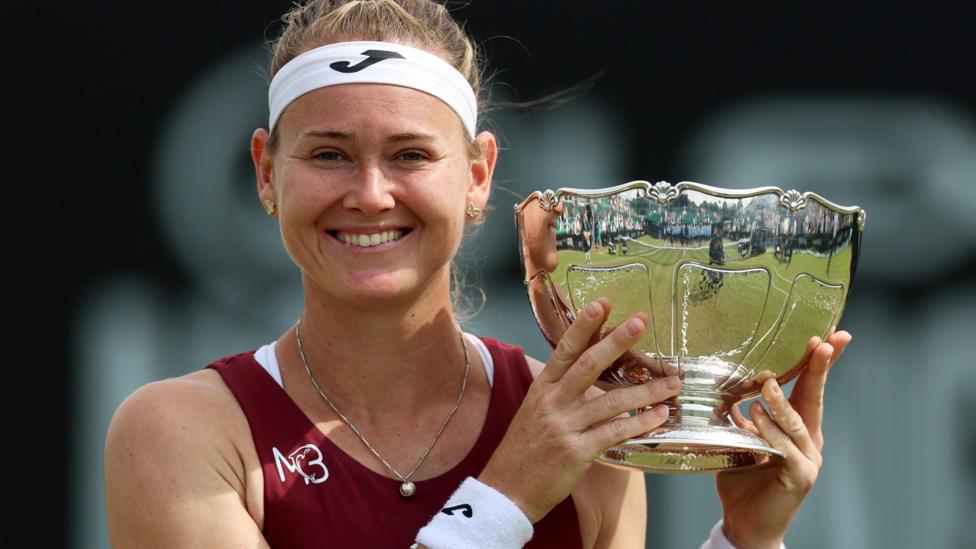
Bouzkova's Grit Shines Through Pain to Claim Nottingham Crown
Marie Bouzkova fought through an ankle injury to capture her first grass-court title at the Nottingham Open.
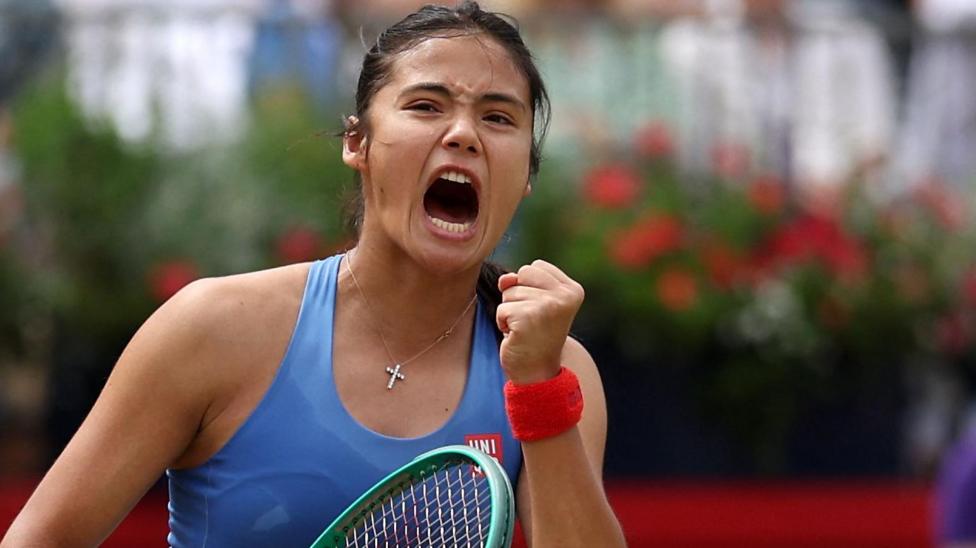
Emma Raducanu: The Dawn of a New Era at the All England Club
Raducanu falls at Queen's final but shows she is ready for Wimbledon.