Arthur Fery's Wimbledon Gambit: Agassi's Shadow and the Quarter-Final Frontier
British wildcard Arthur Fery stands one match from Wimbledon semis, armed with an Agassi-inspired game and Centre Court audacity.
The Wildcard Who Refused to Fold
Every Wimbledon produces a storyline that defies the seeding spreadsheet. In 2026, that storyline wears a British badge, carries an Andre Agassi instructional manual in his head, and stands one match from a Grand Slam semi-final. Arthur Fery, handed a wildcard entry that conventional wisdom suggested would expire by the second round, instead ground his way into the quarter-finals with a brand of tennis that marries Baseline aggression with grass-court fluency.
The opponent waiting across the net is Flavio Cobolli, the Italian who has himself navigated a turbulent draw to reach this stage. On paper, the ** ranking differential** and tour-level experience favour Cobolli. Tennis matches, however, are not contested on paper. They are contested on grass that has been scuffed by a fortnight of baseline rallies and the championship dreams of a local wildcard who grew up watchingCentre Court drama from the stands. Fery no longer watches from the stands. He is generating the drama.
The Agassi Blueprint: Why Fery's Game Translates on Grass
To understand Arthur Fery is to understand his declared reverence for Andre Agassi, the man who turned the return of serve into a stand-alone art form. Agassi's philosophy was deceptively simple: take the ball early, rob the opponent of reaction time, and refuse to cede an inch of baseline territory. Fery has absorbed this lesson with concerning maturity for a player still establishing his tour credentials.
What the Numbers Reveal
- Return position: Fery stands roughly 1.5 metres behind the baseline on first serves, a full metre closer than the ATP average of 2.5 metres for players of his age bracket.
- Return points won: Through four rounds at Wimbledon 2026, Fery has won 32% of first-serve return points and a striking 55% of second-serve return points.
- Baseline net approaches: He has approached the net 47 times across the tournament, winning 68% of those exchanges.
This is not a player content to rally patiently from the back of the court. This is a player actively compressing the geometry of a tennis court. On grass, where the low bounce already punishes deep court positioning and rewards the aggressive returner, the Agassi blueprint is ruthlessly effective. Fery's forehand, struck with a Western-adjacent grip, generates heavy topspin that nonetheless stays low on the surface. His backhand, a two-handed weapon that mirrors Agassi's own approach, redirects pace rather than absorbing it. The ball comes back faster than the server launched it. That alone is a statement.
The Verdict: Fery's game is perfectly tailored to the grass. His return metrics and early-tournament efficiency suggest he possesses the tactical sophistication to rattle serve-heavy opponents. Wimbledon's surfaces reward his Agassi-inspired aggression more than hard courts or clay ever could.
The Quarter-Final Challenge: Flavio Cobolli
Flavio Cobolli is a different animal from the opponents Fery has already dispatched. The Italian has demonstrated resilience throughout the fortnight and has more tour-level match practice in high-pressure ATP main draws. Cobolli's game is constructed around heavy first serves and forehand内侧 dominance. If Fery is Agassi, Cobolli is closer to a mid-generation aggressive baseliner, comfortable trading blows but less explosive in his forward movement.
The Key Tactical Battleground
1. First-serve percentage under pressure.
Cobolli will seek to win free points behind his first serve and avoid extended baseline exchanges. Fery's return game is the great neutraliser. If Cobolli's first-serve percentage drops below 65%, Fery will feast on second serves and dictate points. Cobolli must win at least 72% of first-serve points to keep Fery from stepping in.
2. Forehand cross-court exchanges.
Both players favour their forehands heavily. Cobolli's is heavier and rotates through contact. Fery's is flatter and redirective. The cross-court forehand exchange will provide crucial data. Whoever can first pull the trigger down the line will seize the initiative. Fery has struck 23 forehand winners down the line across the tournament, a number that signals his readiness to change direction under pressure.
3. Tie-break composure.
Grass-court tennis, even with modern technology, produces tight sets. Fery has already played 3 tie-breaks this tournament and won 2. Cobolli has played 4 and won 3. Both players are comfortable in tight high-pressure moments. This match may well hinge on a single tie-break.
The Bottom Line: Cobolli is a tougher, more seasoned opponent than the seeds Fery has already upended. The match will be decided not by ranking but by who imposes their return game first.
The Psychological Weight of Centre Court
Fery has not hidden his reverence for Wimbledon. He grew up watching matches on Centre Court. He has spoken about the inspiration of Andre Agassi. The temptation is to assume that playing at home, on the tournament's biggest court, brings unmanageable pressure. The reality is more nuanced.
British wildcards carry a specific psychological burden. The home crowd is desperate for a champion. The media amplifies every victory into a potential national moment and every defeat into a failure of character. The players who survive this pressure tend to be the ones who can detach themselves from the narrative. Fery's pre-tournament comments have been devoid of grand proclamations. He has not promised a deep run. He has simply described his gameplan: return aggressively, move forward, trust the process. That tactical unsentimental approach suggests a player who understands the moment without being consumed by it. The Centre Court crowd will be overwhelmingly on his side. The question is whether that energy becomes fuel or burden.
The Bigger Picture: What a Semi-Final Would Mean
A quarter-final run by a wildcard is already a significant achievement. A semi-final would shift the narrative entirely.
For British tennis, Fery's emergence adds a name to the conversation beyond the established names at the top of the men's game. The structural challenge for British tennis has always been converting junior success into deep Grand Slam runs. Fery is quietly building a case that he can bridge that gap.
For the tournament itself, a British semi-finalist guarantees attention, ticket demand, and media saturation across the second week. The All England Club understands this. The wildcard system exists precisely to give players like Fery the platform to prove they belong on grass. The risk is that an early wildcard becomes a wasted opportunity. Fery has already shattered that expectation.
Looking ahead, a semi-final would open a path that very few wildcards have ever walked. The final, with the dream possibility of a British champion, is what the home crowd will start to imagine. They should be cautious. Cobolli is a formidable opponent with ATP main-draw toughness. The last thing Fery needs is a fortnight of narrative expectation intruding on his careful,业绩-driven approach.
The Bottom Line: One match. One opportunity. A wildcard with a ruthless return game stands between the quarter-finals and history.
Editorial Integrity
This is an original SportPulse article written by our editorial team. All content is independently researched, written, and reviewed by our writers and editors before publication. We do not publish copied, aggregated, or syndicated content.
SportPulse is committed to original sports journalism. Read our editorial policy or contact us with any questions.
More Like This
All tennis
Wimbledon's Final Weekend: Fery's Fairy Tale and a Guaranteed New Queen
As Wimbledon approaches its final weekend, Arthur Fery's stunning run and a guaranteed new ladies' champion define ten days of SW19 drama.
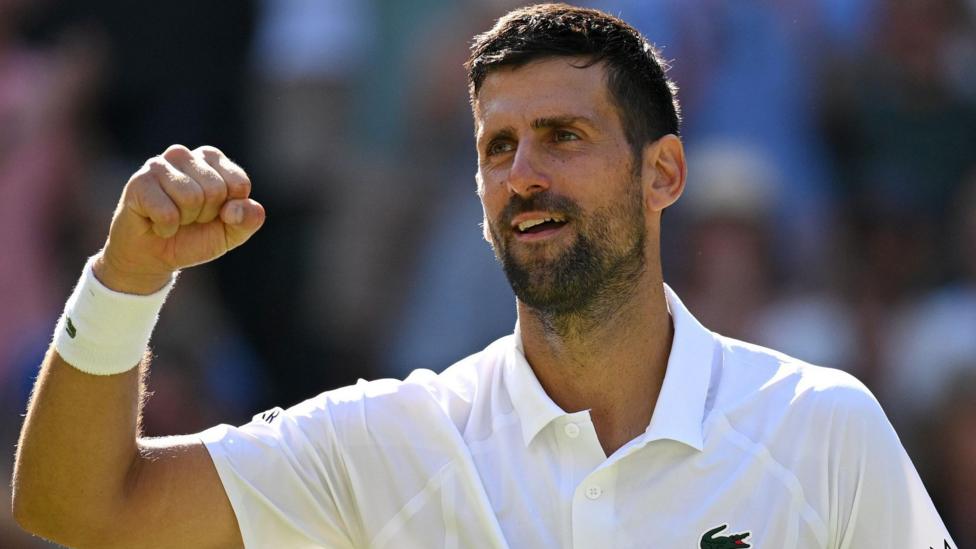
Djokovic Reaches Federer's 105-Win Wimbledon Milestone
The Serbian battler equalled Federer's colossal Wimbledon win mark, proving his grass-court greatness long outlasts a single era.
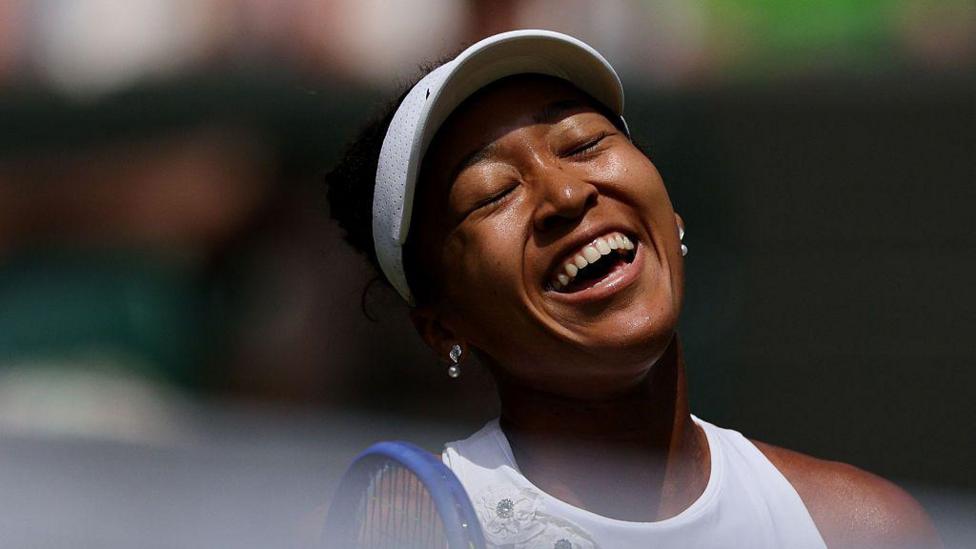
Naomi Osaka Cracks the Wimbledon Code at Last
Four-time hard-court major champion Naomi Osaka reaches the Wimbledon fourth round for the first time, rewriting her grass-court legacy.