Burnley's Manager Hunt Hits a Wall as Edwards Walks Away
Rob Edwards turning down Burnley exposes a club still searching for identity after relegation.
Rejection Stings at Turf Moor
Burnley's search for a new manager just became a very public embarrassment. Rob Edwards, the man who masterminded Luton Town's improbable rise to the Premier League and then navigated them through a relegation battle with genuine dignity, has turned down the Clarets' approach. It's not every day a Championship vacancy gets rejected by a coach who just dropped out of the top flight, and that should concern everyone at Turf Moor.
Let's be blunt: when a manager who just endured a grueling Premier League season with limited resources looks at your club and says "no thanks," the optics are brutal. Edwards isn't a man with a dozen elite offers on the table. He's available, he's proven at this level, and he still chose to walk away. That tells you something about where Burnley sits in the current football hierarchy.
The Clarets have been without a permanent manager since Vincent Kompany departed for Bayern Munich in May, a move that stunned English football and left Burnley scrambling. Kompany's exit was supposed to be the first domino in a structured rebuild. Instead, it's become a slow-motion crisis.
What Edwards Saw (And Didn't Like)
Understanding why Edwards said no requires looking at the landscape he surveyed. Burnley were relegated from the Premier League last season after finishing 19th with just 24 points, winning only five matches across the entire campaign. Kompany's expansive, possession-heavy style was dismantled repeatedly by better-resourced opponents. The defensive record was alarming: 78 goals conceded in 38 matches, one of the worst returns in recent Premier League history.
Edwards, by contrast, built his reputation on pragmatic adaptability. At Luton, he deployed a 3-4-1-2 system that squeezed every drop of talent from a squad assembled on a shoestring budget. The Hatters conceded 68 goals in their Premier League season, a respectable tally given their wage bill ranked bottom in the division. More importantly, Edwards got Luton playing with an intensity and belief that transcended their financial limitations. They were competitive in virtually every match, including memorable draws against Liverpool and Newcastle.
But here's the uncomfortable truth for Burnley: the Clarets' squad is a stylistic orphan. Kompany recruited heavily for a possession-based system, spending significant sums on players comfortable in short-passing sequences. That recruitment philosophy doesn't translate neatly to the kind of organized, transitional football Edwards favors. Any incoming manager inherits a squad built for a vision that no longer exists at the club.
The Paradox of Parachute Payments
Burnley do have one enormous advantage: parachute payments worth approximately £45 million per year for the next two seasons. That's a financial war chest most Championship clubs can only dream of. Yet money alone doesn't make a project attractive. The infrastructure around a manager matters as much as the transfer budget.
Consider the questions Edwards would have asked himself:
- Who controls recruitment? Burnley's transfer strategy under Kompany was heavily influenced by the Belgian's personal scouting network. Without a clear sporting director or recruitment framework, a new manager inherits uncertainty.
- What's the board's timeline? Promotion is expected, but at what cost? Edwards experienced the chaos of a club yo-yoing between divisions at Luton. He knows the pressure of instant success and the toll it takes.
- Is there alignment? Edwards' tactical identity is well-defined. Burnley's squad is not built for it. The gap between vision and reality is a genuine concern.
Burnley's Credibility Problem
The Edwards rejection follows a pattern that's becoming difficult to ignore. Multiple candidates have reportedly been approached since Kompany's departure, and the list of names who've distanced themselves from the job grows longer by the week. When a club with Premier League parachute payments and a recent top-flight pedigree can't attract a manager fresh off a relegation, something is fundamentally misaligned.
Part of the issue is optics. Burnley's managerial search has been conducted in public, with names leaking to the press before any formal agreement. That's a red flag for any prospective hire. Discretion in recruitment suggests competence; a revolving door of reported targets suggests desperation.
There's also the Sean Dyche shadow. For over a decade, Dyche defined Burnley. His direct, physical, low-block approach was the club's identity. Kompany represented a dramatic philosophical departure, and while it produced one brilliant Championship season that delivered promotion, it ultimately failed at the highest level. Now, the club faces a fundamental question: do they return to the Dyche archetype, or continue down the possession-based road Kompany charted?
Edwards' rejection suggests the club hasn't resolved that tension. Managers want clarity of vision before committing their reputations to a project. Right now, Burnley offers ambiguity.
Who's Left on the Board?
With Edwards out of the picture, Burnley's options are narrowing. The Championship season is fast approaching, and pre-season preparation requires a manager in place well before the opening fixture. Every week without a confirmed appointment is a week of lost tactical work, unsettled players, and a fanbase growing increasingly anxious.
The realistic candidate pool now includes:
- Scott Parker — experienced at Championship level, won promotion with both Fulham and Bournemouth, but his tenure at Club Brugge ended poorly and questions remain about his tactical ceiling.
- Steve Cooper — did impressive work at Nottingham Forest before being dismissed, known for building organized sides with clear identity, but may be holding out for a Premier League opportunity.
- Wayne Rooney — a wildcard option with Championship experience from Birmingham City, though his record at St Andrew's was mixed at best.
- An overseas appointment — Burnley could look abroad, following the trend of Championship clubs hiring from European leagues, though this carries significant integration risk.
The clock is ticking. Burnley open their Championship campaign in early August, and the squad needs direction. Players returned to pre-season without knowing who their manager would be or what system they'd be asked to play. That uncertainty breeds anxiety in the dressing room, particularly among senior figures who've already lived through one chaotic transition.
The Bottom Line
Rob Edwards turning down Burnley isn't just about one man declining one job. It's a symptom of deeper institutional uncertainty at a club that, barely 18 months ago, was celebrating automatic promotion from the Championship. The speed of Burnley's decline from optimistic Premier League returnees to managerial castaways is stark.
Edwards saw what many in football now see: a club caught between identities, with resources but no roadmap. The parachute payments will attract a manager eventually. Money always does. But attracting the right manager, someone who can build something sustainable rather than merely buy promotion, requires the kind of strategic clarity Burnley haven't demonstrated.
The Clarets need to stop leaking names, stop chasing candidates who aren't interested, and start presenting a coherent vision. Because right now, the most telling statistic isn't their 24-point Premier League season or their 78 goals conceded. It's the number of quality managers who've looked at Turf Moor and decided they'd rather wait for something better.
Editorial Integrity
This is an original SportPulse article written by our editorial team. All content is independently researched, written, and reviewed by our writers and editors before publication. We do not publish copied, aggregated, or syndicated content.
SportPulse is committed to original sports journalism. Read our editorial policy or contact us with any questions.
More Like This
All football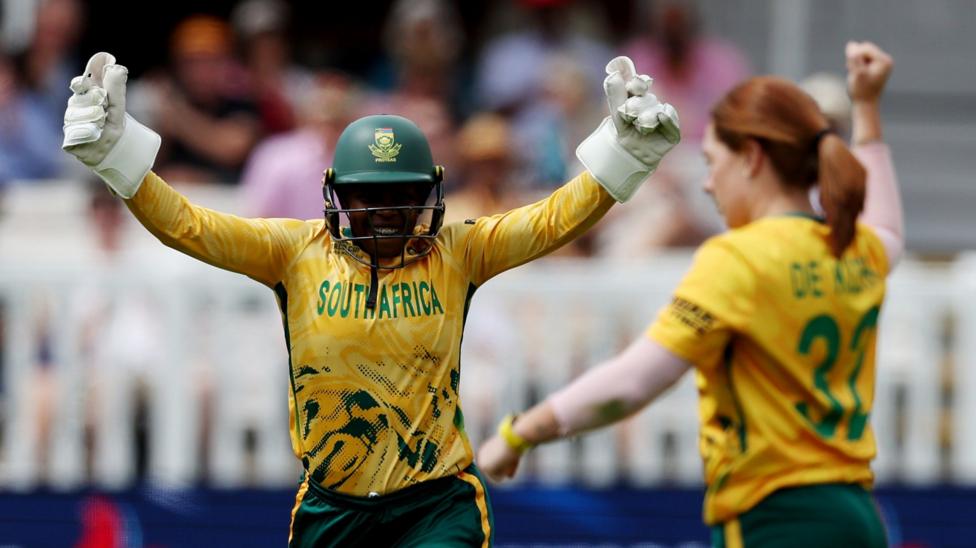
South Africa Stutter Past Bangladesh to Turn Heat on India
South Africa overcame their own dysfunction at Lord's to edge Bangladesh, shifting the T20 World Cup semi-final pressure squarely onto India.

Everton Ordered to Pay Burnley Nearly £40m in Landmark PSR Verdict
Burnley win a precedent-setting legal case that could reshape how Premier League clubs are held accountable for financial breaches.

Germany's World Cup Trauma Deepens as Paraguay Expose Structural Decay
Another round of 16 exit via penalties demands the same soul-searching that birthed Das Reboot after 1998.