When Celebrities Take the Wheel: F1's Outsider Drivers
From aristocrats to actors, F1 has let non-racers into the cockpit — but piloting a prototype demands something no fame can buy.
The Cockpit Is Not a Rec Room
Formula 1 cars are not charity drives. They are the most aerodynamically complex machines on four wheels, powered by turbo-hybrid power units pushing 1,060 brake horsepower, with suspension geometries tuned to within millimetres and brake biases that shift in milliseconds. When F1.com compiled a look at famous names from outside the sport who have been given the opportunity to drive an F1 car, the list was a reminder that sitting in a cockpit does not make you a driver — it makes you a passenger who has not yet realised it.
The people on that list come from very different worlds. There are aristocrats, actors, athletes, and other celebrities who have been granted access to a cockpit as a promotional exercise, a testing invitation, or an educational experience. None of them are Formula 1 drivers by profession. And yet every single one of them had to deal with the same machine: a car that demands physical adaptation, cognitive load, and respect for limits that do not care about your fame.
What an F1 Car Actually Demands
Let us start with the mechanics, because that is where the fantasy usually collides with reality. An F1 car produces downforce levels that can exceed 5g in a corner. The braking deceleration from 300 km/h to under 100 km/h takes roughly three seconds, loading the car's carbon-ceramic brake discs and the driver's neck muscles with forces that would make an untrained person black out. The steering ratio is brutal at low speeds and barely perceptible at high speed, meaning the driver's inputs must be feather-light — a twitch of the wrist, not a wrestle with the wheel.
The hybrid energy recovery system, or KERS, adds another layer. Energy captured under braking is stored in a battery pack and deployed via the MGU-K unit to deliver an extra burst of torque. The power delivery is instant and unpredictable for someone not accustomed to managing energy maps on the fly. A driver used to throttle-in, throttle-out habits in conventional cars will find themselves either lifting too early or overwhelming the rear tyres with torque they did not intend.
And then there is the seat position. An F1 driver sits with hips higher than their knees, spine nearly vertical, and feet on pedals that require roughly 30 kg of pressure each. The car's centre of gravity is so low — around 300 mm from the ground — that any body movement inside the cockpit shifts weight distribution measurably. A celebrity driver who has never undergone the anti-G training or neck-strengthening protocols used by F1 drivers will feel every cornering force immediately and uncomfortably.
F1.com looks back at some of the famous names from outside of the sport who have been given the opportunity to drive a Formula 1 car.
That sentence is deceptively simple. "Given the opportunity" means the car ran. It does not mean the driver pushed it to its limit. In almost every case, the celebrity driver was restricted to low-speed runs, sometimes on a damp track, under the supervision of a race engineer who knew the driver had one session and no intention of becoming a professional. The car's engine mapping would be softened, the drag settings adjusted for stability, and the tyre pressures raised to reduce grip and therefore danger.
The Aerodynamic Reality Check
The most misunderstood aspect of an F1 car is how dependent it is on airflow. The front wing generates roughly 40 per cent of the car's total downforce. The barge boards along the sidepods condition airflow toward the rear diffuser, which creates low pressure under the car and sucks it onto the track. This system is tuned for a specific ride height — the gap between the car's floor and the tarmac — and that gap is controlled by the driver's body position and braking technique.
A celebrity driver sitting upright, braking late and hard, will squat the car's nose down, compressing the pushrod suspension and reducing the underfloor seal. The car loses downforce precisely when it needs it most. That is why F1 teams insist on a race engineer in the radio loop at all times during these sessions. The engineer watches telemetry — steering angle, brake pressure, throttle position, G-forces — and calls out corrections before the driver even realises the car is unsettled.
Engineering Insight: The Telemetry Barrier
What separates a celebrity driver from a race driver is not courage. It is data literacy. An F1 driver watches their own telemetry after every lap. They learn that their throttle application at corner exit is 15 per cent smoother than their rival's, or that their brake trail into Turn 3 is 0.2 seconds too late. They internalise these numbers until driving becomes a series of continuous micro-adjustments.
A celebrity driver receives telemetry data they cannot read. They may see a graph showing lateral G-force peaking at 4.2g through a corner, but without the framework to interpret what that number means in terms of tyre load, suspension travel, and aerodynamic efficiency, the data is meaningless. The gap between "I drove fast" and "I drove efficiently" is measured in milliseconds — and milliseconds are where the engineering lives.
Why F1 Lets Famous Drivers In
The answer is not technical. It is cultural and commercial. F1 has always had a relationship with celebrity that stretches back to the 1950s and 60s, when socialites and actors were photographed at circuits as much as race winners were. Today, the sport's commercial model depends on visibility beyond the traditional motorsport audience. A well-known face in an F1 car generates headlines, social media engagement, and broadcast interest that a test driver from a Formula 3 academy cannot match.
But visibility comes with responsibility. Every time F1 allows a non-professional into the cockpit, it sends a signal about the sport's accessibility. The risk is that the narrative becomes "anyone can drive an F1 car" rather than "this car is so specialised that only years of progressive training can master it." The truth is closer to the latter. The cars on F1.com's list of famous outsiders are proof not that driving an F1 car is easy, but that the sport is willing to share a fraction of its complexity with people who will never fully understand it.
The Next Track Is Always Harder
For those famous drivers, the session is a single afternoon. For F1 engineers, the question is what the car gains from a driver who does not know how to extract performance from the suspension kinematics, the power unit energy deployment curve, or the tyre warm-up window. The answer is usually: very little. The car performs the same regardless of who is behind the wheel. It is the driver who suffers the deficit — in lap time, in confidence, and in the sheer physical toll of a machine that was designed for someone whose neck muscles can withstand 6g without flinching.
Editorial Integrity
This is an original SportPulse article written by our editorial team. All content is independently researched, written, and reviewed by our writers and editors before publication. We do not publish copied, aggregated, or syndicated content.
SportPulse is committed to original sports journalism. Read our editorial policy or contact us with any questions.
More Like This
All f1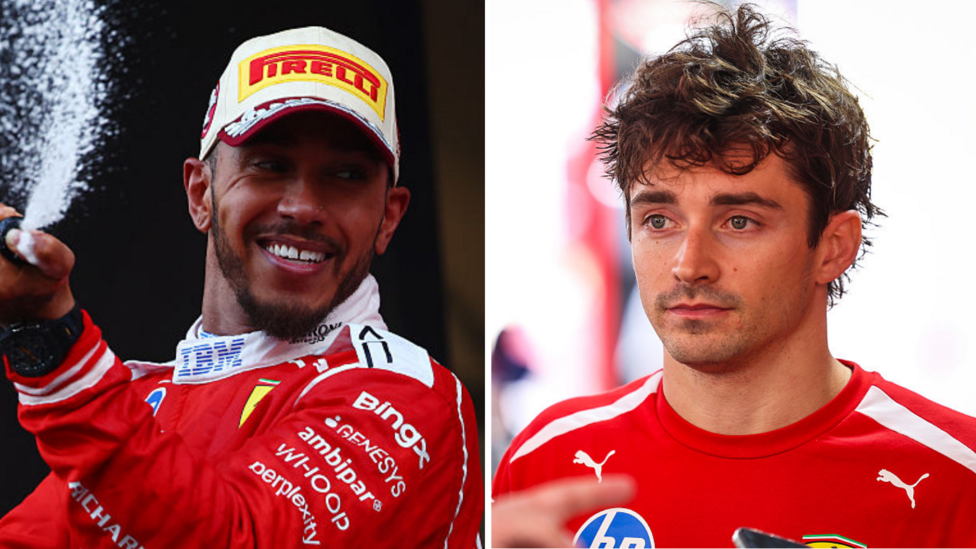
Monaco Mastery: Hamilton's Precision vs. Leclerc's Heartbreak
Hamilton's Monaco triumph highlights driver ratings, while Leclerc's local curse persists amid strategic gambles.
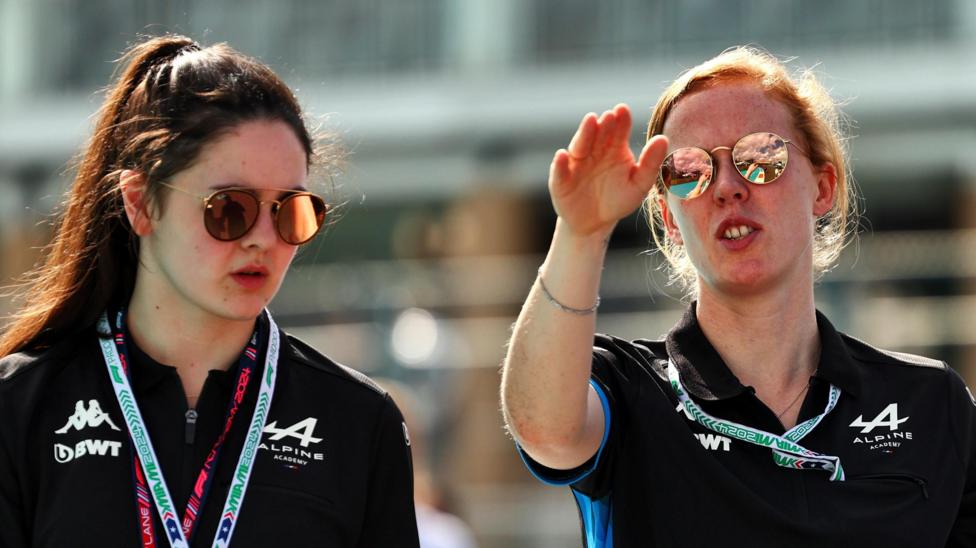
Powell and Pulling Shatter F1 Commentary Glass Ceiling in Barcelona
Alice Powell and Abbi Pulling make history as the first all-female F1 commentary duo for BBC Sport at the Barcelona-Catalunya Grand Prix.

Silverstone Storm: 2026 British GP Preview and Watch Guide
The 2026 regulations meet British weather at Silverstone in a weekend where aero efficiency will decide the championship.