One Slip, a Thousand What-Ifs: Chwalinska's Cruel Wimbledon Exit
Maja Chwalinska was a single point from victory when grass betrayed her, turning triumph into a crushing first-round defeat.
The Point That Changed Everything
There is a fraction of a second in sport where physics and fate conspire to write the cruelest possible script. For Maja Chwalinska, that fraction arrived on match point at Wimbledon's first round, on a surface she had spent two weeks learning to distrust. She lunged. Her foot found nothing solid beneath it. And just like that, a match she had authored with poise and grit beyond her ranking slipped away, quite literally, from under her.
The French Open runner-up, riding a wave of form that had carried her all the way to a Grand Slam final just weeks earlier, stood one point from booking her place in the second round of the Championships. Then the grass, that deceptive, pristine English grass, demanded its tax. Chwalinska's foot gave way. The point went to her opponent. The momentum vanished like breath on a cold morning.
She did not recover. What followed was a capitulation as sudden as it was painful, the kind of collapse that makes you wonder whether the body failed or whether the mind simply could not process the cruelty of what had just happened.
From Paris to London: The Weight of Expectation
To understand why this loss cuts so deep, you have to rewind to Paris. Chwalinska's run to the French Open final was not a fluke. It was the culmination of a player arriving, finally, at the summit of a sport that had spent years asking her to wait. She played with a ferocity on the Roland Garros clay that belied her modest ranking, dismantling opponents with heavy groundstrokes and a tactical intelligence that grew sharper with each round.
By the time she walked off Court Philippe Chatrier as runner-up, Chwalinska had announced herself to the wider tennis world. The question was no longer whether she belonged at the top. It was how high she could climb.
Wimbledon was supposed to be the next chapter, not a footnote.
The transition from clay to grass is one of the sport's most unforgiving adjustments. The ball skids lower. The footing is treacherous. Reactions must be faster, instincts sharper. Champions who dominate Paris often stumble in SW19, and Chwalinska, despite her talent, was navigating a surface that remains foreign to many players who grew up on European clay.
The Anatomy of a Collapse
Chwalinska had done the hard work. She had fought through a gruelling first-round encounter, trading blows with an opponent who sensed an upset opportunity the moment the draw was announced. She had served for the match. She had earned match point through her own quality, not through gift or luck.
Then came the slip.
Grass-court tennis is built on a paradox. It rewards the most elegant, fluid movement in the sport, yet it punishes the slightest misstep with disproportionate severity. One moment of lost footing at a critical juncture can unravel an entire match's worth of dominance. Players have spoken for decades about the unique psychological toll of falling on grass, the way it plants a seed of hesitation that infects every subsequent movement.
For Chwalinska, that seed took root instantly.
The match point slipped away. The games that followed belonged almost entirely to her opponent, who suddenly found herself liberated by the reprieve. Chwalinska, by contrast, appeared diminished, as though the fall had shaken loose something deeper than confidence. Her footwork, so assured for much of the match, became tentative. Her forehand, a weapon that had carried her through the French Open, lost its conviction.
The final scoreline will record a first-round exit. It will not record the match point. It will not record the slip. It will not record the moment where an entire tournament pivoted on a patch of grass.
Career by the Numbers
- 2024 French Open: Runner-up, her best Grand Slam result to date
- 2024 Wimbledon: First-round exit after holding match point
- Career-high WTA ranking achieved following her Roland Garros run
- Reached her first Grand Slam final without dropping a set in the opening five rounds
- Grass-court win rate remains a fraction of her clay-court record
The Psychological Battlefield
Grand Slam tennis is as much a mental exercise as a physical one, and Chwalinska's Wimbledon exit raises uncomfortable questions about resilience at the highest level. This is not a criticism. It is a recognition that the gap between a French Open finalist and a Wimbledon first-round casualty can be measured in milliseconds and mindset.
"You train your whole life for these moments, and sometimes sport just takes from you what it wants. The challenge is not letting one moment define the next tournament, the next season, the next chapter." — a sentiment echoed by multiple coaches on the WTA Tour who have watched talented clay-courters struggle to adapt to grass.
The best players in history have used defeats like this as fuel. Steffi Graf spoke openly about learning to fall on grass and getting back up. Rafael Nadal, the ultimate clay champion, spent years adapting his movement and his mentality before conquering Wimbledon. Chwalinska has the talent to follow that path. Whether she has the psychological framework remains the central question of her career.
What This Means Going Forward
The hard-court season looms, and with it a chance for Chwalinska to prove that her French Open run was no anomaly. The US Open, played on the fast concrete of Flushing Meadows, offers a surface that sits closer to her natural game than grass, even if it demands its own set of adjustments.
The real test will be how she processes this Wimbledon exit. A first-round loss is not catastrophic in isolation. Plenty of Grand Slam champions have suffered early exits and returned stronger. But a first-round loss after holding match point, after a slip that felt like an act of cosmic indifference, carries a different kind of weight.
Coaches and sports psychologists will tell you that the matches that hurt the most are the ones that teach the most, but only if the player allows them to. Chwalinska will need to look at the footage of that slip, sit with the discomfort, and extract whatever lesson it offers. Then she will need to let it go.
The Legacy Question
It is far too early to speak of Chwalinska's legacy. She is a player still writing her story, still accumulating the experiences that will eventually define who she became. But moments like this one, on a sun-drenched Wimbledon court with victory in her grasp, are the ones that often determine the trajectory of a career.
The great ones absorb the pain and redirect it. They turn the slip into a springboard. They carry the memory of the fall not as a wound but as a reminder of how close they came, and how determined they are to finish the job next time.
Maja Chwalinska stood one point from the second round of Wimbledon. She left with nothing but a memory and a bruise on her ranking. What she does with that memory will tell us everything about what comes next.
The grass, as always, will be waiting next year.
Editorial Integrity
This is an original SportPulse article written by our editorial team. All content is independently researched, written, and reviewed by our writers and editors before publication. We do not publish copied, aggregated, or syndicated content.
SportPulse is committed to original sports journalism. Read our editorial policy or contact us with any questions.
More Like This
All tennis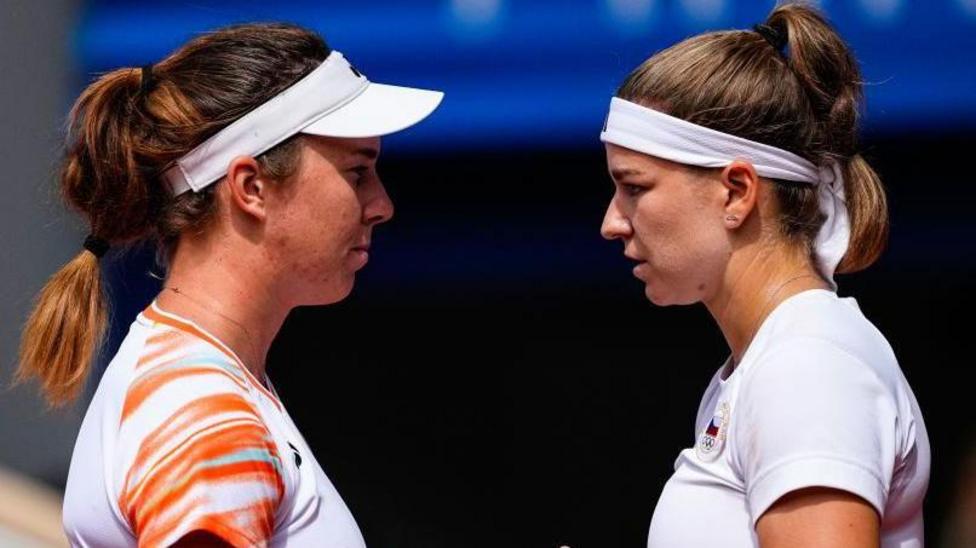
Czech Wimbledon Dominance Is No Accident
An all-Czech Wimbledon final exposes a system the tennis world still refuses to study seriously.
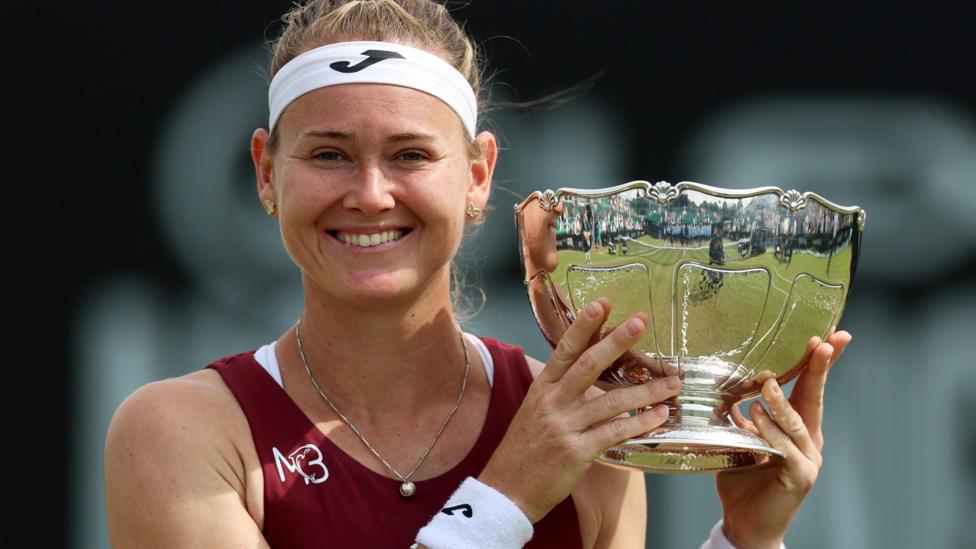
Bouzkova's Grit Shines Through Pain to Claim Nottingham Crown
Marie Bouzkova fought through an ankle injury to capture her first grass-court title at the Nottingham Open.

Gauff's Fire and Sabalenka's Nadal Mindset Light Up Wimbledon
Coco Gauff survived a deciding tie-break thriller as Aryna Sabalenka drew inspiration from Nadal's Netflix documentary.